Image Theft
Is it okay to just remove the watermark? How AI detects clever image theft

💡 In this article, you can find the following information.
Why it is difficult to report even when it is an obvious theft
Increasingly sophisticated theft methods, threats seen through actual cases
Limitations of existing response methods: Manual work and subjective judgment
How can AI determine whether there is plagiarism or theft?
What does it take to change from 'It looks similar' to 'It is theft'?
Beyond simple response, automation that executes strategies
Conclusion: Image theft, when responding with evidence, not just intuition
😩 “It clearly looks like our product image, but they just removed the watermark and changed the background. But proving this as theft feels completely overwhelming.”
🤔 “The theft seems obvious, but to report it internally, we have to explain 'why this is theft.' That is the hard part.”
😢 “Similar images are uploaded multiple times a day. But because they only slightly changed the colors, the judgment is ambiguous, and with so many distribution platforms, comparing them all manually is realistically overwhelming.”
Recently, the issue of image theft has transcended simple copyright infringement issues to become recognized as a societal problem that threatens brand identity and consumer trust. In particular, with the expansion of online commerce and content platforms, unauthorized use or clever alterations of images occur frequently, leading to a steady increase in legal disputes and brand infringement cases. On online distribution platforms, image theft no longer stops at simple captures or unauthorized copies. Recently, sophisticated methods such as erasing watermarks or slightly changing only the background, as well as cases using AI to generate similar images derived from the original image, are emerging. From the brand's perspective, they are facing image infringements that are difficult to distinguish with the naked eye, and the practical difficulties of responding are also growing.
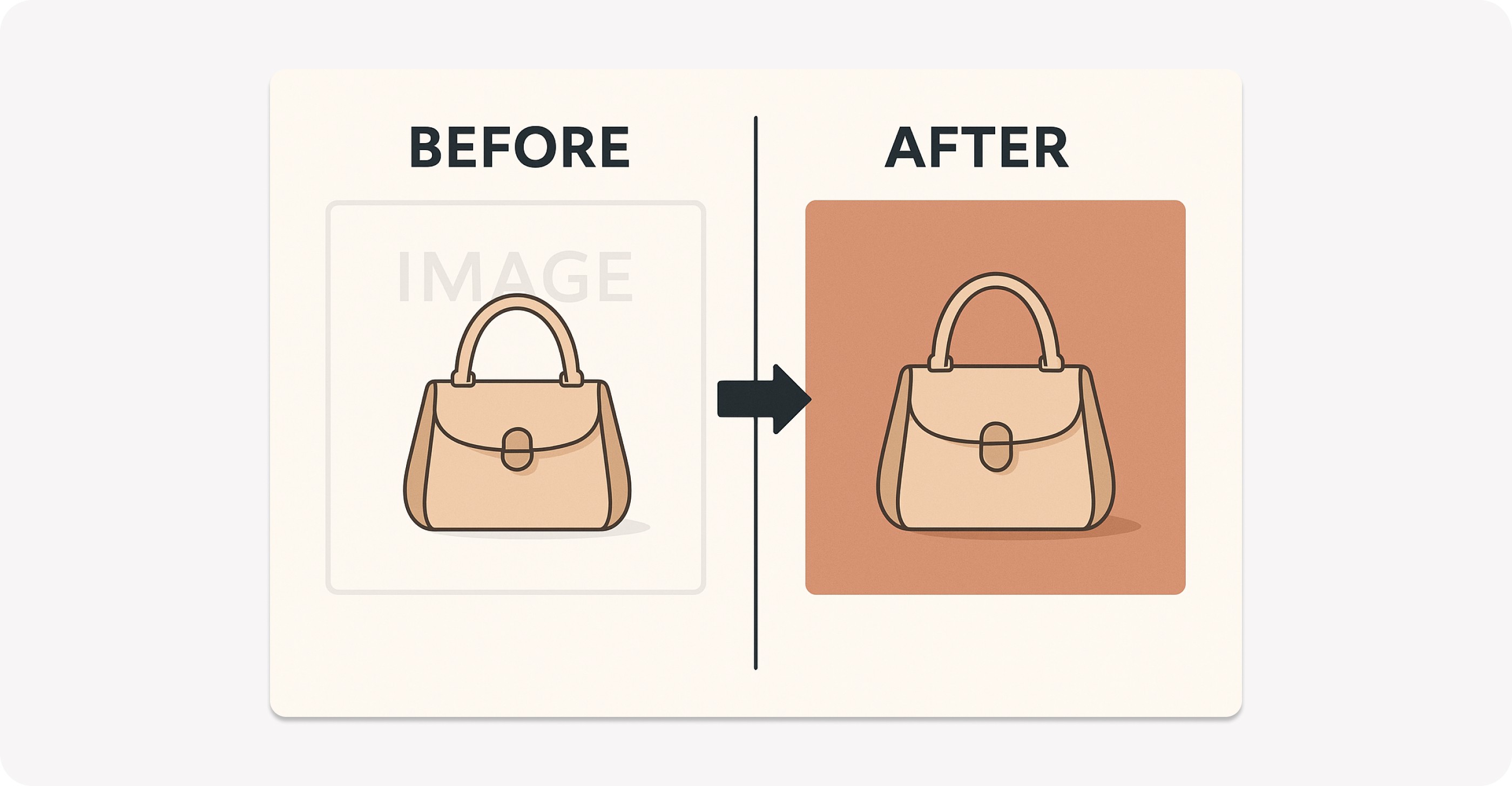
Given that the repeated distribution of similar images is having a real impact on brand trust and genuine product sales rates, it is time for the response method to transition to a precise and systematic one as well.
Why Reporting is Difficult Even When It's Obvious Theft
Even if practitioners actually recognize image theft, it is not easy to officially report or respond to it. One reason for this is that the criteria for theft are not clear. When only a part of the image is modified or only the watermark is removed, there is a lack of evidence to say definitively, 'This is theft.' In particular, because the proof standards and procedures required by each platform are different, even the same case of infringement is accepted in some places and rejected in others.
In the end, practitioners have to manually create evidence and discuss it internally or submit a report, but in this process, judgment and execution are delayed, or timely action is often not taken. If this situation continues, protecting the brand image becomes difficult, and it inevitably affects consumer trust. The reason why there is awareness of theft but it does not lead to actual action lies precisely in this 'absence of standards and structure.'
Cleverly Evolving Theft Techniques, Threats Seen Through Actual Cases
The Happy Prince Case: Image Theft and Counterfeiting
The baby clothing brand 'Happy Prince' experienced damage due to the unauthorized theft of images and the sale of counterfeit products. Cases were discovered in several Southeast Asian countries, including Vietnam, where Happy Prince's high-quality product photos were used without authorization to sell counterfeit products.

This case is important because it shows that not just the 'form' of the image, but the 'brand image' perceived by consumers can be infringed upon. This is because if consumers are misled through similar images, it ultimately weakens the value of the brand's genuine products and can shift sales to similar sellers.
To solve this problem, Happy Prince introduced an online product monitoring solution. Through this, they monitor suspected counterfeit URLs on various online marketplaces and take measures to block sales through intellectual property infringement reporting centers.
The Solawave Case: AI Analysis-Based Response
The US beauty device brand 'Solawave' suffered damage on the Amazon platform due to resellers using similar images. The images in question had only some changes in color and background, making it difficult to determine authenticity with the naked eye. To find clearer evidence, Solawave also performed reverse image searches on Google and Alibaba. As a result, they discovered that many brands had not only copied and pasted Solawave's copy and messaging exactly but had also stolen their images and graphics. In response, Solawave utilized an AI-based image similarity analysis tool to diagnose cases of infringement and used automated reports as evidence for legal action.
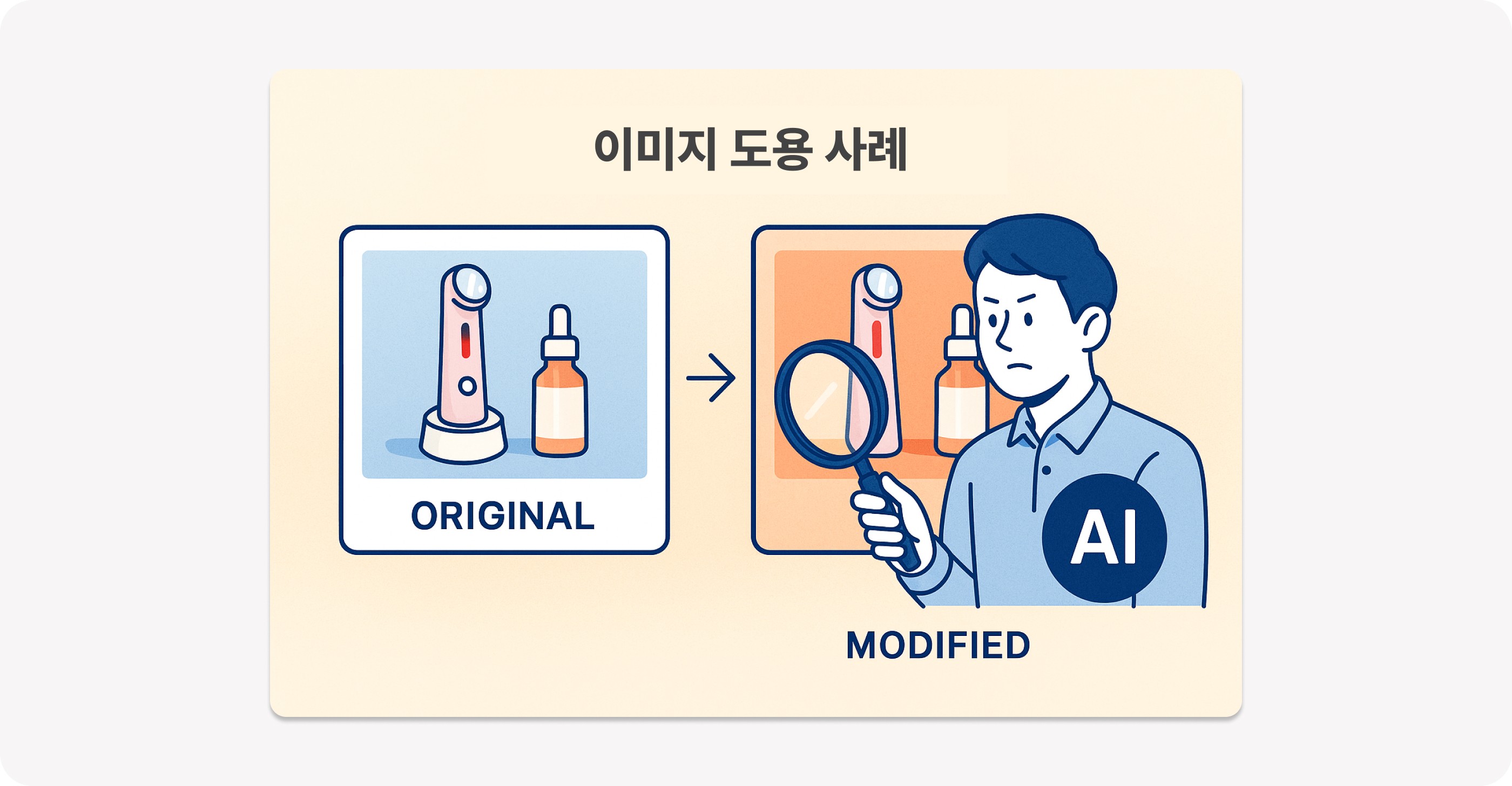
The Solawave case is a representative example showing that AI technology can be utilized as a practical tool for resolving real disputes. It showed the effectiveness of report automation in that it did not simply end with detection but led to actual lawsuits and platform sanctions.
Legal Consultation Case: Indirect Infringement Also Expands into Disputes
Indeed, cases of seeking legal advice regarding image theft are steadily increasing, and a column by Law & Good emphasizes that clever image alteration cases such as 'color change', 'watermark removal', and 'background difference' can also be judged as copyright infringement.
The case introduced in that column includes a case where a company created content defaming a competitor by utilizing the competitor's product images to compare them with their own products. This approach can be considered a serious infringement that goes beyond unauthorized image utilization, damaging brand value and lowering consumer trust.
Ultimately, companies must be able to detect and prove these problems as quickly as possible. For this, the introduction of an automated detection system that quantifies and visually displays image similarity is urgent.
Limitations of Existing Response Methods: Manual Work and Subjective Judgment
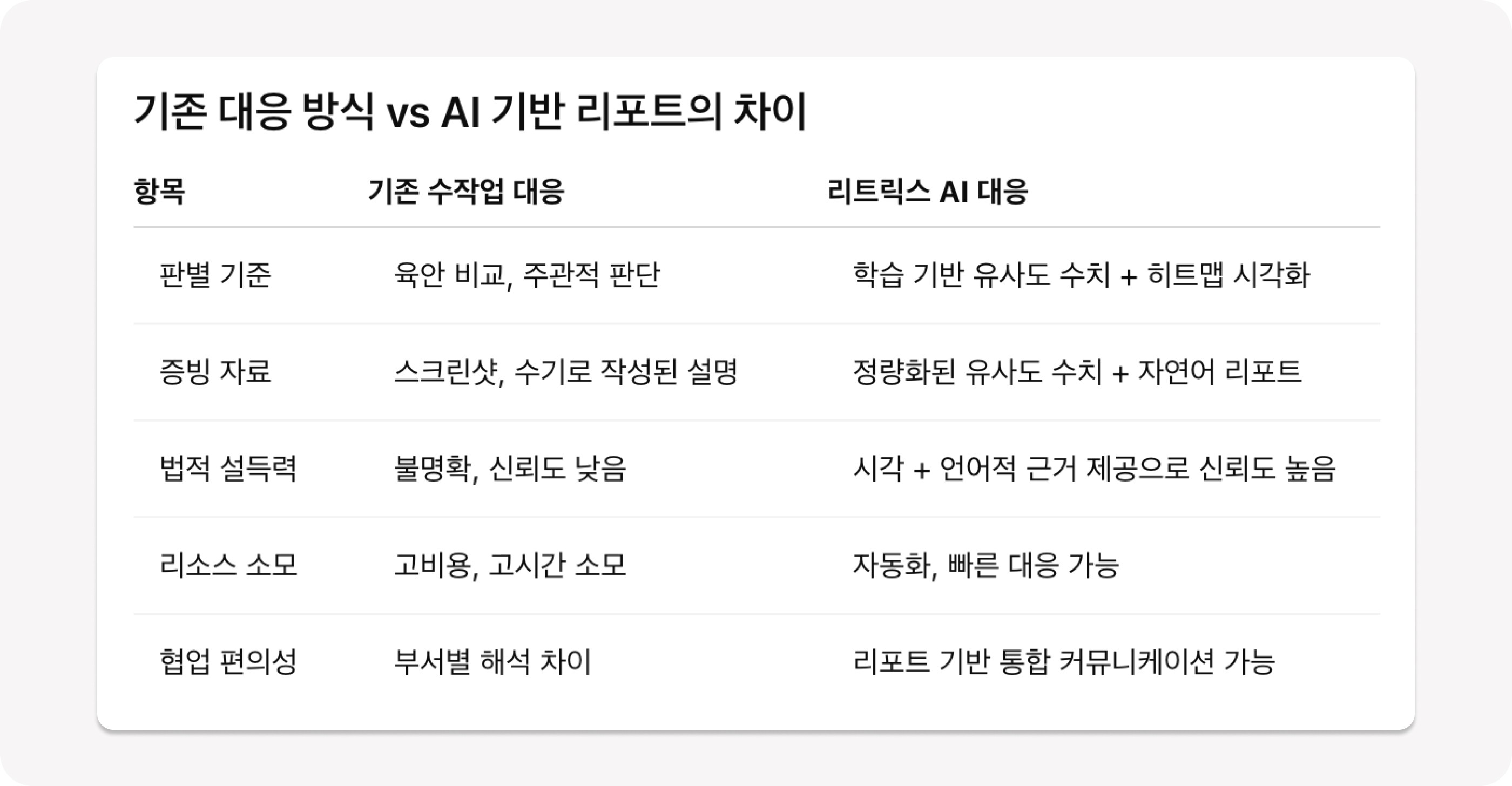
In the past, when image infringement was suspected, practitioners manually compared images, saved screenshots, organized them into documents, and then reported them to the platform or proceeded with internal reporting. However, this method is not only repetitive and inefficient, but it also has the following limitations:
Lack of consistency as judgment criteria vary from person to person
Objectivity and legal persuasiveness of evidence are low due to reliance on visual identification
Resource overload when dozens or more cases of infringement occur
As a result, responding to image theft is classified as 'repetitive work' and is easily pushed down in priority, often remaining a formal response rather than a practical solution.
How Can AI Judge Whether Theft Has Occurred?
An AI-based image similarity diagnosis system can quantitatively analyze visual similarities that are difficult for humans to identify in a short time, and provide the results in the form of visualization and explanation.
Heatmap-based visualization represents similar areas between the original image and the comparison image in color, allowing similarities that are difficult to distinguish with the naked eye to be seen at a glance. Natural language reports explain these analysis results in easy-to-understand language for humans, and can be used immediately as evidence.
For example, a report stating, "This image shows a visual similarity of over 85% in product character composition, background layout, and product placement. Only some colors have been changed, and the original structure and key elements are maintained as they are, making the possibility of theft very high," becomes an objective basis for judgment beyond a simple claim.

As such, if visual similarity is detected between the original image and the comparison image, this also serves as material that can visually prove the possibility of infringement on brand assets. AI performs these analyses automatically without repetition, providing quickly actionable insights without confusion in judgment criteria.
How to Go from 'It Looks Similar' to 'It Is Theft'?
If you are a practitioner who repeatedly experiences image theft, you might have thought about this at least once: "I wish there was a clear standard that shows whether this is theft or not." Or, "Will others be convinced of the similarity I felt?"
Reatromics aims to solve exactly this point. The core of this technology is to quantify the similarity felt by practitioners based on data and visualize and document the results in a way that anyone can understand. This technology, which started from the realistic demands of practitioners who need a standard to say 'this is theft' in the process of internal reporting, platform reporting, and legal response, resolves differences in interpretation and response delays caused by the absence of judgment criteria.
Reatromics quantifies similar image patterns and displays them as numbers, and visualizes overlapping parts with a heatmap to help distinguish right from wrong. Since text descriptions are also automatically generated here, there is no longer a need to persuade with ambiguous evidence like "it feels similar."
As a result, practitioners can obtain an automatic report that anyone can accept without manual comparison. This report can be used for internal reporting, platform reporting, or legal response, dramatically reducing the time spent responding to recurring infringements.
Beyond Simple Response, Automation that Executes Strategy
The effect of AI-based image theft diagnosis technology goes beyond simple efficiency improvement and can lead to structural improvement of the overall practical environment. In client companies using Reatromics, as the tasks of image theft monitoring, image collection, and verification, which were done manually over the past year, were automated, work hours were reduced by up to 70%. Furthermore, as the proportion of repetitive work decreased, they secured additional time to focus on strategic judgment and response. Being able to break free from repetitive tasks and focus on strategic challenges can serve as a foundation for increasing the productivity and judgment of the entire enterprise.
In addition, once automated theft determination standards are established, they can reduce internal communication errors caused by differences in interpretation among practitioners and increase the credibility of legal responses in brand dispute situations. For example, a person in charge who confirms a suspicious image from a customer inquiry can issue just one report to persuade both the legal team and the content team, and quickly respond to the platform. Now, you don't have to put images side by side and rely on gut feeling to persuade, saying, "Doesn't this look like ours?" The automatic report is not just a tool for evidence, but enables practitioners to make judgments themselves and lead the next action.
Conclusion: Responding to Image Theft with Evidence, Not Intuition
AI-based automated solutions are now becoming a foundation of execution power that unifies judgment criteria within a team and connects reporting-responding-collaboration into a single workflow, rather than being just simple image analysis technology. They are positioning themselves as practical execution tools that help practitioners respond quickly without repetitive tasks and create the evidence needed for internal reporting or legal judgments themselves. In particular, in brand operations, fast and clear judgment directly affects distribution trust and consumer perception, so whether or not to adopt a solution determines the organization's response agility.
As the standards for brand response have risen like this, image theft issues also require a different approach than in the past. In the past, only obvious acts of copying were questioned, but we have now entered an era where we must respond precisely even to images that are easily and cleverly altered with AI image technology.
In this environment, AI-based image similarity diagnosis and automated reports are effective solutions that help practitioners avoid being buried in repetitive manual work and focus on essential brand protection strategies. If you are an organization looking to move away from passive responses and design active strategies, now is the time to take that first step.
If you are curious about how AI technology can protect brand copyright, check out the content covering aspects of intellectual property protection such as legal evidence automation in our previous content.