Unofficial Seller Management
Price Management
The Brand Value Toppled by a Single Unofficial Seller: Threats Outside the Distribution Structure and Counterstrategies

💡 In this article, you can find the following information.
Coupang Yukgaejang Bowl Noodle Crisis: How unofficial sellers break a brand's pricing strategy
Why do unofficial sellers keep appearing?
The structural damage unofficial sellers cause to brands
Why are unofficial sellers difficult to control?
Repeated manual responses: A structure that breeds inefficiency
Responding to unofficial sellers: Strategies you can start today
Conclusion: To protect your pricing strategy, you must consider external brand risks
Coupang's Yukgaejang Bowl Noodle Crisis: How Unofficial Sellers Break Brand Pricing Strategies
On the night of May 21, 2025, a 36-pack of Yukgaejang Bowl Noodles was registered on Coupang for just 5,040 KRW (about 140 KRW per pack), sparking an instant sensation on price comparison sites and communities with reactions calling it an 'unbelievable special deal'. A product usually sold in the 27,000 KRW range appeared with a discount rate of over 80%, leading to a wave of 'proof shots' of bulk purchases of dozens of boxes, and orders quickly reached tens of thousands in a short period of time.
Coupang explained that the issue was due to a pricing input error by an internal representative and deleted the product in about an hour, but large-scale orders had already been received. Afterwards, this product appeared on secondhand trading platforms, where products purchased for 140 KRW each were resold for 500–600 KRW or more, initiating a new distribution wave outside the platform.
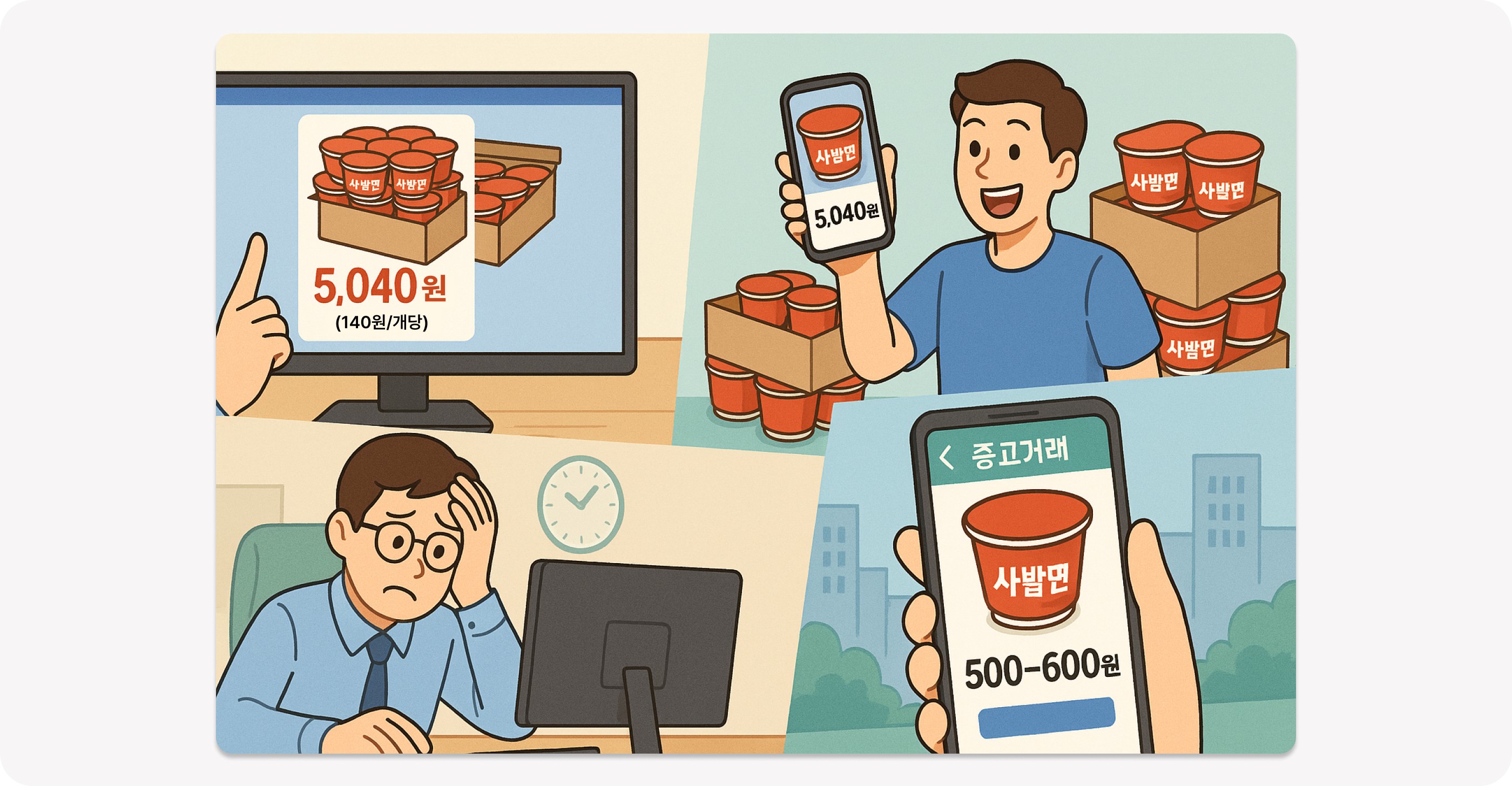
This case is not just a simple mishap, but a representative example showing that once a lowest price is exposed, its ripple effect can continuously shake the brand's pricing not only within the platform's pricing system but also through subsequent resale processes.
The main culprit behind breaking the pricing order of online distribution platforms is not always internal. The moment an 'unofficial seller' with no contract with the brand registers the lowest price on a platform, the entire distribution strategy can instantly collapse.
Therefore, today we would like to examine the structural risks that unofficial sellers pose to brand strategies, and provide step-by-step insights into what actions practitioners can take right now and what kind of system should be established in the long term.
Why Do Unofficial Sellers Keep Appearing?
An unofficial seller refers to a seller who sells products on online platforms without a formal distribution contract with the brand. They are also called 'unauthorized sellers', 'black sellers', or 'resellers', and conduct distribution activities outside of the brand's management framework.
The fundamental reason unofficial sellers frequently appear lies in the structural characteristics of the online distribution environment.
(1) Low Barrier to Entry to Become an Online Seller
Anyone can enter a distribution channel with just a business registration and a simple product registration, and can source products through various methods such as consignment sales, unofficial overseas influx, overseas purchasing agents, and reselling after bulk purchases.
(2) Opaqueness of Product Sourcing Routes and Lack of Seller Verification by Platforms
Some sellers can register products without clear distribution routes or formal contracts, and platforms often lack practical sanctions or verification procedures regarding official/unofficial status. This structure allows sellers who bypass the brand's distribution strategy to emerge recklessly, and consequently, low-priced products that do not align with the brand's pricing policy damage the price credibility of official sellers.
(3) Dynamic Pricing Policies of Platforms
Since some platforms operate based on algorithms focused on lowest price exposure and sales performance, sellers gain an exposure advantage simply by lowering their price, regardless of whether they have a formal distribution contract. This creates a structure where unofficial sellers are placed in more advantageous conditions than official sellers who maintain list prices and operate in line with brand strategies.
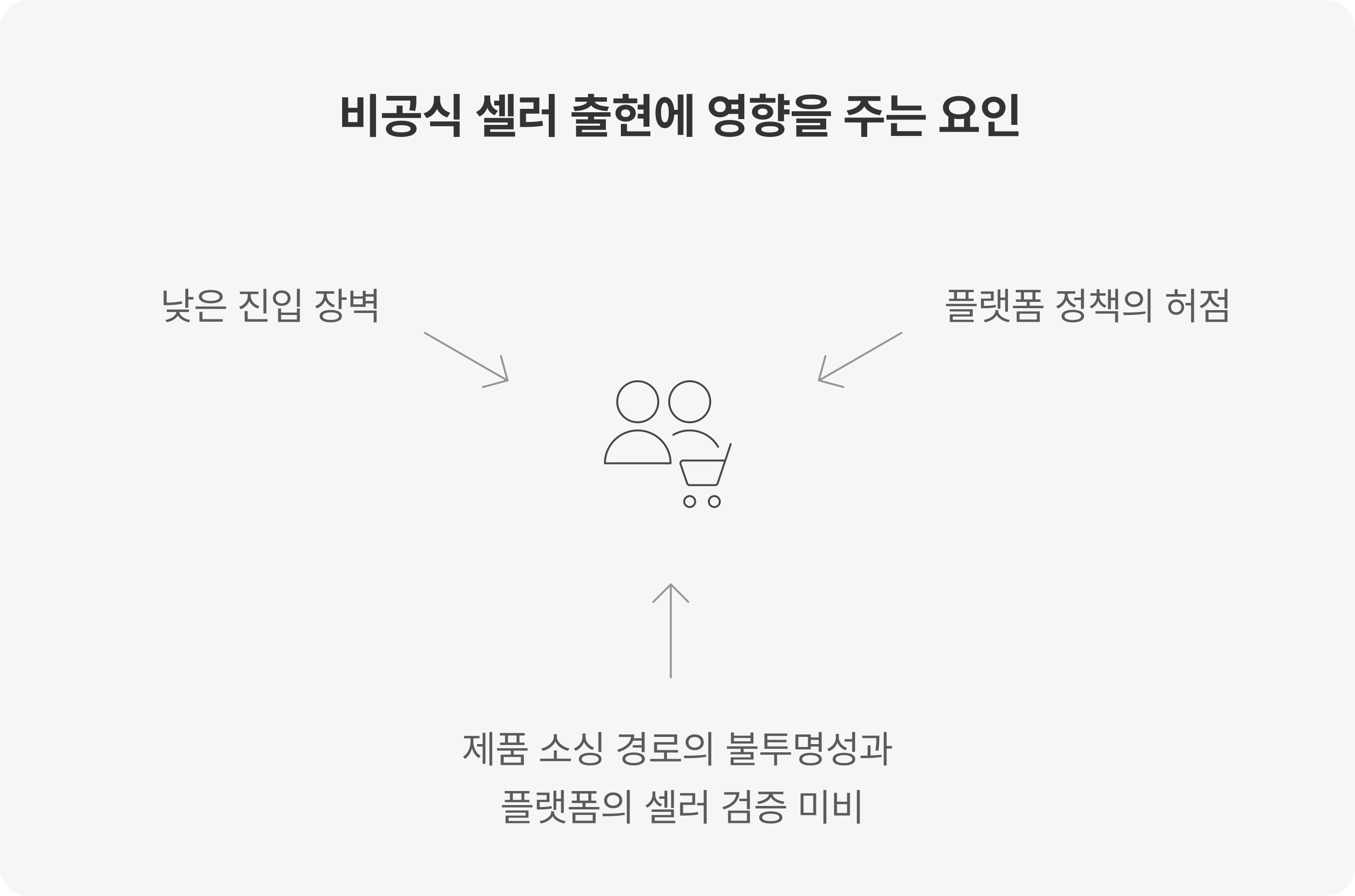
Ultimately, unofficial sellers move independently of the brand's pricing policy, promotions, and distribution strategy, thereby affecting the pricing information exposed across the platform and consumer perception.
Structural Damage Caused by Unofficial Sellers to Brands
Due to the emergence of unofficial sellers, it is difficult for brands to maintain consistency in their pricing policies, and key information such as product descriptions, customer response quality, and shipping speed is exposed without the brand's control. This exposure distorts consumers' price expectations and can even shake the strategies of official sellers who follow list price policies. Ultimately, it poses a threat to overall brand credibility and execution capability.
Unofficial distribution (grey market) is not a minor issue. According to Omnia Retail, grey market distribution forms a global market worth 20 billion euros annually, causing problems such as brand pricing strategy confusion, decline in consumer trust, and distortion of distribution order. Furthermore, according to a report by Counter Diversion, products distributed through unofficial channels lower consumer satisfaction due to uncertainties about authenticity and lack of after-sales service, which is pointed out as an element that can cause long-term damage to brand value.
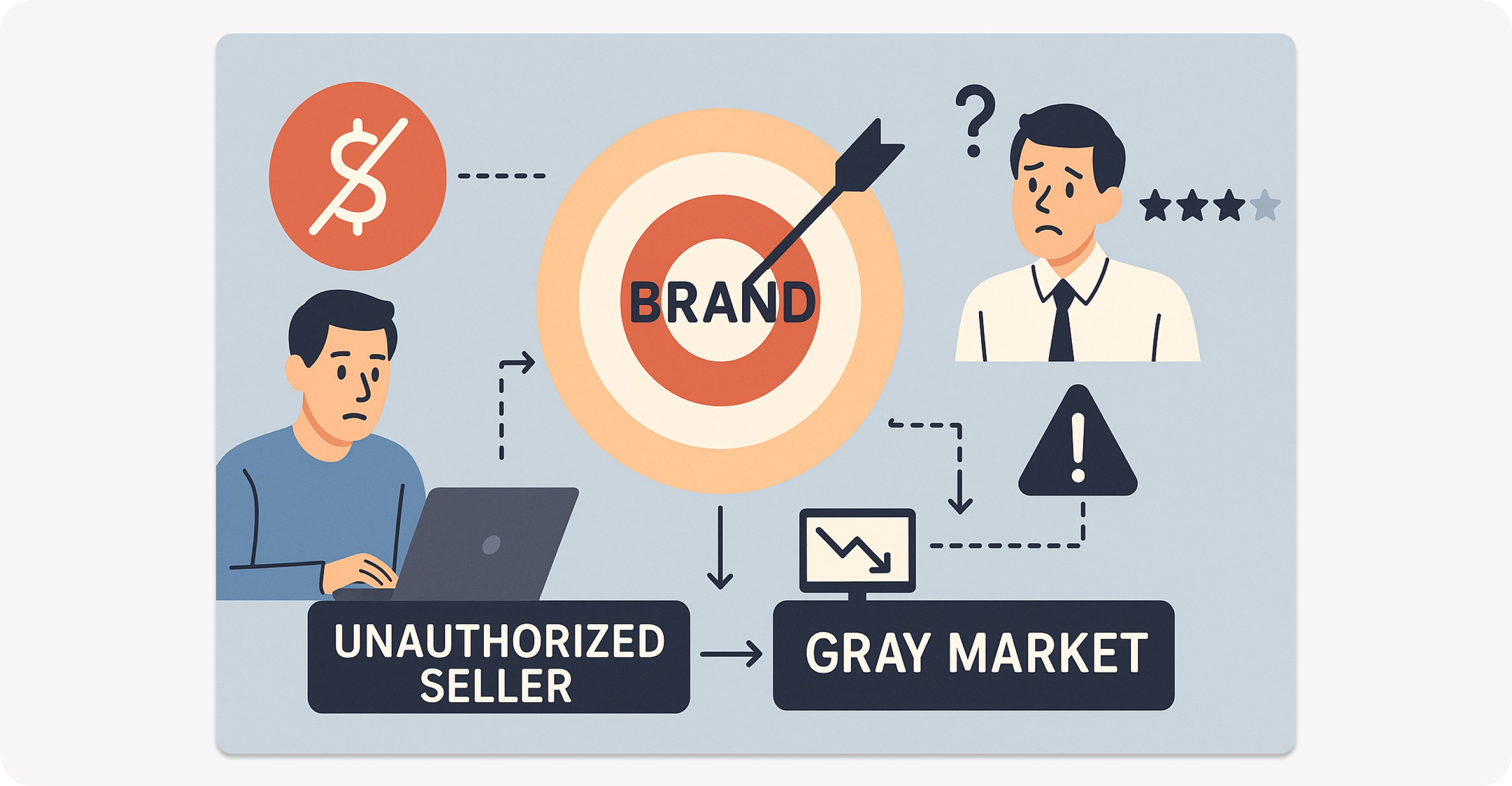
The aforementioned Yukgaejang Bowl Noodle controversy is a prime example showing this structure. A product with a list price in the 27,000 KRW range was exposed at 5,040 KRW due to an internal price input error, and the mistake immediately spread as tens of thousands of orders poured in within a short time. Afterwards, this product appeared on secondhand trading platforms and began to be resold by unofficial sellers at several times the purchase cost, realizing price exposure outside of brand control. This case demonstrates how ultra-low-priced products entering through unofficial routes and exposed on major platforms can collapse both price expectations and distribution strategies in an instant.
This kind of distribution structure negatively affects brands not only domestically but also overseas. In 2025, Unilever identified cases where its beauty products were distributed within the United States without brand consent. About 70% of the products were being shipped from India and had not received US FDA approval. Products delivered through distribution routes where the brand has not intervened in this way can lower trust in quality and safety, affecting the brand image, and even global companies are recognizing the substantial threat of unofficial distribution.
Why Are Unofficial Sellers Hard to Control?
Because unofficial sellers exist outside the brand's direct control system, it is very difficult to sanction them or adjust prices. Representative problems include:
(1) Ambiguity of Identity and Distribution Routes
Since anyone can easily enter online platforms as an unofficial seller, it is difficult to pinpoint the actual operating entity beyond business registration information. Like the Yukgaejang Bowl Noodle crisis introduced earlier, distribution that resells products on third-party channels such as secondhand trading platforms after securing low-priced inventory in a short period is extremely difficult to track and deal with in real time.
(2) Limitations of Legal Action
With official resellers, brands can use means such as warnings, supply suspension, and contract termination in case of price violations based on contracts, but since unofficial sellers have no contract, these measures do not apply. In most cases, brands have no choice but to respond by requesting to stop unauthorized sales by reporting through the platform's customer center or by leaving comments or sending emails to the seller's page.
(3) Re-registering Products After Account Swapping
Even if one account is sanctioned, unofficial sellers can continue their activities by re-registering similar products under a different account. For example, if one account is suspended, they immediately create a new business name or store name to upload the same product again. In a structure where anyone can start selling again just by changing accounts, it is difficult to expect practical sanctioning effects even if unauthorized sellers are blocked. Similar problems occur in the US and Europe. Products imported without the brand's consent are sold without formal quality inspections or standards, and there are even cases of rebranding them as 'new products' by changing the product packaging. Products distributed outside the brand's management framework in this way inevitably lower consumer trust, ultimately acting as a greater risk factor for brand reputation.
(4) Delayed Platform Response
Even if a brand discovers an unofficial seller, the process of reporting to the platform or requesting action usually takes several days or more. However, in the meantime, it is common for the seller to delete the account or disappear after changing information after already selling the products. Brands want immediate action at the time of the problem, but because platforms process requests collectively through internal review procedures or customer center systems, real-time response is very difficult. In addition, platforms do not provide key information such as seller sales, distribution routes, and registration history to the outside, making it difficult for brands to accurately identify the cause of the problem. Under this information asymmetry between brands and platforms, rapid and accurate response to unofficial sellers is structurally limited.
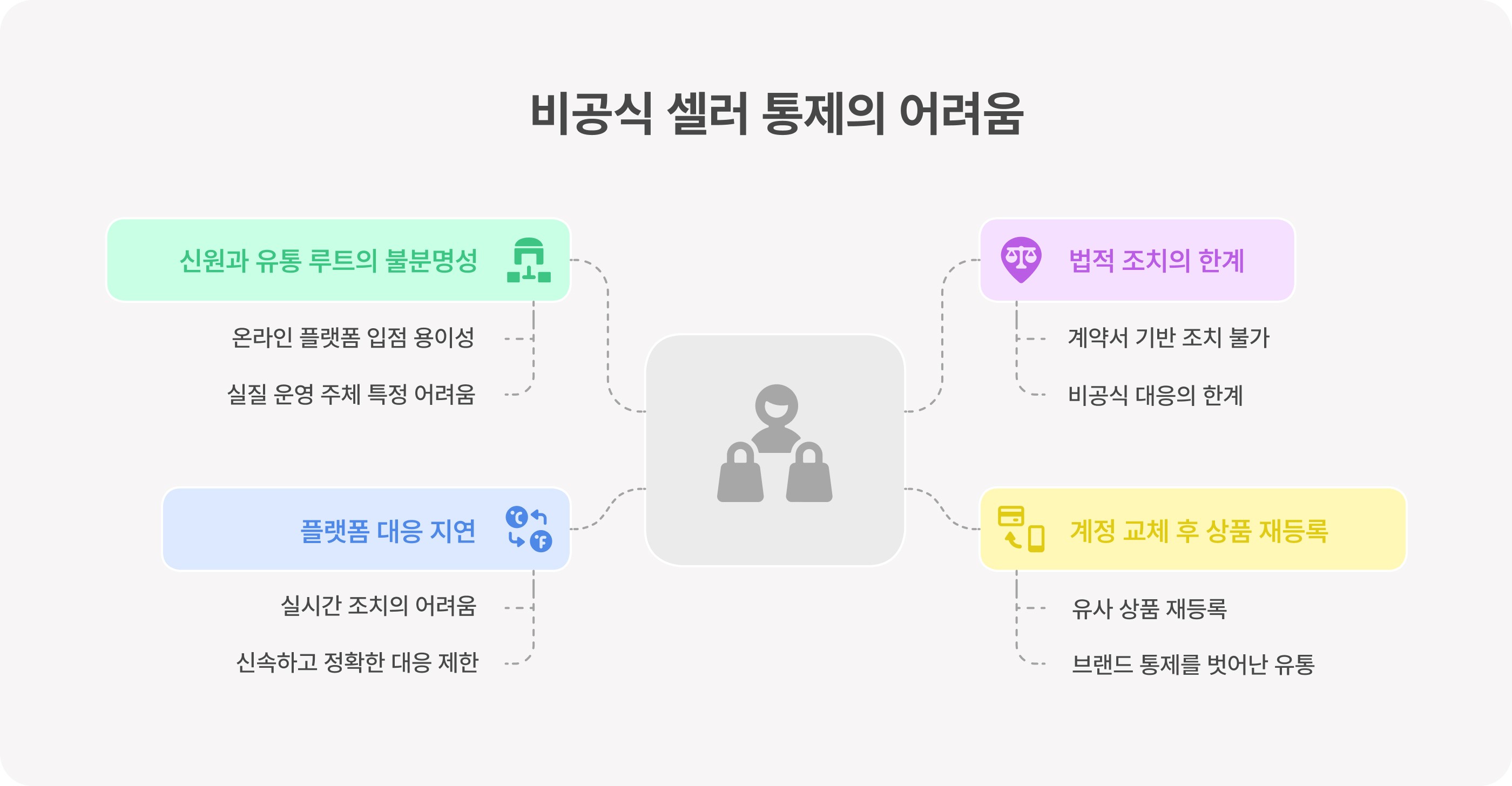
As a result, practitioners have no choice but to repeatedly perform manual monitoring on unofficial sellers or attempt direct contact, making it difficult to establish sustainable response measures. This consumes massive resources in establishing brand strategies and managing distribution order, and unless the problem is solved structurally, a situation where the same issues repeat continues.
Legal Response Trends Against Unofficial Sellers: No Longer a Grey Area
As explained earlier, because unofficial sellers distribute outside contract structures, it is difficult for brands to impose direct sanctions. However, in recent years, global companies have been attempting legal action against such grey market distribution, expanding the possibility of practical sanctions.
Deacons, an Asian regional legal advisory firm, explains that unofficial distribution is no longer a simple grey area, and that precedents and strategies exist for brands to protect formal distribution networks based on intellectual property rights such as trademarks.
JD Supra's International Trade Report also observes a similar trend. In the United States, cases of brands taking legal action based on trademark infringement against unofficial overseas parallel import sellers are increasing, and in some precedents, brand arguments have been accepted by courts.
These global trends show that responses to unofficial distribution are evolving from simple 'requests' to 'legal control'. Although related precedents are still limited domestically, practitioners can set the direction of response strategies based on these overseas cases.
Repetitive Manual Response, a Structure That Grows Inefficiency
(This case is reconstructed based on the price collapse response routine of a Retrix client company.)
As soon as Brand Practitioner A arrives at the office every morning, they open 'Naver Shopping', 'Danawa', and 'Smart Store' one by one. They check if any of their products were exposed at the lowest price again the night before, and check the seller names individually to see who uploaded those prices. They take screenshots, share them with the manager, and summarize and upload the price collapse status on internal communication channels. This is the start of the daily routine.
Next, they check if the same seller appears repeatedly. If the same seller name appears again on another platform, they determine that there is a 'possibility of intentional price manipulation' and prepare to send a Smart Store Talk Talk message. However, on some days no contact information can be found, and on other days it takes more than 20 minutes just to draft a message.
This task is not simply about checking 'who registered the product without keeping the lowest price'. If a seller who breaks the pricing strategy emerges, it can affect actual customer service, advertising operations, and furthermore, the brand's overall image. To respond to this, the practitioner repeats the task of directly typing dozens of products into the search bar every day. It is more complex because price exposure standards differ by platform, and estimating 'where it blew up this time' based on search results is also the practitioner's responsibility.

This routine is repetitive, but improvement is difficult without preparing a structural alternative. Prices change on an hourly basis, and sellers reappear by changing accounts. The manual response method is merely an inefficient routine that continuously exhausts the practitioner's resources.
Strategies to Deal with Unofficial Sellers, Starting Today
Since unofficial sellers are difficult to force measures on based on contracts, it is a realistic starting point for practitioners to start with a 'light response' first. The actions suggested below can be applied to practical work immediately without special systems or tools, and help systematize responses using only internal personnel. This content is based on practical guidelines emphasized similarly in practical response videos suggested by overseas Amazon distribution experts.
(1) Manually Organize a List of Repeatedly Exposed Sellers
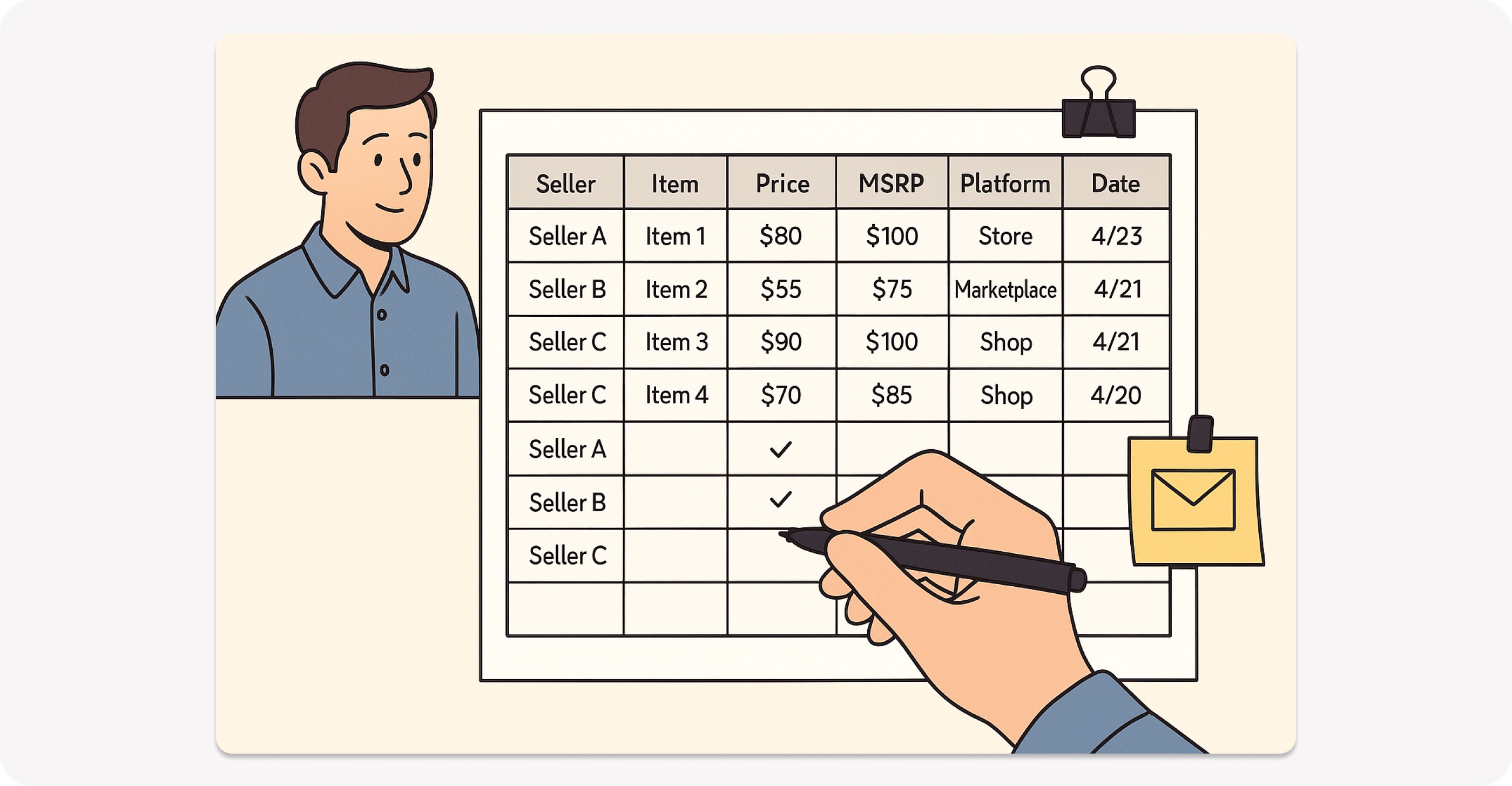
The first method a practitioner can try to respond to unofficial sellers is to manually organize sellers who appear repeatedly. Even without special tools or systems, using Excel or Google Sheets is sufficient to start. By organizing key items such as seller name, product name, exposed price, standard list price, platform name, exposure date, discovery route, screenshot status, and contact history, you can determine whether it is a one-off or repetitive, and set priorities for response.
In particular, to track cases where the same seller reappears by changing only their name or account, it is good to record additional identification information such as store addresses or email addresses together. Such a list goes beyond a simple response record and can be used as evidence for decisions such as internal policy adjustments or entry restrictions when repeated violations occur. Furthermore, if structured so that it can be shared not only with the distribution team but also with the marketing team and advertising operations team, communication efficiency within the organization can also be increased.
(2) Prepare Warning Messages/Contact Templates
When an unofficial seller is selling a company's product at a low price, practitioners often face situations where they must contact the seller directly to request a price adjustment. Preparing warning messages in advance as templates for these times allows for much faster and more consistent responses. For example, preparing sentences such as "This product is distributed under a pricing policy through our official distribution network, and the currently exposed price conflicts with that policy," or "It has been identified that the product is being sold without a formal distribution contract, and we request adjustment to protect the brand."