Price Management
Counterfeit
"Losing Buy Box Winner Status Over a Mere 10 Won?" Coupang Item Winner Risks and Brand Protection Strategies
💡 In this article, you can find the following information.
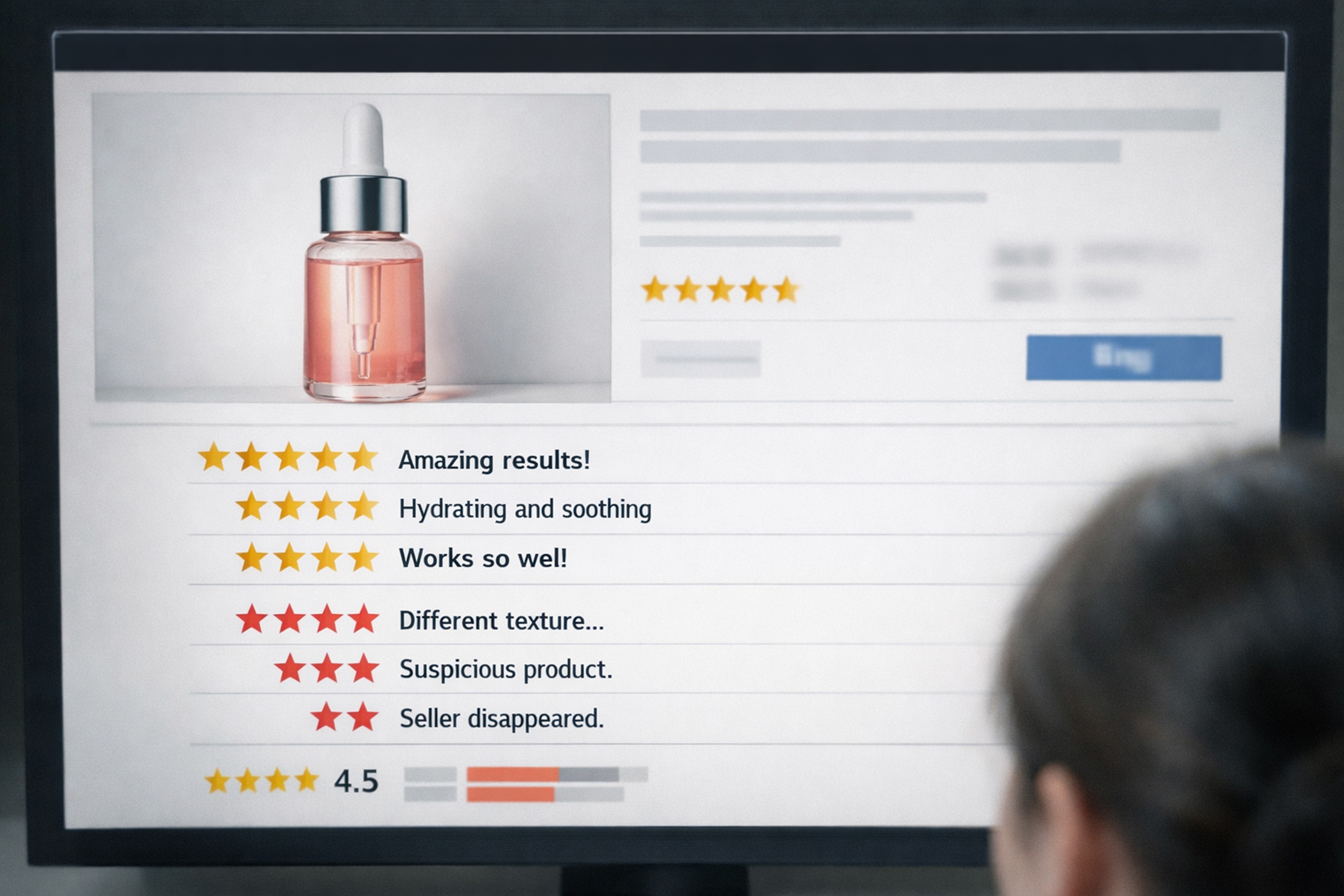
"The review is 5 stars, but the product is a counterfeit?" The bizarre review section shaking up the beauty industry
"Losing my customers over a difference of just 10 won?" The lowest-price system that hands over the market to counterfeiters
The ghost seller's 'hit and run' strategy: Why account suspension is ineffective
"The culprit has already fled, and you're telling me to find the evidence?" The post-response dilemma where the brand takes the full hit
Why 'archived data' is needed: The minimum evidence a brand must secure in the Item Winner structure
The only way to overcome system limitations: The brand's responsibility to prove with 'data'
"The review is 5 stars, but the product is counterfeit?" The bizarre review section that shook up the beauty industry
Imagine going onto Coupang to buy an ampoule from a beauty brand you usually trust and use. At the top of the product page, it is filled with high praise alongside a 5-star rating, such as "As expected, a brand I trust and use," "It's the best for catching inner dryness," and "It's effective for blemishes and redness." Thinking 'as expected, this is the one this time too,' you are about to purchase, but as you scroll down a bit further, you begin to see some strange comments. Perplexing reviews like "The scent and texture are completely different from what I used to use" and "My skin broke out, but I can't get in touch with the seller" are mixed within the same page.
The case of 'Medicube PDRN Pink Peptide Ampoule', which caused a stir in the beauty industry last year, vividly demonstrates this bizarre phenomenon. People clearly bought after looking at the exact same detail page, but some receive genuine products and leave satisfying reviews, while others suffer due to counterfeit products of unknown origin. Why do consumers' experiences diverge so extremely for the same product?
This confusion is not a one-time accident that occurs simply due to bad luck. According to statistics from the Korea Consumer Agency, there were a whopping 447 consultations related to online counterfeit cosmetics received from 2022 to August 2025, and 70% of them occurred on online shopping platforms. The affected items are also expanding indiscriminately beyond perfumes into basic skincare and color makeup areas.
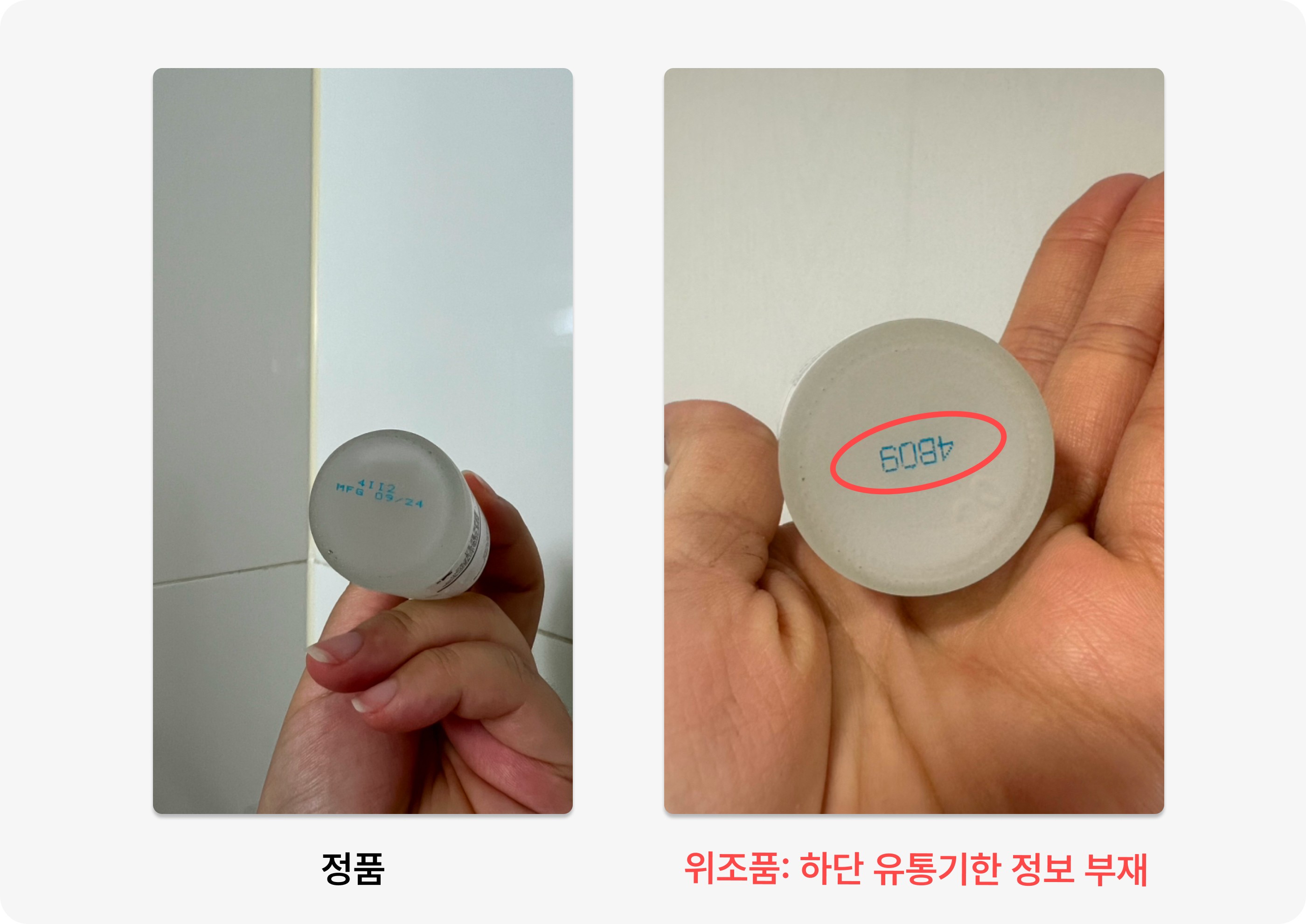
What is even more concerning is that the 'clues' to catch counterfeits are increasingly disappearing. Because counterfeit sellers copy everything from the model cuts on the detail page to the copy exactly as they are to present themselves as genuine sellers, it is close to impossible for consumers to discern authenticity with the naked eye just by looking at the screen. By the time they feel something is strange after applying the product directly and thinking "Uh? The texture is a bit odd?" or "The printing is a bit sloppy?", both payment and delivery are already completed, and the seller in question has often already vanished without a trace.
It is clearly a detail page managed by the brand, so why are counterfeit sellers so boldly occupying someone else's living room? And why do consumers end up buying counterfeit products while trusting reviews of genuine ones? The answer lies hidden in the 'shadow' of a system designed to maximize the platform's efficiency.
"Losing my customers over a difference of just 10 won?" The lowest-price system that hands over the living room to counterfeiters
To understand the aforementioned phenomenon, it is first necessary to look at Coupang's 'Item Winner' system.
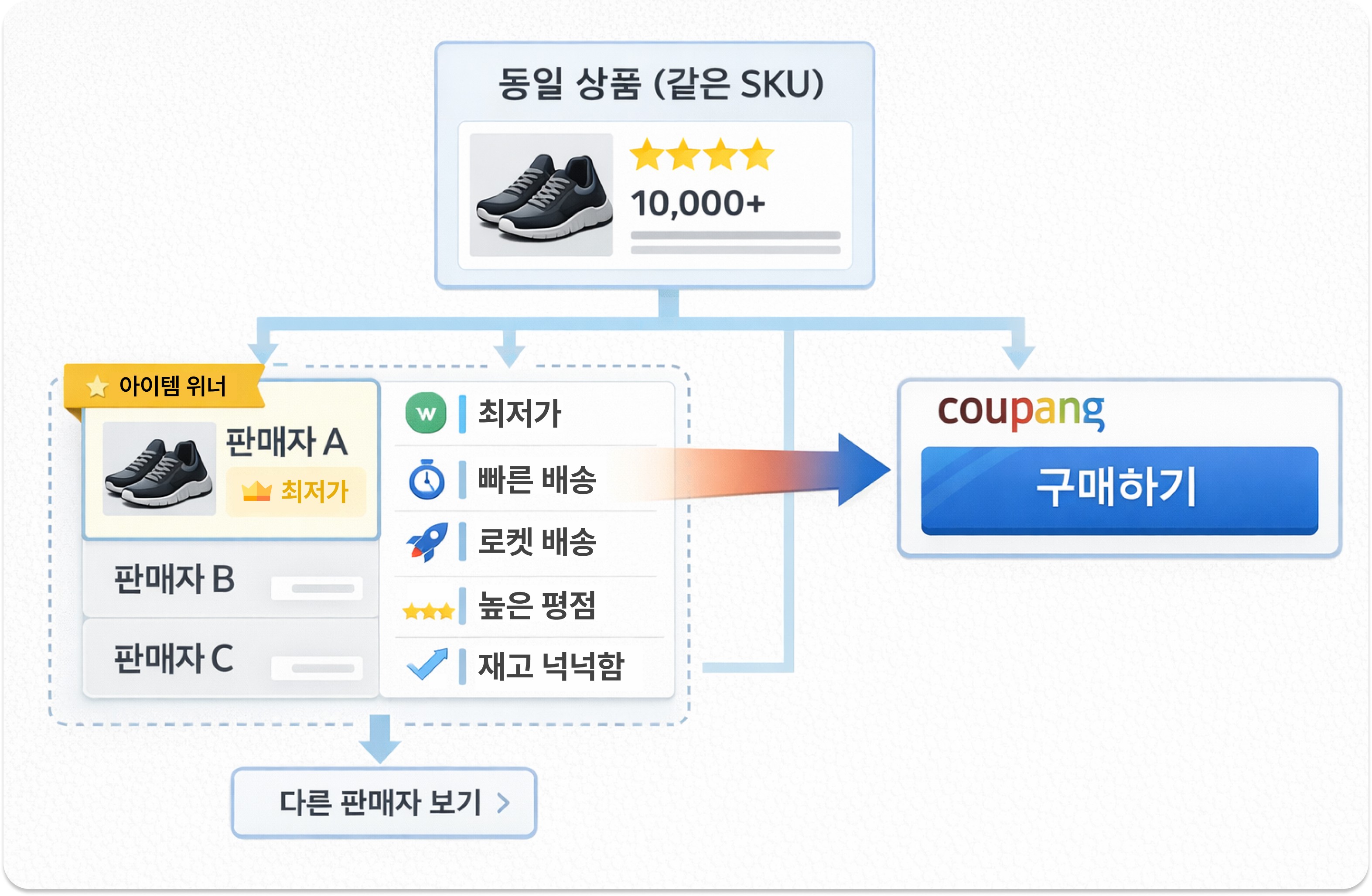
Coupang adopts a structure where, if the same product from the same manufacturer is registered by multiple sellers, the detail pages are not separated by seller but integrated into a single product page. At this time, the seller who is relatively more advantageous in terms of price competitiveness or delivery conditions is exposed as the 'representative seller' of the product, and this very structure is the 'Item Winner', the core link where counterfeits infiltrate.
From the consumer's standpoint, it is an efficient device that allows them to find the lowest price immediately without having to sift through numerous product listings, but at the same time, it is a fatal trap. This is because, usually, when we buy things on Coupang, rather than checking who the seller is one by one before paying, we often click the purchase button trusting the brand name and the star rating at the top of the detail page.
From the perspective of a brand manager, this structure has a very dangerous blind spot. Precisely because of the structure where reviews for a product are tied together regardless of the seller, that 'star rating' that the consumer trusted and clicked might actually belong to a counterfeit seller.
“Reviews built with dedication become a 'shield' for counterfeiters”: The legal absurdity designed by Item Winner
In a typical open market, each seller has their own store, and reviews accumulate in that store. However, under Coupang's Item Winner system, all reviews belong to the 'product itself' rather than the seller. If it is a product based on the same barcode, regardless of which seller the consumer purchased from, all reviews are displayed together in a single review area. In other words, it is a structure where the brand's trust assets, built with dedication through years of communication with customers by the genuine seller, are instantly transferred to an unknown seller who set the price just 10 won lower, solely for the reason of being the 'lowest price'. It means that the brand's fierce, hidden efforts to build trust end up being relegated to a tool that guarantees the credibility of a counterfeit seller just because of a price difference of a few won.
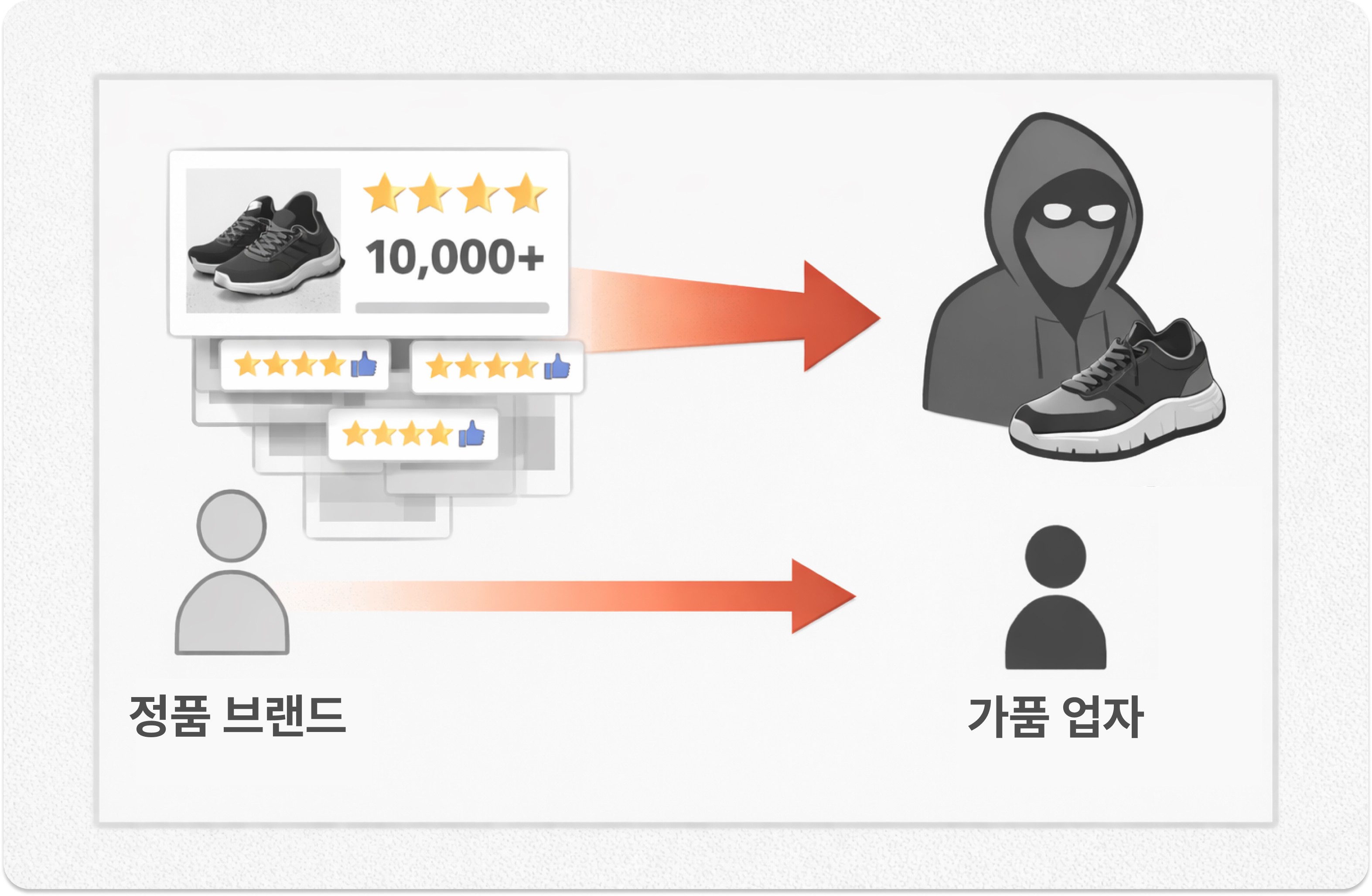
Through this structure, counterfeiters very easily take a 'free ride on trust'. The moment a counterfeit seller hijacks the Item Winner position, the reviews built by the genuine seller are still openly exposed at the top of the detail page. Consumers end up believing, "There's no way it's a counterfeit with reviews this good." In the end, genuine reviews have become a shield that helps sell counterfeits.
What is scarier is that this 'representative seller' changes in real-time. Even if our brand's directly operated mall was the winner this morning, in the afternoon, an unknown company that lowered the price by even 10 won or adjusted the conditions to be slightly more favorable can become the winner. Because it is a structure where only the seller exposed at the top changes while the product page configuration and reviews remain the same, it is difficult for even the brand headquarters to know who is currently selling counterfeits pretending to be our product unless they monitor in real-time.
Ultimately, this structure forces consumers to focus only on 'what product they bought' rather than 'who they bought it from'. While the verification process at the seller level becomes blurred, counterfeiters sneakily settle into the market, hiding behind the alibi of 'reviews' authorized by the system. The fact that trust assets accumulated by a brand over several years are degraded into a distribution channel for counterfeits—this is the painful shadow of the Item Winner system.
The 'hit-and-run' strategy of ghost sellers: Why account suspension is ineffective
By the time you try to catch them, they have already vanished? 'Hit-and-run' counterfeiters
Counterfeiters who abuse the Item Winner system are often called 'ghost sellers'. It is because they literally appear and disappear like ghosts. The method is surprisingly simple yet meticulous. First, they quietly enter a popular brand page with the lowest price at a minutely lower price difference to seize the 'winner' position. Then, backing themselves with the credibility (reviews and star ratings) accumulated by the existing genuine seller, they sell counterfeits in large quantities within a few hours to a few days to maximize profits.
What is truly scary is what comes next. Just before reports from counterfeit buyers are received, the platform's monitoring system operates, and the account is suspended, they close the account themselves and go into hiding. In many cases, by the time the damage is confirmed and the platform tries to take measures such as suspending sales or blocking exposure, they have already taken the sales proceeds and vanished.
The vicious cycle of 'infinite re-entry' by just changing names and appearing again tomorrow
You might ask, "Then can't we just block that person from entering again?" However, they are already looking one step ahead. Although platforms put forward strong punitive regulations such as 'suspension of accounts for repeated infringement,' ghost sellers secure multiple third-party names or ghost corporations in advance in preparation for their accounts being blocked.
When one account is suspended, counterfeiters immediately resurrect as a new 'ghost seller' using a corporation under a different name they prepared. If they caused trouble and disappeared under the name 'A Distribution' today, they reappear on the exact same detail page under the name 'B Trading' tomorrow. Under trademark law, the distribution of counterfeit goods is subject to strict punishment, but in a structure where it is difficult to identify the actual operating entity, sanctions at the 'account level' are merely cutting off the tail. Ultimately, as long as a structure remains where the short-term profits from selling counterfeits are greater than the fines or sanctions, it is extremely difficult to break the infinite loop of their 'corporation switching'.
In this way, one-dimensional responses that only block 'accounts' without stopping the fundamental cause, the 'person', have clear limitations in stopping the behavior of counterfeiters who persistently resurrect by just swapping business information.
The problem is that Coupang's Item Winner system provides a perfect 'hiding place' for these ghost sellers. Exploiting the fact that the appearance of the detail page remains the same even if the representative seller changes, they copy the official brand detail page entirely and hide behind the system.
Detail page 'copy and paste' that almost fooled even brand employees
The counterfeit controversy is not limited to price or seller issues. There are also increasing cases of copying official detail page images exactly to present themselves as genuine sellers, so that customers cannot even suspect until they click to view the seller information after hijacking the Item Winner position. APR, which operates Medicube, has also stated that damage cases are increasing where they unauthorizedly duplicate detail page images of official sellers through open markets and then deliver counterfeit products.
When model cuts, detailed descriptions, and page layouts are replicated similarly, it is easy for consumers to lower their guard. At this time, the clues that consumers can check with the naked eye are heavily limited to subtle differences in texture, typos in explanatory text, or omission of mandatory labeling information. This is why it is not easy to distinguish unless one has prior experience using the genuine product. In the end, consumers click the payment button without suspicion, and even if they realize the damage late, they fall into a swamp that is hard to recover from.
Is the burden of proof on the brand? The dilemma of post-incident response where the brand takes the fall
The golden time of counterfeits created by tedious remedy procedures and consumers 'giving up on refunds'
When you bought a counterfeit, have you ever let it slide, thinking, "Oh well, let's just say I lost a few tens of thousands of won"? Actually, one of the unexpected backdrops behind the unending distribution of counterfeits lies in the 'low response rate' of affected consumers. According to a survey, the percentage of people who do not request a refund even after realizing it is a counterfeit reached a whopping 58.6%. As for the reason for giving up on refunds, the response "the procedure is complicated or takes a long time" was the most common at 60.4%.
This 'annoyance' of consumers becomes the best opportunity for counterfeiters. During the time it takes for consumers to delay refund requests and for the platform to enter into an investigation, black sellers have already sold thousands of counterfeits, laundered the funds, and disappeared. The very moment we think, "I'll give up because the procedure is complicated," ends up buying the 'golden time' for counterfeiters to run away safely.
Decline in trust and safety risks for which the brand takes the fall
From the brand's perspective, it is upsetting that sales are cut, but what is truly scary is the 'distrust' of customers. In particular, because beauty products directly touch the skin, safety risks due to unclear ingredients are fatal. A customer whose skin broke out after using a product without knowing it was a counterfeit turns away, thinking "I can't use this brand's products anymore," rather than going to find and argue with the counterfeiter.
Even if the distribution of counterfeit goods cannot be blocked entirely, if the brand does not show an active response to prevent the damage from growing, customers will judge it as "a brand that does not protect me." The counterfeiter just needs to leave with the money, but the remaining brand has to pour in multiple times the effort to recover its unfairly tarnished image and win back departed customers.
"Prove it yourself that it's counterfeit": The high wall of the post-incident reporting system
Of course, platforms do not neglect the counterfeit issue. Currently, major platforms, including Coupang, operate intellectual property (IP) protection programs and put forward a 'zero-tolerance policy' regarding counterfeit distribution. They respond by taking measures such as refunds, sales suspensions, and blocking exposure when confirmed as counterfeit. They also operate monitoring teams and reporting programs to prevent counterfeit products. However, the point of contention is not the existence of the policy itself, but who bears the burden of proof. This is because the system mainly centers on a 'post-incident reporting system' where, for sales suspension or account blocking, the right holder (brand) must purchase the product in question directly to prove it is a counterfeit, or submit original evidentiary materials regarding the theft of the detail page.
The problem is the difference in response speed that occurs as this burden of proof is excessively shifted to the brand company. While the brand manager hurriedly checks the goods, makes a counterfeit determination, and prepares and sends the documents, will the counterfeiters stay still? While the speed at which counterfeiters hijack the Item Winner and pour out volume accelerates in real-time, it takes as little as a few days to as much as several weeks for the brand to discover this, collect evidence, and pass the platform's review. While the platform's management system remains at post-processing, ghost sellers have already achieved their purpose and prepare to disappear. With the 'post-incident reporting' method that cleans up only after an accident occurs, it is virtually impossible to catch a ghost that has already run away. Ultimately, what is more important than 'reporting' is the power of 'recording' to secure evidence before they run away.
The minimum evidence a brand must secure: 'Real-time data preservation' that catches Item Winner risks
The point where a brand becomes most disadvantaged in the Item Winner structure is 'after' the representative seller is replaced. Because of the structure where the exact same detail page as the official one and 5-star reviews are exposed in their entirety regardless of who the seller is, consumers end up believing that they are still buying from the brand's official source or genuine store. In this structure, unless it is confirmed at that point "when, which seller became the winner, and under what conditions," the burden of proof in the post-incident response stage becomes much heavier.
Therefore, what is practically important is not concluding whether it is counterfeit, but recording without missing core changes in the Item Winner structure, such as the timing of representative seller replacement, seller information, and price changes. This is because such information becomes difficult to verify easily over time, and leaves even less trace once the seller cleans up the account.
Retrix connects at this point as a role in reducing the 'evidence vacuum' that repeatedly occurs within the Item Winner structure. It is a way to help brands secure in advance facts they will have to explain later.
"It looks similar" is not evidence: '0.1% numerical evidence' created by AI
Detail page theft also becomes more difficult to respond to when coupled with the Item Winner structure. Even if the seller changes, if the model cuts and descriptions are similar, it is easy for consumers to perceive it as a genuine seller. In particular, because counterfeiters sophisticatedly replicate not only the brand logo but also the package and container, it is virtually impossible to discern authenticity just by looking at the appearance.
Just looking at the recent case of Medicube, it was no different. Until they opened the actual counterfeit product, it was almost identical to the genuine one, but looking closely, typos and spelling errors were discovered where they slyly swapped 'Collagen' to 'Gollagen' and 'ml', the volume indication, to 'mi'. Explaining logically 'critical differences' that are easy to miss with the naked eye, like subtle font thickness or typos in copy, is not an easy task.
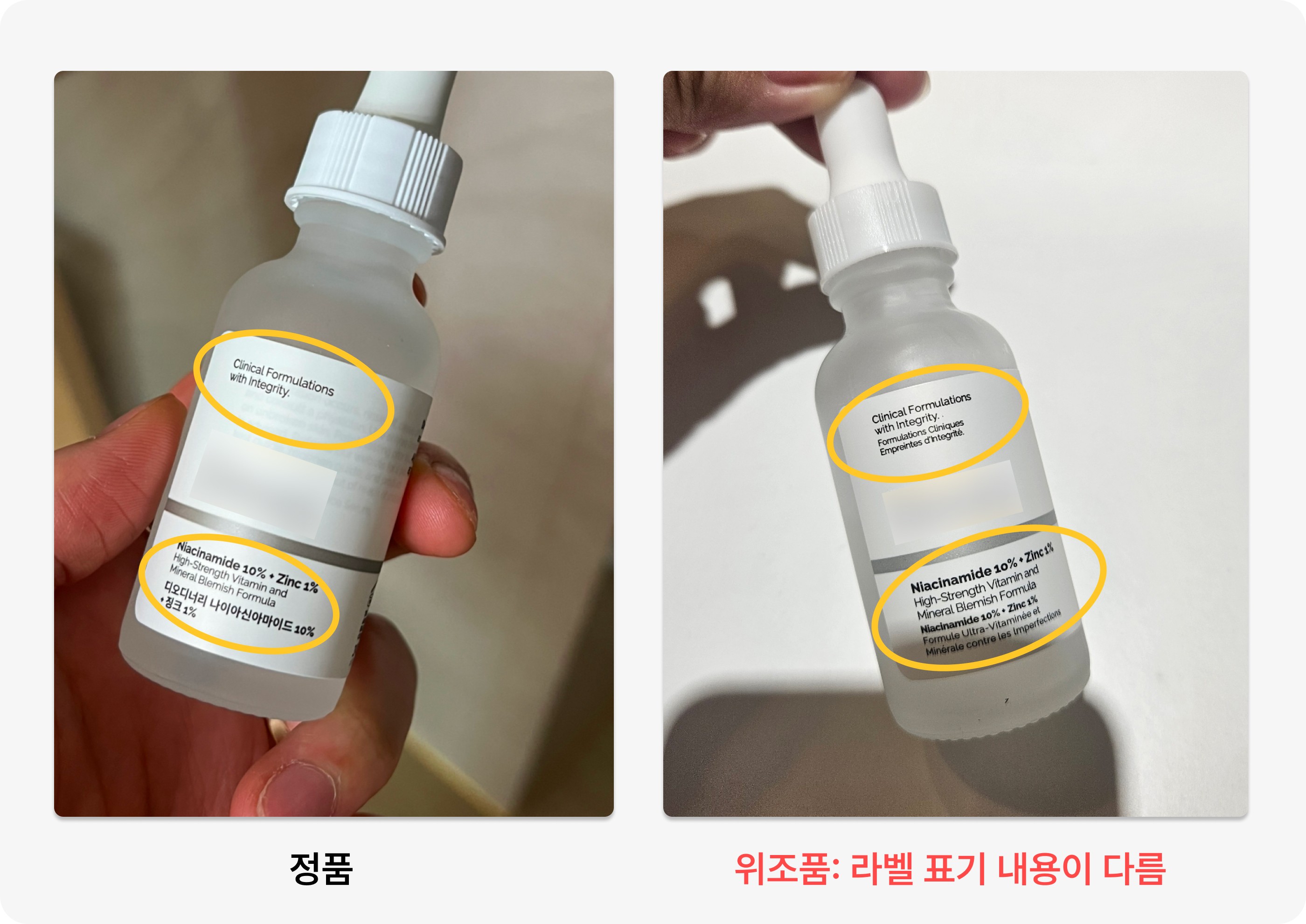
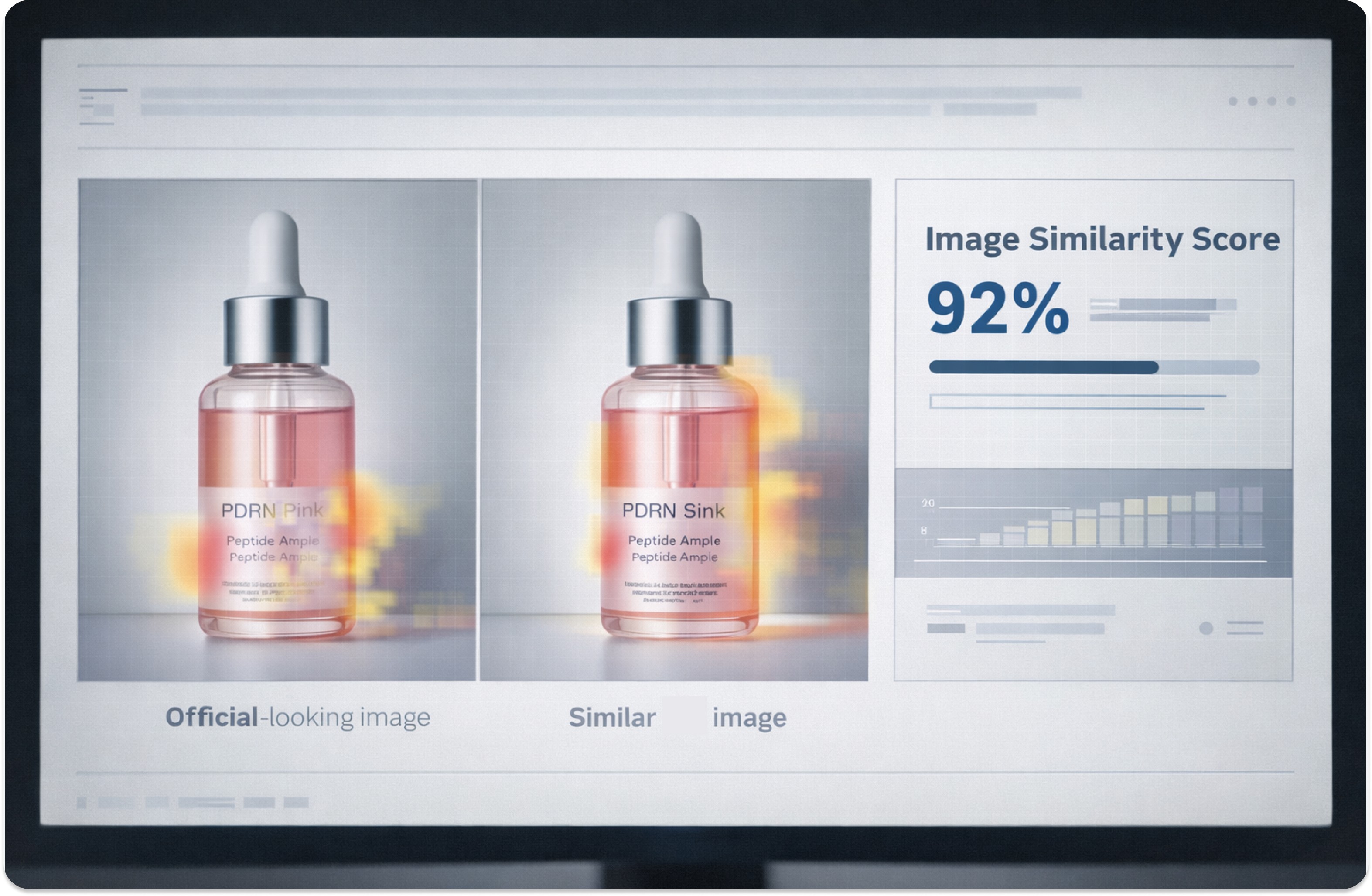
What is needed in such times is not a sensory judgment that "it looks similar," but objective evidence that can clearly show which parts are how similar and different. Retrix's AI image similarity analysis compares official images with sales images to present similarity in the form of scores and heatmaps. Because it proves by quantifying even subtle text variations in packages or minute traces of theft in thumbnails, brands can explain suspected counterfeit situations to platforms or investigative agencies more clearly and professionally.
In the end, what a brand must protect is not 'post-incident response' but 'explainable records'
Once a situation has already occurred, it becomes much more difficult to explain the causal relationships required for a response. Therefore, practically, rather than clinging to post-incident cleanup, leaving records immediately at the moment a suspicion signal is captured is much more efficient in terms of risk management.
Retrix tracks the frequent representative seller and price fluctuations of Item Winner in real-time, and proves even subtle traces of theft on detail pages that are hard to catch with the naked eye as clear numbers through AI image similarity analysis. It is a strategic tool that perfectly fills the gaps in 'securing evidence', where brands are bound to be most vulnerable within the Item Winner structure.
Brand responsibility proven by 'data'
In the end, the counterfeit issue created by Coupang's Item Winner and ghost sellers is not a simple 'unlucky accident', but a shadow inevitably left by the platform's efficiency-centered system. Counterfeiters hide behind the shield of reviews and trust built by the brand over several years, hijacking the living room in real-time, and disappearing like ghosts before evidence is left. Relying only on the platform's post-processing leaves the burden of proof too heavy, and the customers' sense of betrayal and safety risks that occur in the meantime remain entirely the brand's responsibility.
Now, brands must move away from the vague expectation that "someone will solve it." Although the distribution of counterfeit goods cannot be completely eradicated, it is possible to reduce the golden time during which damage spreads. Securing 'preserved data' yourself, such as records of the moment the Item Winner changes and objective figures of detail page theft, is the only weapon to block counterfeiters who resurrect like zombies.
Unrecorded facts cannot be evidence. Do not miss the traces of the winner changing silently even at this very moment. Thorough data recording is the strongest promise to take responsibility until the end for customers who trusted and chose my brand.