Counterfeit
Unofficial Seller Management
Coupang and Naver's $4.5 Billion Counterfeit Incident: What Brands Need to Check First

💡 In this article, you can find the following information.
What should you check first when a counterfeit product incident occurs?
Can price monitoring also find counterfeits that are priced similarly to genuine products?
Should counterfeit reporting be done case-by-case, or by seller?
Where should counterfeit products be reported?
How should you guide consumers when a counterfeit product issue arises?
Frequently Asked Questions on Counterfeit Product Response in Open Markets
Open Market Counterfeit Incidents: What to check even if not on the detection list
On September 17 last year, the Ministry of Food and Drug Safety (MFDS) and the Intellectual Property Office caught a broker distributing Chinese counterfeit goods domestically and handed them over to prosecutors, which became a hot topic for a while. It was announced that cosmetics and health functional foods sold on open markets such as Coupang and Naver were counterfeits made in China, with the sales volume amounting to 61 types, approximately 83,000 items, worth about 4.5 billion won. Hearing this news, many brand managers probably searched to see if their own brand's products were on the bust list.
If your brand is not on the list, you might feel relieved initially, but it's hard to completely let your guard down. In the briefing, the MFDS explained that "the fake products were somewhat cheaper than the genuine ones, but the price difference was not huge," and revealed that while orders were taken on open markets, the actual delivery was made from domestic logistics warehouses. It was a structure where it was highly likely difficult to spot the counterfeit just by looking at the sales screen or price. In times like this, rather than vaguely searching for "are there fakes of our products too," it is more realistic to start by checking your brand's current sales records and reporting systems.
In today's post, we will look at what brand managers should check first when a counterfeit goods distribution case occurs, how to keep price records, how to separate counterfeit reporting from agency reporting, and what to prepare for customer inquiries, in that order.
When a counterfeit goods incident erupts, what should you check first?
Open market counterfeit distribution refers to cases where non-genuine products are registered and sold on open markets as if they were genuine. When this situation occurs, it is important not to stop at checking if your product is on the bust list, but also to look at which sellers and channels your products are currently being distributed through.
In this case, a Chinese shipper sent counterfeit goods to a domestic warehouse via international express and overseas courier, and when an order was received on an open market, a domestic broker sent it from that warehouse to the buyer via courier.
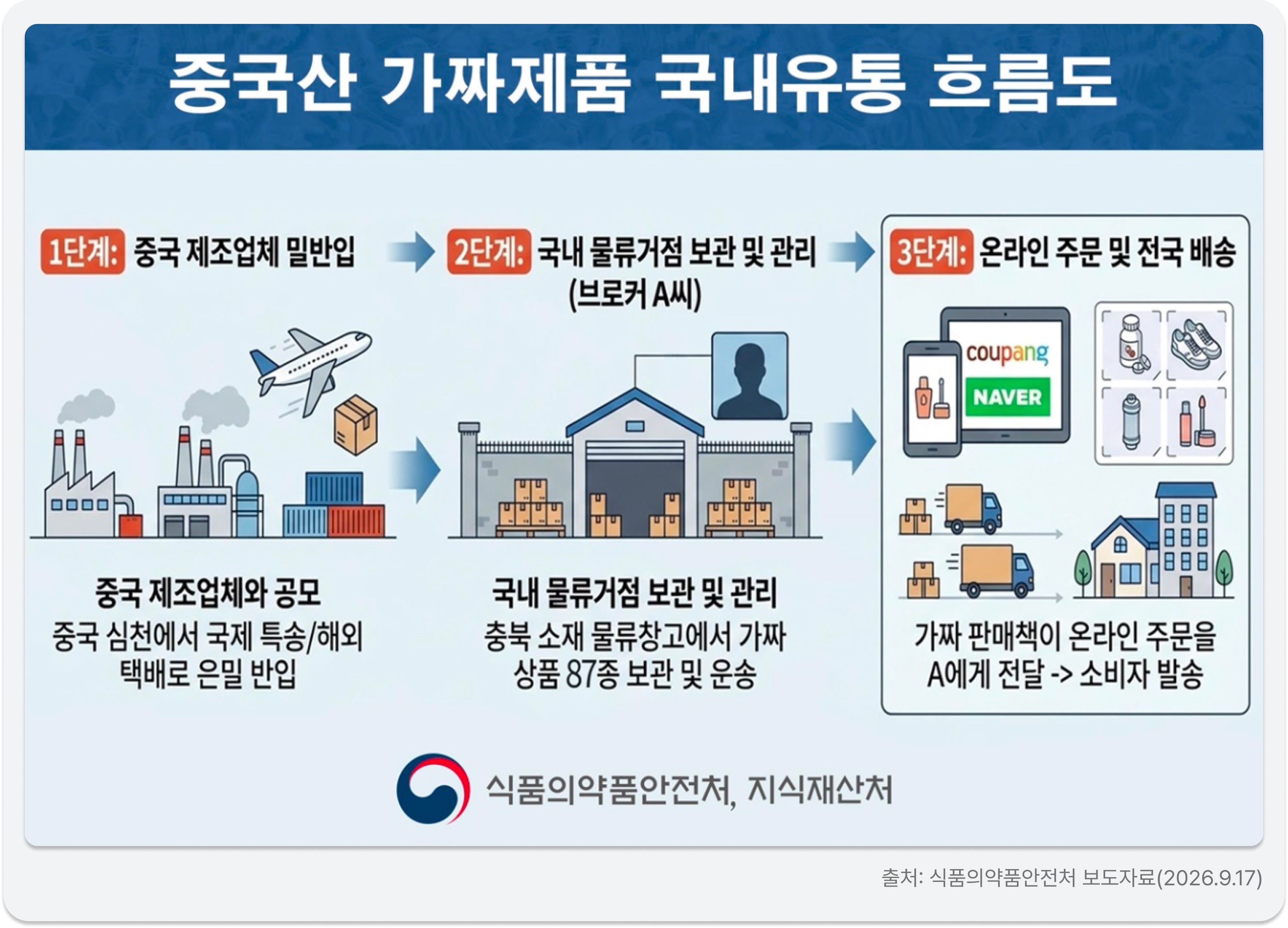
When a similar incident occurs, you can first check the following four things.
Check the list of busted items: First, check if your brand and products are included, and mark the busted product categories together to help understand the scope of how far the incident has extended.
Record the open market sales pages where our products are being sold: Keeping records of the seller's name, product page URL, price, confirmation date/time, and screen captures will give you a standard for comparison later if the page goes down or the seller changes.
Cross-reference with the official seller list: Just because there is a seller not on the official list doesn't mean you should report them immediately; rather, this is a step to separate them as targets requiring additional confirmation. Narrowing down the targets like this allows you to manage subsequent records and reports within a manageable scope.
Share the incident details and the official seller list with the CS team: When a counterfeit goods case becomes widely known, inquiries asking about authenticity may come in even if your products are not on the bust list.
By organizing your current sales status and official distribution network first like this, it becomes much clearer what you need to check in the subsequent price recording and reporting stages.
Can minimum price monitoring stop counterfeits?
As mentioned earlier, the counterfeits in this case were somewhat cheaper than the genuine products, but the price difference was not huge. Minimum price monitoring is an operational method of periodically checking and recording the seller offering your product at the lowest price on open markets, but with this level of price difference, it is highly likely that it did not stand out conspicuously on the minimum price list. This means it is difficult to filter out counterfeits through price monitoring alone.
If you report solely based on the price being low, you might mistakenly report legitimate sellers. Conversely, if you let it slide because the price is similar, you might miss counterfeits being sold at prices close to genuine products.
Therefore, it is better to use the price data gathered through minimum price monitoring as a record to leave a sales history rather than as a basis for determining counterfeits. Later, when reporting a suspected counterfeit seller to a platform or agency, having a record of when and at what price it was being sold allows you to explain the situation much more specifically. In cases where distribution has continued for a long time, just having the confirmation point in time and price trend recorded helps organize the seller's sales history.
If you have recorded the sales page earlier, it would be good to add two more things here.
1. Whether additional discounts such as coupons or card discounts apply
2. The date you first verified the seller
Both of these are items that are easy to miss. Without the discount applicability, you end up judging solely by the displayed price, and without the first verification date, it becomes difficult to explain from when your side started identifying the sale.
Should counterfeit reporting be done case-by-case or seller-by-seller?
When reporting counterfeits, whether to submit only one problematic sales page or the accumulated records of the same seller together depends on the records you have built up so far. If the same seller repeatedly registers similar products, you need the accumulated records to have a basis for raising an issue on a seller-by-seller unit.
Just because one sales page has been taken down doesn't mean the problem with that seller is over. This is because there are cases where the same seller registers similar products again after the existing page disappears. To reduce the hassle of recreating report materials each time, it is much more efficient to continuously build up reporting records by seller.
Record Item | Reason for Keeping |
|---|---|
Date/Time of Detection | The baseline for explaining the sales period and re-appearance intervals |
Seller Name and Seller Info Screen | Evidence showing they are the same seller when grouping by seller unit |
Product Page URL and Full Screen Capture | Records that remain even after the page goes down. Save so that the product name, price, and seller name are visible on one screen |
Use of Detailed Page Images | If they used images copyrighted by the brand as-is, you can review copyright infringement reporting separately from counterfeit reporting |
Request Date for Action and Result | As rejection reasons pile up, you can see what points need to be supplemented in the next report |
Re-appearance Status and Date | The baseline for verifying sales history after action was taken |
As these records accumulate, you will be able to specifically explain when reporting, such as "This seller was caught in how many cases since when, and it appeared again even after action was taken."
Where should counterfeits be reported?
Where to report counterfeit goods depends on what action you want. If you need action taken on sales posts or sellers, you review platform reporting, and if you need an investigation into the distribution or manufacture of counterfeit goods, you review reporting to government agencies.
In this case, the distribution structure was confirmed through an agency investigation. The Intellectual Property Office and the Special Judicial Police of the MFDS obtained information on the distribution of counterfeit goods in open markets and conducted a joint investigation, during which the warehouse and supply routes behind the sales pages were identified. The offenses busted included violations of the Trademark Act, the Cosmetics Act, and the Health Functional Food Act. Since trademark infringement is investigated by the Trademark Special Judicial Police of the Intellectual Property Office, and violations of food and drug laws are investigated by the Central Investigation Unit for Harmful Products of the MFDS, both agencies were involved in one case.
It was also announced that as a result of a precise test of the 12 types of seized functional cosmetics and health functional foods, functional ingredients of cosmetics and indicator substances of health functional foods were not detected at all. It was a case that required an MFDS investigation because not only the counterfeit status but also the quality and safety issues of the products themselves were revealed.
How do platform reports and agency reports differ?
The platforms, the Intellectual Property Office, and the MFDS each have different actions you can request.
Classification | Platform Report | Intellectual Property Office Report | MFDS Report |
|---|---|---|---|
What is Requested | Platform actions regarding sales posts and sellers | Investigation into trademark (counterfeit goods) infringement | Investigation into products violating food and drug laws |
Channel | Rights infringement reporting of each open market | Intellectual Property Infringement One-Stop Reporting and Consultation Center (1666-6464) |
For a first-discovered sales page, you can start with a platform report. However, if the problem does not end with a single action on a post as shown below, you can also review reporting to an agency.
The same problem repeats even after action is taken by the platform
The same problem continues across multiple open markets
Quality or safety issues are suspected based on the details displayed on the detailed page or consumer inquiries
You do not have to choose just one of the two. You can continue with platform reports even while proceeding with agency reports. What is important here is materials that can identify the seller and the selling activity. The official infringement report of the One-Stop Reporting and Consultation Center guides you to submit the purchased physical product along with the payment details and seller information, and if you do not have the physical product, you can submit the sales post URL and site name through a simple tip-off. If a received report is judged to be a counterfeit product through appraisal by the trademark holder, it leads to a Special Judicial Police investigation by the Intellectual Property Office. If the trademark is not registered domestically or if the rights holder refuses appraisal, it will not lead to a Special Judicial Police investigation. The seller-by-seller reporting records accumulated earlier can be utilized as they are when organizing materials required for agency reporting.
How should we guide consumers when a counterfeit goods issue arises?
When a counterfeit goods incident occurs, it is good to also prepare how to respond to consumer inquiries. The key is to let consumers directly check official sellers, and to make sure inquiries about authenticity can be answered with the same standard.
Even in this announcement, it was advised that when purchasing famous products in online open markets, consumers should use official sellers certified by the brand or manufacturer, and if forgery or alteration is suspected, they should inquire with the customer center of the respective company. In the end, the place consumers search for again to check authenticity is the 'brand.' If official seller information and response standards are not organized on the brand's side, it becomes difficult to answer consumer inquiries consistently.
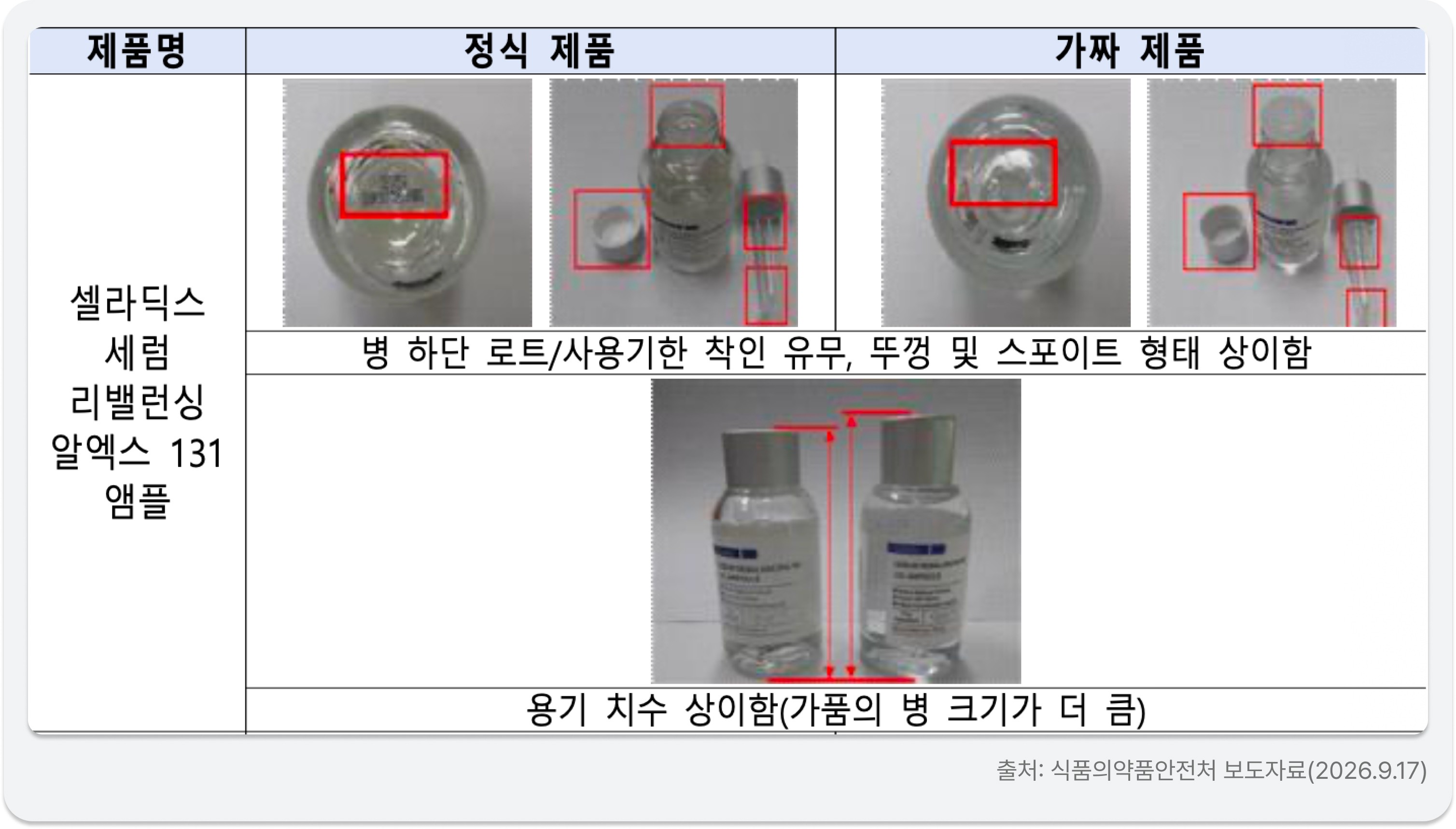

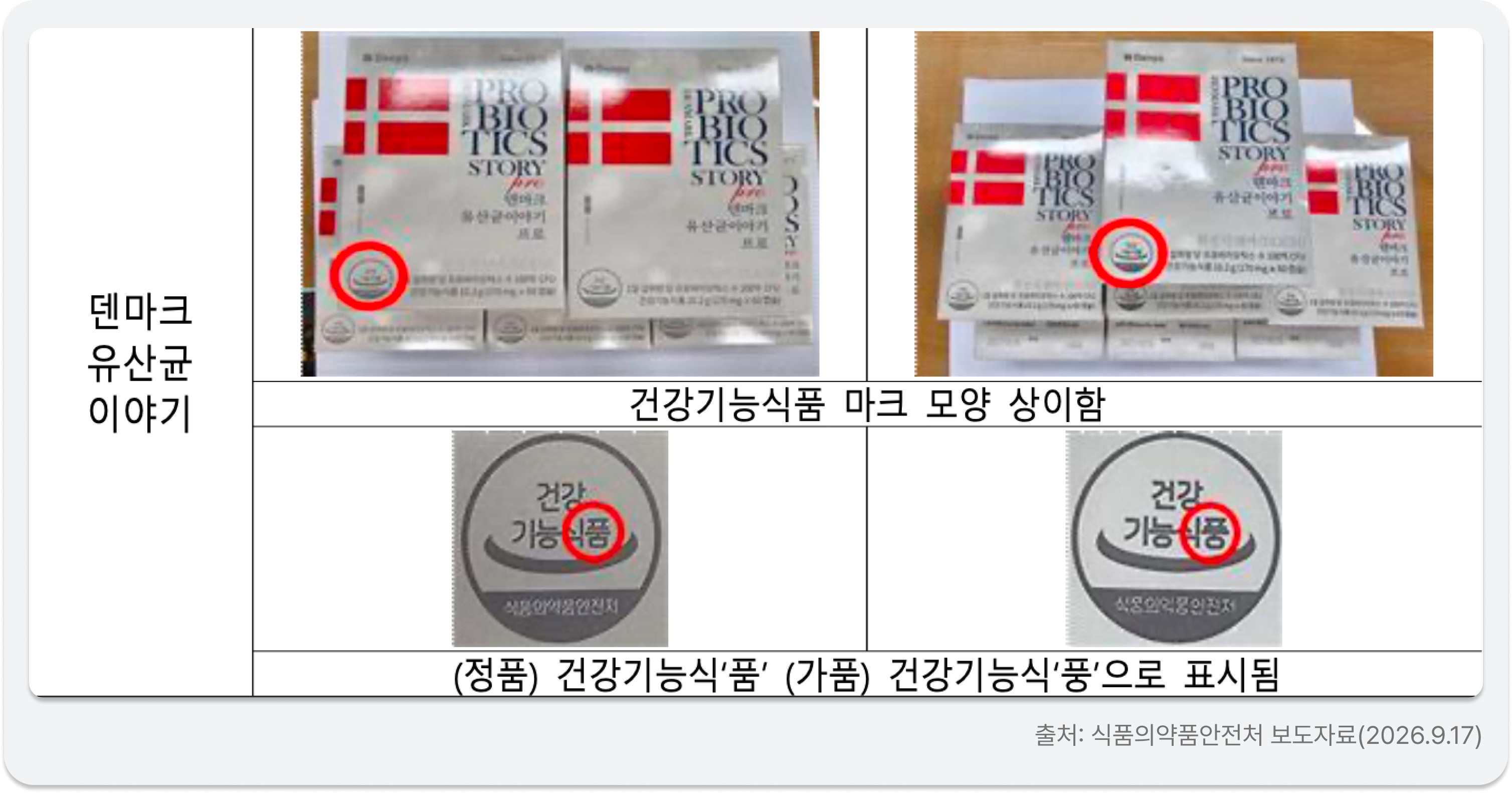
It is good to check two things first before inquiries flood in.
Official Seller List Page: Gather the online stores and offline shops that officially sell our products in one place, allowing consumers to check them with a single link. Writing down the names of official stores for each open market can also reduce confusion with sellers of similar names. If the list is long, there is also a way to let them directly search for the seller's name. For example, Samsung.com operates 'Find Samsung Online Official Partner' so that users can search and check the name of official partners.
CS Response Standards: Set in advance what information to receive and what details to guide when inquiries about authenticity come in. For example, receiving the place of purchase, purchase date, and product photos, and guiding them to the official seller list and subsequent processing procedures.
Consumer inquiries also serve as a channel to let the brand know about sellers they haven't verified yet. The purchase location information received from inquiries can be left together in the seller-by-seller reporting records organized earlier.
However, just because a consumer received an answer from a platform saying it is genuine does not mean the brand must accept that judgment as is. Since each platform has different standards and methods for verifying authenticity, judgments may differ even for the same product. There was actually a case where different judgments came out from a platform that verifies based on distribution documents and a platform that directly inspects physical goods, and this difference was covered separately in Why Authenticity Judgments Differ by Platform.
Responding to Open Market Counterfeits, FAQ
Q. Was the 4.5 billion won counterfeit incident amount sold solely on Coupang?
No. According to the announcements by the MFDS and the Intellectual Property Office, about 83,000 counterfeits distributed in online open markets including Coupang and Naver were worth about 4.5 billion won. The amount for each platform was not disclosed in the announcement.
Q. Can a seller selling genuine parallel imports be reported as counterfeit?
Just being genuine does not immediately make them targets for counterfeit reporting. Supreme Court precedents view parallel imports as not being trademark infringement if they are goods on which a trademark was affixed by a foreign trademark holder or a legitimate licensee, and requirements are met, such as the overseas and domestic trademark holders being identical or closely related, and there being no substantial difference in quality. Conversely, if these requirements are not met, even genuine goods can become domestic trademark infringements, so it is difficult to conclude that there are always no problems just because they are genuine. Also, if a seller copied and used detailed page images protected as copyrighted works without the rights holder's permission, copyright infringement can be reviewed separately. If they displayed themselves as if they were an official seller or official importer, causing consumer confusion, whether it constitutes unfair competition can also be reviewed separately.
This answer is a general explanation to aid understanding. Since actual cases may differ in judgment depending on the facts, please consult a professional such as an attorney for specific legal advice.
Open Market Counterfeit Incidents, things to check even if you are not on the bust list
This incident showed that it is difficult to filter out fakes just by price or sales screens. As such, how many records have been built up regarding sellers dictates the quality of subsequent reporting and consumer response.
Leave prices and sales histories as records, not as bases for determination. When records of the same seller accumulate, they become the basis for requesting seller-unit action from platforms, and when it doesn't end with a single post action, they also lead to agency report materials. Purchase location information received from consumer inquiries can also be added to the same records.
If you have finished checking the bust list, try putting the list of sellers currently selling our products and the list of official sellers side-by-side right now. All of this response begins with recording a single seller not on the official list.
▶︎ Reference Materials
The images in the body are attached materials from the Ministry of Food and Drug Safety press release, and were used by revealing the source in accordance with Article 24-2 of the Copyright Act.