Image Theft
How far can we protect brand copyright with AI technology?

💡 In this article, you can find the following information.
World Book and Copyright Day
Why AI-based image similarity monitoring is necessary
Copyright protection policies of global brands
How to respond to image theft
Brand protection must be prepared in advance
World Book and Copyright Day
April 23rd is 'World Book and Copyright Day', designated by UNESCO. In an era where millions of pieces of digital content are poured out every single day, this day is not just a simple anniversary.
It is a day to look back on the rights of brands and creators, and it would be great to take some time to look into the issue of brand image theft once again.
In an e-commerce environment where images have become a core communication tool, 'brand image theft' is a daily recurring problem. Image-based content is easily copied or reprocessed through various channels such as SNS, shopping malls, blogs, and reviews, and the risk is even greater, especially for brands with unique visual assets.
Selling counterfeit products using stolen brand images online and unauthorized usage that ignores discount policies go beyond simple infringement and break down the brand's distribution order itself.

The Growing Problem of Image Theft
With the recent rapid growth of the e-commerce market, the problem of unauthorized theft of brand images is emerging as a serious issue. Online, product images are easily copied and unauthorized use is increasing, which significantly degrades the reliability and competitiveness of brands. Sellers steal official brand images and use them to sell counterfeit (fake) goods or resell products at unauthorized low prices, causing disappointment to consumers or damaging the brand's value.
As the channels of the e-commerce market increase and open market automatic registration solutions emerge, the participation of individual sellers in the distribution of brand products is also spreading rapidly. Because of this, it is becoming difficult for brands to control product distribution channels, and it is getting harder to respond to each copyright infringement case, such as image theft or detailed page theft.
Why AI-Based Image Similarity Monitoring is Essential

Sellers Trying to Avoid Rights Infringement
Major domestic online platforms such as Coupang and Naver are responding increasingly strongly to copyright infringement. Sellers are also putting in various efforts(?) to prevent product sales from being suspended due to copyright infringement.
Changing the background
Slightly adjusting saturation/brightness
Skewing the image angle
Flipping the image
Synthesizing with other images or text
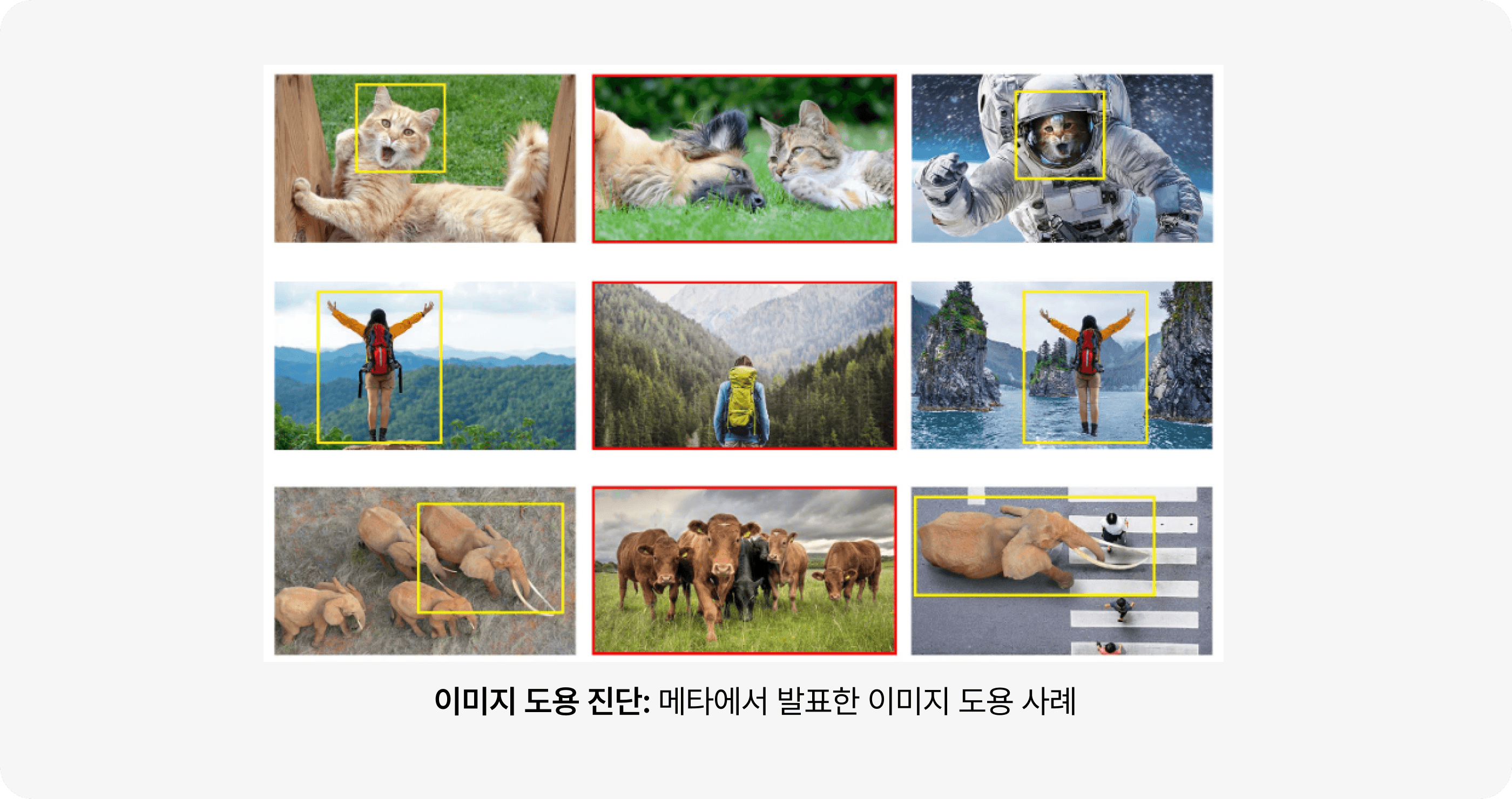
[Source] https://ai.meta.com/blog/heres-how-were-using-ai-to-help-detect-misinformation/
The Practitioner's Dilemma: "Is this image stolen?"
Particularly for brands trying to maintain a Minimum Advertised Price (MAP) policy, image theft is not just a simple image issue but an element that shakes the reliability and sales structure of the entire distribution network. For these brands, 'real-time monitoring' and 'securing evidence for legal action' are desperately needed.
However, there are currently no clear standards or guidelines per platform to determine whether an image has been stolen. Brand managers periodically search to see if there are resellers using their images, manually take screenshots to compare them, or save captures. And mostly, they visually compare their images with the stolen images to qualitatively judge the degree of infringement.
This method leaves problems such as high cost (using copyright experts), low efficiency (human visual inspection), and lack of consistency (disagreement of opinions), so it is not a completely satisfactory result from the brand's perspective. In particular, when images are "modified to some extent," there is also a lack of a clear standard on how far it should be considered infringed.
Diagnosing Image Theft Fast and Accurately with AI: The Retrix Way
Consistent AI-based image similarity diagnosis technology can play a much bigger role than human judgment.
It analyzes images at the pixel level to detect modified patterns, composition, color, and even symmetry/flipping.

It can provide judgment criteria as "natural language explanations" rather than just simple numbers.
By utilizing LVLM (Large Vision-Language Model) technology to explain the basis of theft judgment in natural language, it can summarize in sentences how visual elements such as logos, composition, and background tones in the image are similar to the original. By utilizing these AI diagnosis results, brands can secure objective grounds for copyright infringement determination and efficiently respond to infringement reports.
[LVLM Application Case by Retrix]
The position of the wrinkles on the T-shirt is identical to the original. Although the background has changed, this is to a degree that can be easily altered using generative AI.
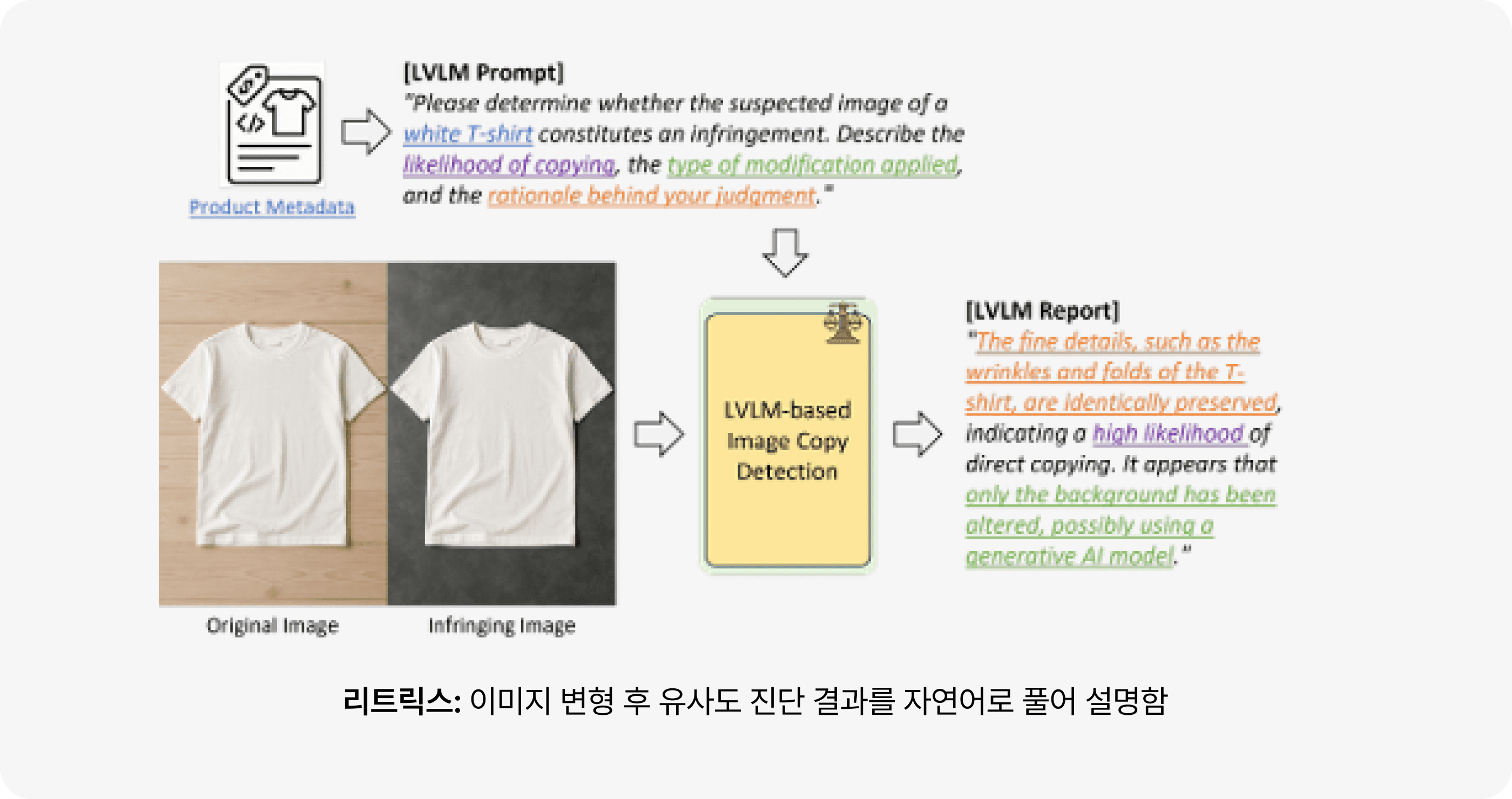
Copyright Protection Policies of Global Brands
Louis Vuitton: Systematizing Counterfeit Response and AI Collaboration
Global brands are implementing various strategies to protect brand value from image theft and counterfeit goods. Their approach has a major commonality in 'how strategically they manage and protect brand images.'
Louis Vuitton manages more than 18,000 intellectual property rights worldwide and runs its own brand protection system to prevent counterfeiting. Recently, they have also strengthened an AI-based response system to automatically detect counterfeit goods through collaboration with Google. They monitor the distribution of counterfeit products in real-time across online and offline channels and are taking legal action against infringement cases, including brand image theft. This goes beyond simple surveillance and can be understood as a 'systematized strategy to maintain brand identity in the digital space.'

Benchmarking Global Brands
Ultimately, Louis Vuitton collaborates with big data specialists for 'continuous counterfeit monitoring,' and this strategy offers the following implications for domestic e-commerce and B2B brands as well:
Leaving unauthorized theft unchecked damages the entire brand policy
Fast and repeatable automation technology is needed for image infringement detection
Beyond simple detection technology, it must be able to explain the theft and connect it to responses
In this regard, AI-based image similarity monitoring is not just 'image surveillance' but can be the most realistic means to implement the strategies used by global brands at a reasonable cost.
Respond to Image Theft Like This

If You Don't Have a Solution Yet
If instances of image theft are found, systematically collect evidence such as screenshots and URLs, and
Send warnings and requests for correction (proof of contents) to the unauthorized seller
Fill out an infringement report form on the platform
If not corrected, you can file civil/criminal lawsuits for copyright infringement
Theft of entire detail pages or design theft can be addressed as violations of the Unfair Competition Prevention Act
Make image use permission clear to official resellers and partners, and specify image use conditions and violation liability clauses in the contract
However, most of these procedures rely on manual work, making it difficult to respond quickly and accurately.
Utilizing AI Solutions
AI-based image similarity monitoring technology is a practical means to solve these problems.
Retrix compares the images from the brand's own mall and authorized sellers with the images in the sales records of unauthorized sellers to diagnose similarity. As a result, for specific sellers who damage brand value (e.g., violating minimum advertised prices), it provides functions such as presenting evidence (screen captures proving image theft) and automatically generating platform-specific reports.
Such automated systems reduce repetitive verification work for practitioners and enable real-time detection and accurate response.
Brand Protection, You Must Prepare First
Copyright protection goes beyond simple legal response; it has a larger meaning of maintaining brand trust and providing consumer value. The new method of copyright protection provided by AI technology, and the strategic defense of brand value, will become increasingly important in the future. Introducing AI technology that specifically explains the reasons for copyright theft will not only increase the work efficiency of practitioners but also secure evidence to strongly respond to malicious sellers.
Brand protection is no longer an option but a competitive edge that only 'prepared companies' can enjoy.
Take the opportunity of World Book and Copyright Day to check once again how your brand is preparing for copyright protection.
👉 Who is protecting our brand's images right now?