Unofficial Seller Management
Price Management
Distribution platforms with no price control—is there really no way to monitor overseas sellers?

💡 In this article, you can find the following information.
Why does the pricing strategy set by a brand collapse?
If the regular price collapses, what is shaken first?
MAP is just the beginning; a system is needed to maintain it
Price is a brand strategy and trust
Why Do Brand Pricing Strategies Collapse?
🤔 "We established a solid pricing policy for each country, but the prices displayed on the platforms don't follow our guidelines at all. What is the point of this policy if no one keeps it?"
Global brands carefully formulate different pricing policies considering distribution structures by country, exchange rates, taxes, logistics costs, and margin structures. However, on open platforms like Amazon, Temu, and AliExpress, anyone can register as a seller and list products, with prices also set autonomously.
The issue is that within this structure, a pricing policy designed by a brand can collapse with just a single listing. If an unofficial seller or black seller with no contractual relationship with the brand lists a product at a price significantly lower than the reference price, the entire official distribution structure is shaken within just a few hours. This situation is not merely a problem of platform structure. Indeed, according to market data, research shows that approximately 20-30% of brand products sold in open markets are listed without complying with the Minimum Advertised Price (MAP). When price violations occur repeatedly, a pattern becomes established where partner distribution networks collapse and consumer trust is damaged.
An even bigger problem is that brands have no way to prevent this. Platforms do not intervene in pricing, and seller information is mostly private. Even if a price violation is discovered, there is no structure to respond in real time, so brands have no distinct means other than repetitive manual tasks such as checking prices, taking screenshots, organizing them, sending protest emails, and reporting to the platform daily.
As such, even strategically well-designed pricing policies will not work in the market at all if a system for execution is not in place. Consequently, skepticism of "Why did we even make a policy?" repeatedly erupts on the ground.
What Happens When a Brand Pricing Policy Is Rendered Powerless?

When minimum advertised price policies stop working in the market, the impact spreads beyond sales losses into the overall distribution structure. Partners who keep the regular price complain, asking 'Why should we be the only ones to bear the loss?', and consumers who notice the price gap doubt the brand's consistency, questioning 'Why is it sold cheaper here?'. In particular, when a price significantly lower than the standard set by the brand is posted on a platform, situations frequently arise where official sellers fall behind in price competition and leave, or reconsider their contracts.
Voices from the field saying, “Official sellers who keep the regular price are trying to leave because of black sellers. We have become the only brand that sells at a high price,” are by no means exceptional stories. Differences in perception among consumers who purchased the same product at different prices quickly lead to a decline in trust in the brand, and as a result, the risk of parallel imports expands.
Ultimately, the collapse of regular prices is not just a matter of lowering prices, but leads to a structural crisis that destroys a brand's distribution strategy and market positioning. To prevent this, beyond setting price standards, it is necessary to establish a monitoring and response system so that they can actually function in the market.
If Regular Prices Collapse, What Starts to Shake First?
Trust with distribution partners is broken.
Official resellers who have maintained profits while keeping regular prices are prone to losing trust in the brand whenever they see products distributed below the reference price on platforms. As the reason to sell through official distribution channels disappears, the structure quickly deteriorates into either leaving or getting caught up in price competition. In the long run, this can act as a constraint not only on partner departure but also on securing new distribution channels.
Consumer confusion increases and product value is damaged.
If the same product is 100,000 KRW on Coupang and 60,000 KRW on Temu, consumers start to doubt the brand's pricing policy or quality standards. Instead, the channel exposed to the cheaper price is perceived as 'normal', causing brand consistency to collapse. From the buyer's perspective, if the pricing standard becomes unclear, trust in the entire brand has no choice but to decline as well.
The brand image becomes cheapened.
The message, philosophy, and emotion that the brand tried to convey become meaningless, and in the market, it is summarized as 'that brand, it's been selling cheap lately'. Especially for premium brands, the moment regular prices collapse, the speed of brand value decline also accelerates. As consumer reviews, community evaluations, and even search related words are reorganized around price, the image assets that the brand has built can be shaken.
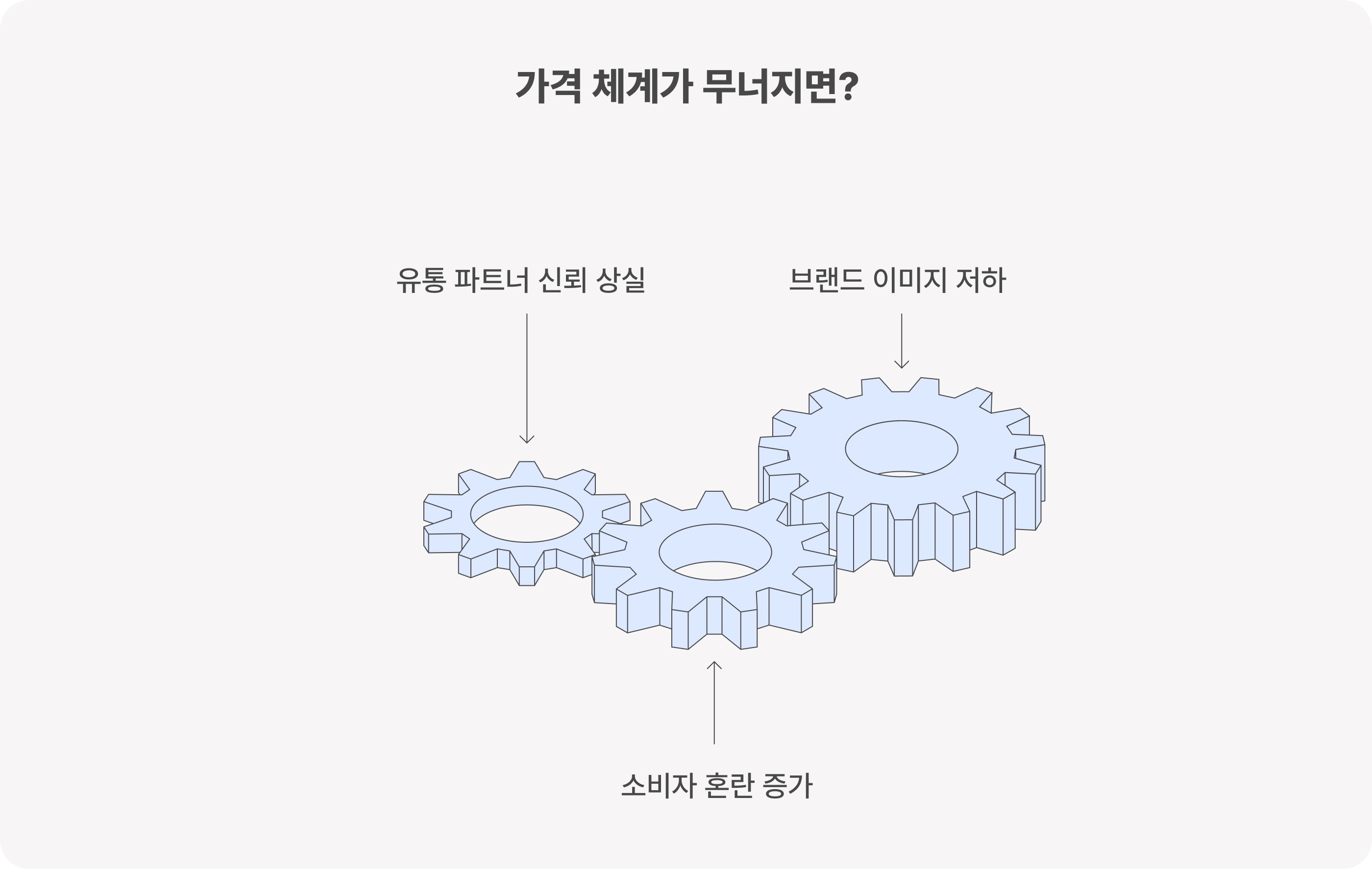
According to a Wired report, product images and descriptions created by a seller officially listed on Amazon were copied and uploaded to Temu without authorization, and the identical product was sold at a price approximately 30% lower than the reference price. The seller stated that sales decreased by more than 20% and the consumer influx rate also dropped significantly. The brand took action, raising issues not only regarding copyright infringement but also the decline in brand asset value and damage to consumer trust. These cases show that price violations can act as a powerful risk to the entire brand, going beyond simple discounts.
Similarly, there have been cases where product detail page images and descriptions were copied without permission and registered on Temu, selling at prices much lower than the standard price, thereby weakening the competitiveness of official sellers. This led to increased consumer confusion and an increased response burden on the brand side. As such, price violations go beyond simple individual problems and result in destroying the entire distribution strategy.
MAP Is Just the Beginning; You Need a System to Maintain It

Four Response Conditions Required for Pricing Policies to Work
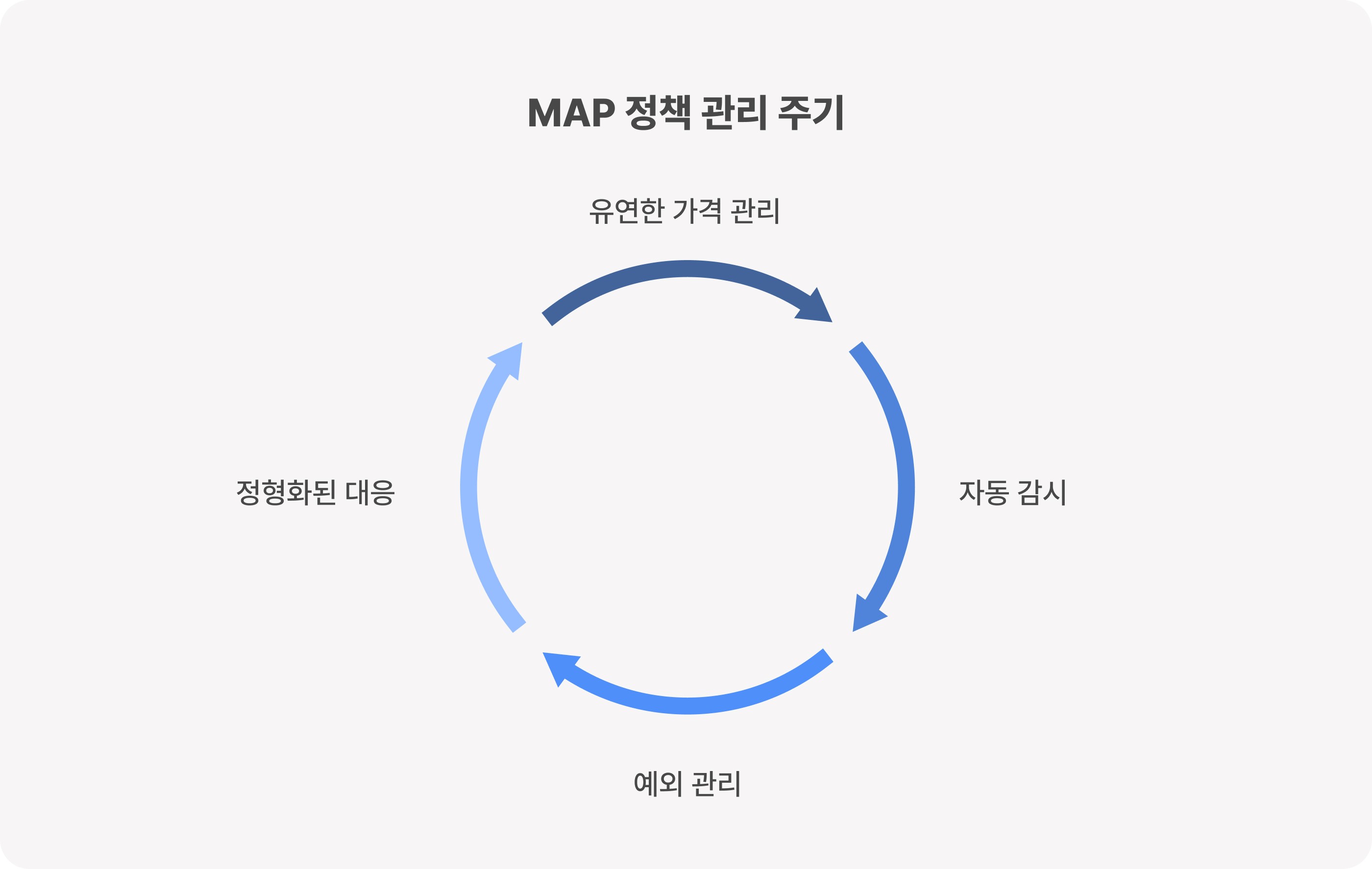
As explained earlier, many brands operate minimum advertised price policies, but in platform environments, they face limitations where these policies struggle to be effective. For the minimum advertised price policy to not end as a mere declaration but actually function, the following execution conditions must be met together.
It must be possible to flexibly and automatically manage MAP standards by product, season, and platform.
Many brands set regular price policies by country, but to keep them in reality, automated MAP price management tailored to the platform, product, and seasonal situations is essential. Since it is difficult to respond to rapidly changing market prices manually, a structure is needed that allows flexible adjustments within the system, from setting and changing reference prices to managing exception conditions.
Monitoring and response systems must be automated.
Instead of just manually detecting violations, a system is needed that includes automatic identification of repeat offending sellers, accumulation of violation history, real-time alerts, and reporting functions. Only when such an automated system is established can managers focus on strategic planning and improvement rather than monitoring.
If establishing pricing standards and monitoring systems is the primary task, then structuralizing response methods and recurring exceptions is required next.
Standards for exceptional situations must be clear.
MAP standards cannot be applied uniformly to all situations. Cases requiring exceptions often arise considering seasonal limited-time discounts, partner-specific promotions, and stock clearance. At this time, permissible and non-permissible conditions must be clearly defined according to internal brand standards, and set so that they can be automatically reflected in the system to reduce false positives and enable consistent responses.
Seller response methods must be standardized in advance.
If the response method differs each time a price violation occurs depending on the situation, the speed of work can slow down and confusion can arise. By pre-templating formats such as warning emails, report forms, and response reports, and ensuring they are automatically generated according to repetitive violation types, processing speed and response consistency can be secured simultaneously.
Why an Automation-Based Response System Is Necessary
With a method of manually managing reference prices and checking violations one by one, it is practically difficult to respond to a rapidly changing platform environment. On platforms like Temu, thousands of new products are registered every day. Prices change from moment to moment, and sellers continuously re-register using different accounts, making it practically impossible to track manually. For example, a method of repeatedly listing the same product at 50,000 KRW from account A and 45,000 KRW from account B is difficult to even perceive manually. It becomes more complex because price disruption is not limited to product units, but spreads through seller units or image theft.
Particularly, in cases where the same product is repeatedly registered at different prices, or copied without permission in a form where only images and descriptions are subtly changed, manual tracking is almost impossible. Brands can respond strategically only when they can systematically register standard prices by product, season, and platform, automatically manage exceptional conditions, and generate reports on repetition after violation detection.
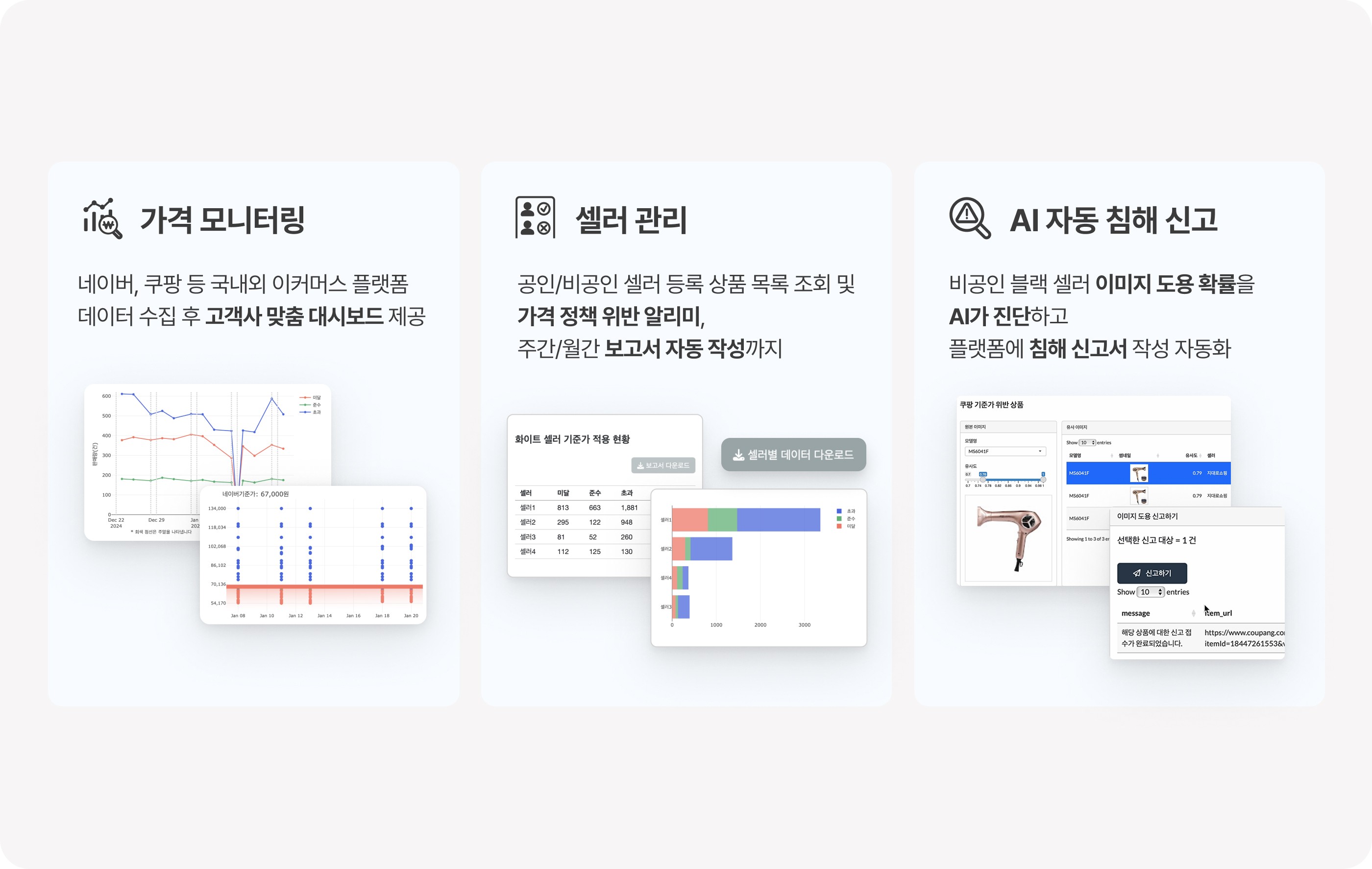
Based on the reference price set by the brand, Reatrich supports operating different standards by product, season, and sales platform, and can detect price violation cases even without registration URLs through AI-based image and text detection technology. It automatically identifies repeat offending sellers to generate reports, and can immediately generate report PDFs or response email templates, reducing the manual burden on working staff. This structure, along with real-time alerts, helps brands respond strategically.
Price Is Brand Strategy and Trust
Price is a brand's philosophy and promise. It acts as trust for consumers and a strategic baseline for distribution partners. It is not an area of simply adjusting numbers, but one of the most core means of maintaining brand dignity and consistency.
If the price order collapses, the brand's strategy does not work either. Pricing confusion leads to a drop in trust, which in turn spreads to the departure of distribution networks that keep regular prices, consumer defection, and brand image degradation. This is why long-term trust must be prioritized over short-term sales volume.
What is needed now is execution, not declarations. Beyond establishing policies, it is important to have a structure that can maintain them. What brands need to regain the initiative amidst repetitive seller price disruption is systematic monitoring and execution power. Brands that equip themselves with this structure first can preserve brand trust amidst collapsing price order, maintain stable relationships with distribution partners, and secure long-term profitability and market competitiveness.