Unofficial Seller Management
The Core of Seller Monitoring: Knowing 'Who is Selling' Reduces Risk

💡 In this article, you can check the following content.
“Prices keep collapsing. But I don't know who is bringing them down.”
Why price control repeatedly fails – lack of seller identification
Then how should brands respond?: Seller monitoring tips
Reetrix's perspective on seller tracking – connecting “who, what, and how”
Conclusion: “Look at the seller before the price”
“Prices keep crashing, but I don't know who is bringing them down.”
If you are a brand practitioner managing online distribution, you have probably experienced this at least once. It was clearly a product you took action on last week, but a few days later, another seller appears with the same image at an even lower price. Most of these are unauthorized sellers or unofficial sellers who have no contractual relationship with the brand. They sell below the price of the official distribution network or copy genuine images as they are, confusing consumers. The names are different and the store IDs are different, but strangely similar phrases and price patterns are repeated. In this way, a situation where it is difficult to clearly understand who is selling, where, and in what way continues. In this case, most practitioners express frustration, saying, "I can see the price, but I can't see the person."
Unauthorized sellers avoid the brand's surveillance network by rotating multiple accounts and cross-appearing on different platforms. If one account is penalized, it quickly reappears under another name, and since the seller information structure is different for each platform, it is difficult to track the same person. In the end, brands end up repeating only short-term responses without clearly pointing out why prices are collapsing and who the cause is.
Seller monitoring is the process of correcting the starting point of this vicious cycle. Price is the result, and the seller is the cause. Detecting and taking action on price anomalies alone cannot prevent the problem. Real control begins only when you accurately identify “who is selling.”
Why Price Control Fails Repeatedly – Lack of Seller Identification
The common problem faced by brand practitioners is not simply that 'prices keep falling,' but that there is no way to trace the cause. No matter how much price data is collected, if you cannot identify which seller is repeatedly intervening and in what way behind it, control will fundamentally hit a limit. In the end, what the brand sees is only the 'result', and the 'cause' that created that result remains invisible. This is because if you look only at the price, you only see the 'phenomenon', but if you look at the seller, you see the 'cause that created the phenomenon.'
The core of the problem is the structural characteristic where the same entity operates multiple accounts. If one seller is penalized, they soon reappear under another name, and some use different store names, business names, and contact information for each platform to evade surveillance. Some accounts use business names similar to their own brand name, while others slightly edit the same image and re-register it. On the surface, they look like completely different sellers, but in reality, the same entity often acts with multiple faces. As such, when the same entity operates multiple accounts, price control becomes as exhausting as a game of Whack-A-Mole.
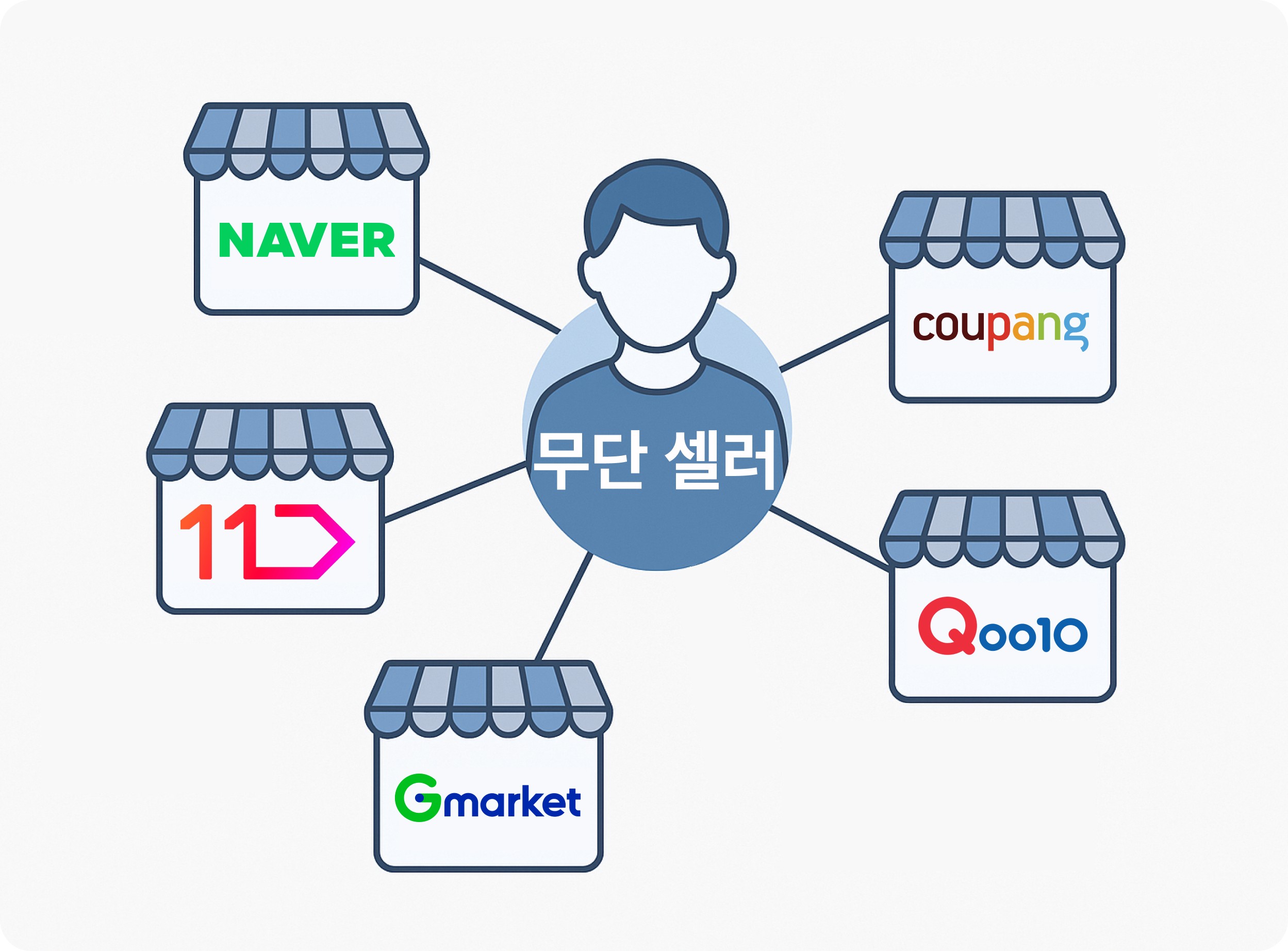
In such an environment, it is difficult to make improvements by monitoring individual prices alone. This is because the collected data is mostly disconnected by platform, making it difficult to see at a glance whether the same seller is running multiple accounts. Ultimately, brands repeat the cycle of "detecting abnormal prices → reporting → deletion → reappearing under another account." Monitoring only individual prices only records 'phenomena' and fails to reach the root cause of 'why the price repeatedly appears.'
Structural differences between platforms also complicate the problem. Each platform, such as Naver, Coupang, and 11st, has completely different seller nicknames, business names, and contact information systems. If a brand has to compare these manually, it takes a huge amount of time, and it is also difficult to accurately identify the same person.
In this process, meaningful clues lie in the repetitiveness of images, copy, and price patterns. The same product photo, similar phrasing, and a certain percentage of price discounts can be traces of the same seller. However, if this information is not connected on one screen, the structure of "catching them today only for them to pop up again tomorrow" will not change.
Crucially, at the internal reporting or platform reporting stage, there is a lack of evidence to concretely explain "why this seller is a problem." Simply capturing plagiarized thumbnail images or links lacks persuasiveness, often causing delays in approvals or actions. Presenting image, price, and seller information together speeds up judgment within the brand and makes the response to the platform clear.
In the end, the failure of price control is not a technical issue but a structural problem stemming from the 'absence of seller identification.' Unless brands look at the market centering on 'who is selling,' prices will collapse again and the problem will repeat.
Then, How Should Brands Respond?: Seller Monitoring Tips
The problem we looked at earlier is clear. No matter how much price data you accumulate, if you cannot identify 'who created that price,' control will repeatedly fail. Then, what kind of monitoring routine should practitioners establish to reduce these structural limitations?
Just because a price drops suddenly does not mean it is a problem in itself. What brand practitioners need to look at is not the 'price' itself, but the context in which that price is created. Rather than one-off drops, you must look at repeated patterns, connected sellers, and shifting account flows together to reduce risk.
If you look at the 6-step seller monitoring checklist recommended by Re-Trix in order, you can gain a sense of structural control beyond simple price monitoring.
1. Check the Context of Sudden Price Drops
Check if the price drops repeatedly only within a certain range. For example, if a sharp drop occurs on a specific day of the week, a specific time slot, or right before/after a discount event, it is highly likely to be an intended influx strategy rather than a simple temporary discount. This pattern can be clearly distinguished when compared with the brand's official promotion schedule.
2. Track Registration History and Re-registration Patterns
Sellers often re-register under different names while using the same image. If the product name structure or detailed page phrasing is similar, there is a possibility that they are multiple accounts operated by the same entity. Of course, since they cannot be legally concluded to be the same person, it is practical to tag them as a 'suspected seller' and manage them for follow-up review. Investigating and managing seller contact information, addresses, emails, etc., in a database makes it easy to discover if they are the same seller.
3. Observe Review Patterns
There are cases where reviews rapidly increase in a short period, or similar sentences and photos are repeated. This is highly likely an account that is systematically managed. Unlike price data, reviews are traces of consumer behavior, so including abnormal review patterns on the watch list is highly efficient.
4. Utilize Image Similarity and Heatmaps
Even if they look like different products to the naked eye, you can check for a high match rate on the same label, background, and angle using AI image similarity diagnostics. Cases where brand images are used without authorization are frequently discovered in this step. Utilizing Re-Trix's heatmap feature allows you to intuitively check which areas match, greatly reducing review time for practitioners.
5. Tag Suspected Groups and Set Priorities
Treating all suspected sellers equally is inefficient. By combining and scoring various signals such as 'short-term sharp drops', 're-registration', 'image reuse', and 'sudden increase in reviews', you can easily prioritize responses. This priority action seller list simplifies internal communication. For example, in Re-Trix, you can proceed with the report-approval-action stages based on the automatically tagged list.
6. Save Time with Dashboard Reports
In the Re-Trix dashboard, all evidence, such as price fluctuation graphs, image comparison results, and seller history, is connected and displayed on one screen. Practitioners can select only the necessary section and directly extract report files that include captures, links, and timestamps. This report can be used as is for internal approval documents or platform reporting, greatly reducing the time from 'reporting → approval → action.'
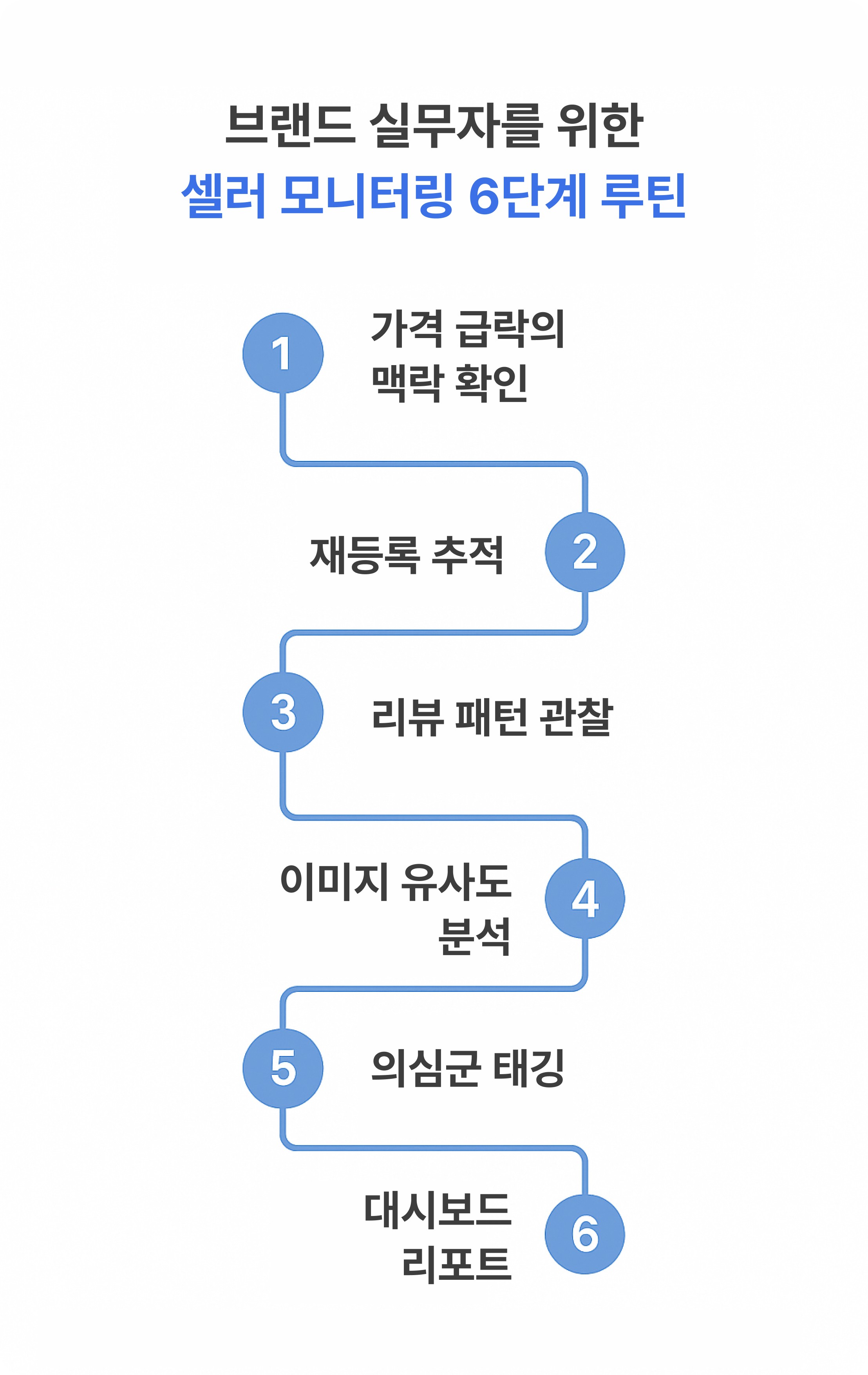
By consistently repeating these 6 steps, you can move away from simple price drop monitoring and develop it into a monitoring system that pre-reads signs of brand value damage. The key is not 'solving it all at once', but accumulating repeated patterns and leaving connections between sellers as data.
Re-Trix's Seller Tracking Perspective – Connecting "Who, What, and How"
However, it is not easy to manually repeat this 6-step process every time. Routines from data collection to pattern analysis, seller clustering, and evidence report generation consume a lot of time and resources. That's why Re-Trix designed this process so that practitioners can 'directly control while managing in an automated structure.'
Re-Trix does not simply show the result that 'the price has dropped.' It is a solution that weaves price, image, and seller data together to show at a glance "who is selling what, how, and in what way they are shaking the brand." It understands the problem through 'behavior' rather than 'numbers.'
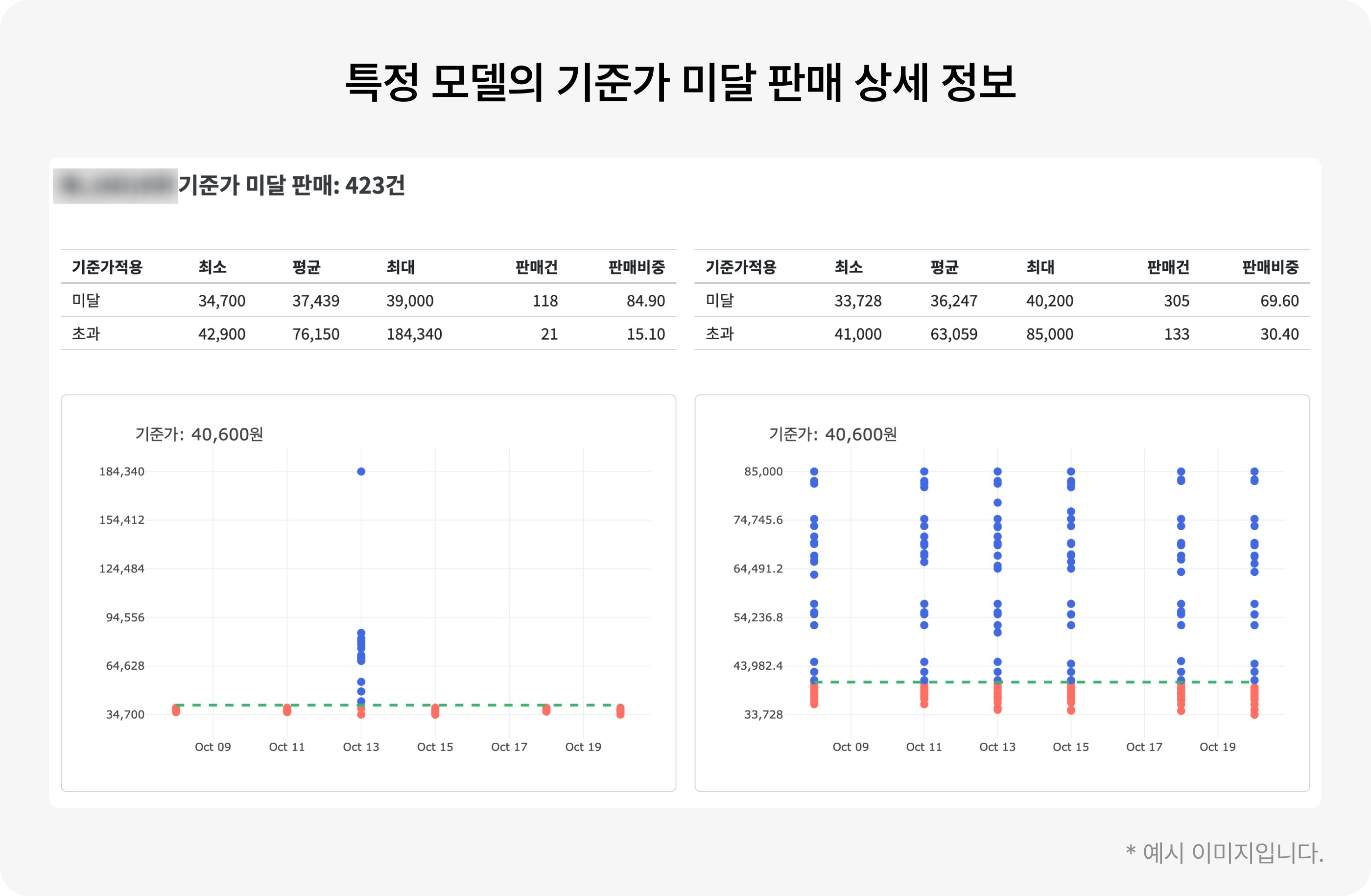
The first thing to do is to connect data. Re-Trix looks for a consistent flow by viewing scattered price, image, and seller information together.
In price data, it detects abnormal drop sections that go out of the normal range.
In image data, it uses AI to check whether similar product photos are repeatedly used across different seller accounts or if edited versions reappear.
In seller data, it looks at information such as store name, domain, contact details, registration time, and re-registration cycle together.
When you combine different data in this way, you start to see flows such as "Is the same person running multiple accounts?" and "Is there a seller group appearing intensively at a specific time?" rather than a simple 'price drop list.'
Re-Trix collects these repeated patterns and organizes them into suspected seller groups. For example,
While reusing the same product image,
Appearing with low prices during specific seasons,
If there are sellers who repeatedly use similar product names, they are grouped into a category highly likely to be the same entity.
This process does not legally determine who is 'the same person', but rather presents "suspected seller clusters" based on data associations. From the brand's perspective, this makes it much clearer why prices keep collapsing.
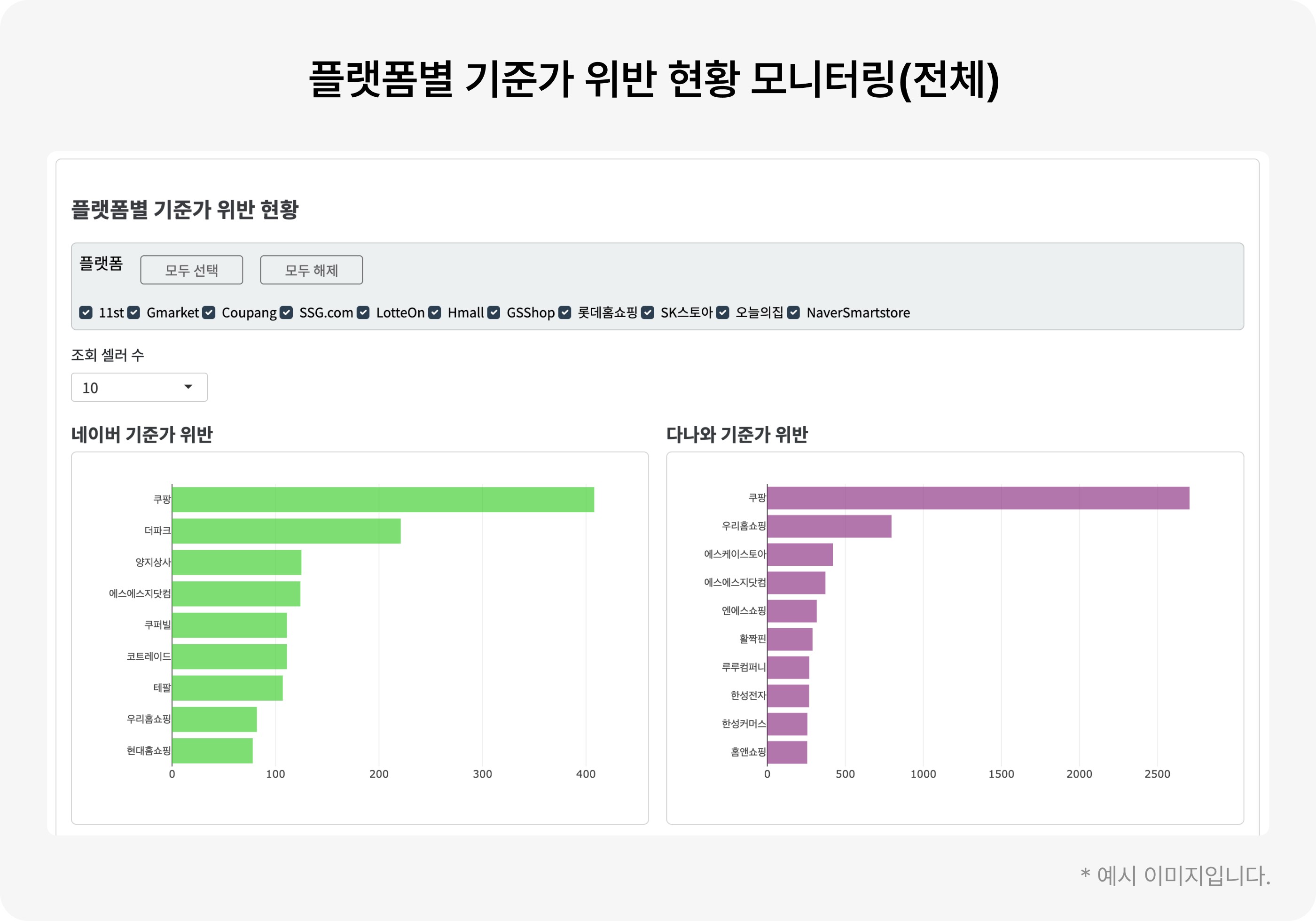
The detected seller groups do not end up as simple tables. Re-Trix organizes them into reports in the form of 'evidence packages.' Within a single page, you can check
Price fluctuation trend graphs
Image comparison results (including heatmap visualization if necessary)
Sellers' registration history and store migration routes
Related links, captured images, and time information all at once.
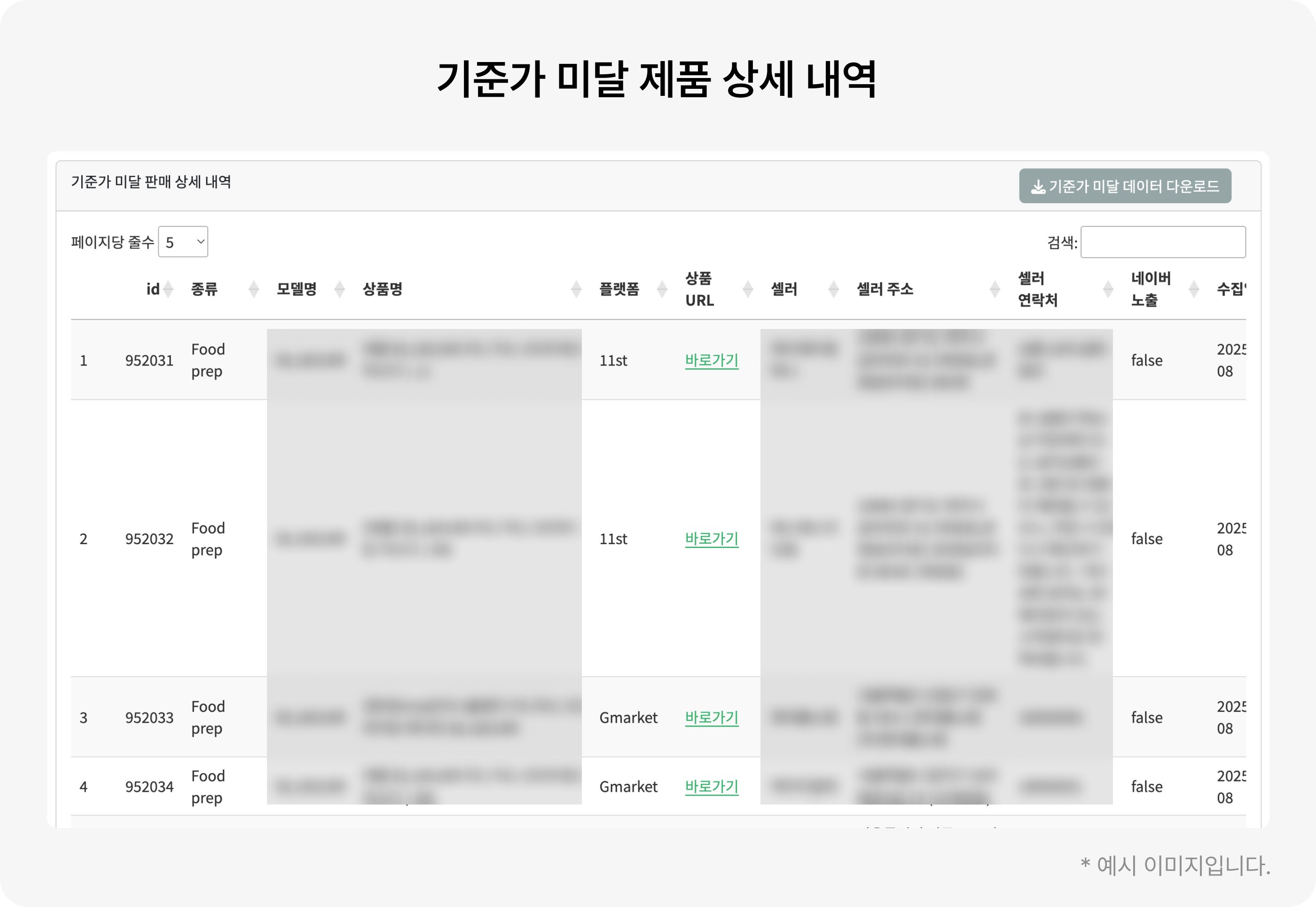
In other words, practitioners do not need to go back and forth between multiple platforms to collect captures or write reporting documents themselves. This is because the data explaining "why this seller is a problem" is already organized within the system. It can be used as is for internal reports and platform notifications.
However, internal detection criteria (similarity values, price drop thresholds, etc.) are applied differently for each brand, so they are not disclosed externally. Since Re-Trix sets standards according to each company's policy, even the same feature operates as a completely different surveillance system for each brand.
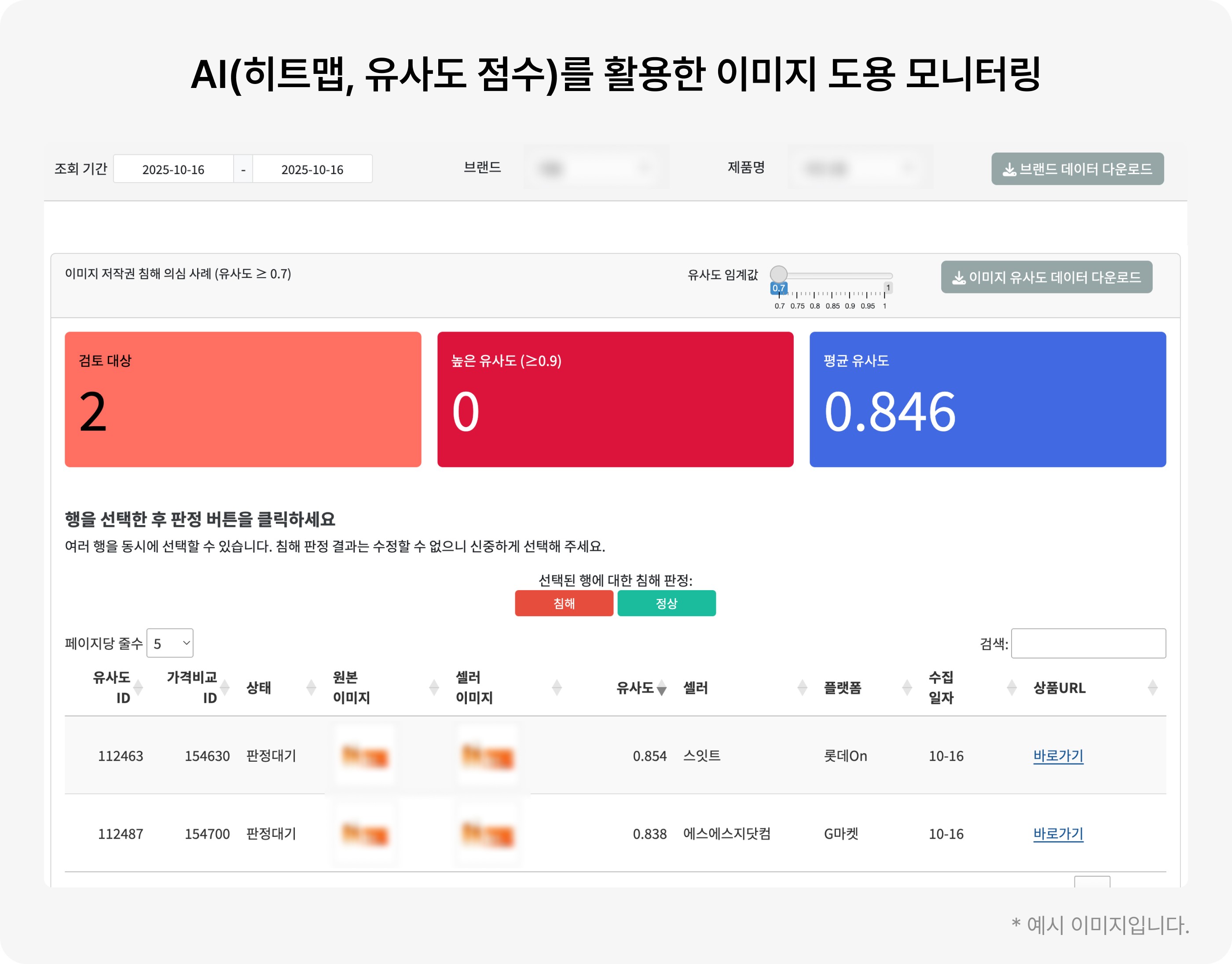
Ultimately, Re-Trix's seller tracking is not 'data collection' but a process of finding the 'links of repeated behavior.' Brand practitioners no longer need to respond on an individual price or account basis. They can understand "who, in what way, and how often they are damaging the brand image" in context, and clearly establish priorities for response.
Conclusion: "Look at the Seller Before the Price"
Prices can change at any time, but the one creating that change is ultimately the 'person', the seller. Therefore, what brands need to control is 'who is selling' and 'in what way those sellers are repeating it' rather than numbers.
In the short term, responses that quickly address only price drops may seem effective. However, over time, another seller under a different name repeating the same product launch is bound to happen. This is because price is the result, and the seller is the cause. If you don't look at the cause, the response will always be a 'following action.'
In this situation, what practitioners need is a 'shift in perspective to focus on the seller.' Tracking who is selling, and when that seller appears and disappears along the timeline, allows for earlier and more accurate detection of brand risks. This shift in perspective is the starting point of sustainable price control.
And Re-Trix makes this flow faster and more precise. By tying price, image, and seller data into one, it is designed as a customized monitoring infrastructure that maximizes efficiency while leaving direct control in the hands of the practitioner. In other words, it is not the system that controls on your behalf, but rather it enables a practitioner-led, data-driven surveillance structure.
In the end, what brands must protect is not simple 'price stability' but the consistency of trust and value. If you look at the seller first, price control follows naturally. What Re-Trix helps with is not simple surveillance, but the power of brands to control the market on their own.