Price Management
E-commerce price monitoring tool recommendations: Why 'customized' is needed more than simple automation
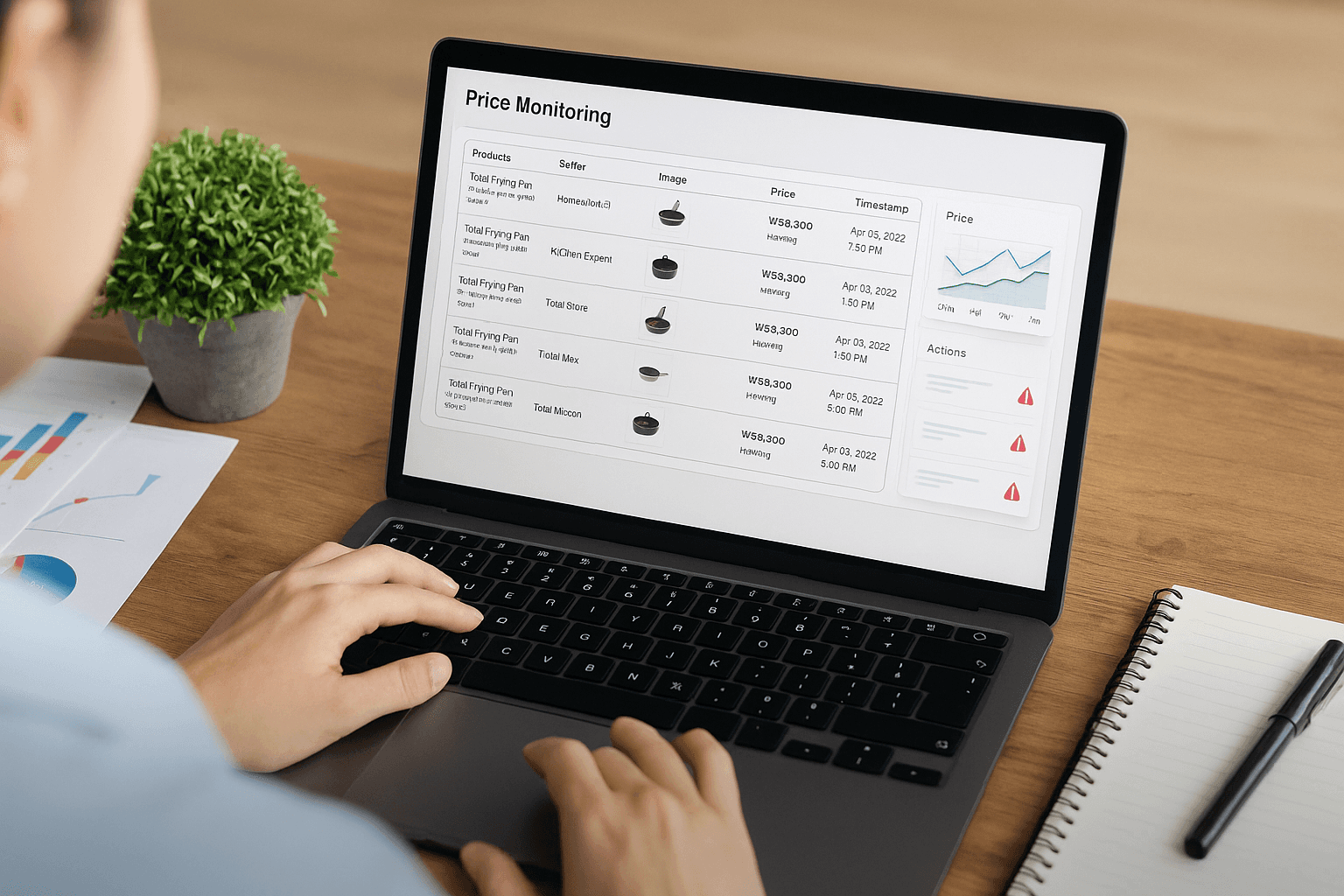
💡 In this article, you can find the following information.
Prices collapse without the brand even knowing
Key points of tool comparison – 'Automation' vs. 'Customization'
Reatrics' perspective – The 'area of context' that standardized automation misses
Selection criteria for practitioners to remember – Does it enable 'execution' rather than simple 'collection'?
Conclusion: Protecting prices is ultimately about protecting brand trust
Brands' Prices Collapse Without Them Knowing
The e-commerce market changes daily, or rather, hourly. Dozens of new sales channels emerge in a single day, and prices fluctuate in real time. It is common for a pricing policy established yesterday to be broken by this morning. Therefore, price monitoring tools are no longer just management tools, but essential devices for brand survival.
Many working professionals put it this way: "It is difficult to check exactly where our products are being sold and for how much."
Particularly for brands listed on multiple online platforms, it is frequent for various different sellers to sell products at abnormal prices or display discount advertisements. If left unattended, the trust of official sales channels declines, eventually leading to a perception among consumers that "it makes no difference where you buy it." The problem is that a significant portion of these abnormal prices stems from 'unofficial sellers' or 'unauthorized sellers' who have no relationship with the brand. They temporarily lower prices to secure traffic, subsequently disrupting the price order of the entire market. In the end, the brand loses trust without even realizing it, and its long-term price management system is shaken.
However, realistically, it is extremely difficult to manually check every single storefront and manage unauthorized sellers. Thus, companies have now begun to automatically collect data through e-commerce monitoring tools and detect signs of violations based on various criteria such as price, seller, image, and product name. This kind of seller monitoring system is evolving from simply 'looking' at prices to a way for the brand to directly monitor and control market order.
In other words, current price monitoring does not function as mere 'price tracking', but as a real-time defense system to protect brand value. Among these, tools that go beyond 'who is selling at what price' to specifically show 'why that seller is a problem and by what criteria we should respond' become meaningful choices in actual practice.
Key Points of Tool Comparison – 'Automation' vs. 'Customization'
When you search for price monitoring tools, similar phrases appear one after another. 'Real-time price tracking', 'AI-based detection', 'automated report generation'... If you only look at features, they all seem similar. However, any professional who has actually used them knows. Depending on the character of the tool, the results the brand gets are completely different.
Most monitoring tools operate in a 'fully automated' structure. The tool collects prices on its own, detects anomalies, and sometimes even automatically reports suspected violations. While it seems convenient on the surface, this approach has clear limitations. It is difficult to reflect company-specific brand policies or internal decision-making structures.
For instance, some brands permit 'temporary price reductions during promotions', while others strictly maintain a 'nationwide uniform price' policy. However, fully automated tools have difficulty applying these detailed rules uniformly. Consequently, in actual operations, brand professionals have to manually review the data again to differentiate whether 'this is an exception or a violation.' Even if the tool automatically gathers data, decision-making still remains in human hands.
On the other hand, Reatrics is a 'custom-operated solution'. Automated data collection and detection are basic features, and it can reflect each brand's specific pricing policy, operation process, and reporting system as they are. In other words, instead of 'fitting' the brand's existing workflow to the tool, it is a method of setting up the tool to match the brand's actual operational structure.
For example, Reatrics' internal rules can be customized so that a specific brand receives alerts based on MAP violation detection, while another brand can prioritize actions upon detecting image theft. This flexibility is the biggest difference from 'automated tools'.
Comparison between general automated price monitoring tools vs. Reatrics customized solutions

In summary, while fully automated tools represent a method where the brand "outsources the work," Reatrics is a method where the brand "strengthens its own management capabilities." Particularly for organizations like large enterprises that have many internal approval stages and frequent policy adjustments, a 'structure that flexibly sets up according to the work' is far more efficient than a 'one-sided structure that forces you to adapt to the tool'.
Ultimately, the criterion for selection is simple: Not "who has automated more," but "how well can it reflect our brand's way of doing things?"
Reatrics is evolving not merely as a tool to gather data, but as a 'customized brand value protection solution' that embodies the mindset and workflow of brand practitioners.
Reatrics' Perspective – The 'Contextual Domain' Missed by Standardized Automation
As examined in the previous section, automated monitoring tools have strengths in processing repetitive data quickly. Price anomaly detection, report sending, automatic reporting of suspected violations... At first glance, it looks convenient because it processes the entire journey automatically, but professionals quickly hit a wall. "The system does it for us, but our brand's unique criteria are not reflected." The problem lies not in the data, but in a structure that fails to read context.
Most automated tools apply the same detection criteria to all brands. Individual brands' exceptional conditions—such as promotional periods, discount policies of specific channels, or temporary price adjustments of headquarters' directly managed malls—are not considered. As a result, "normal sales" are frequently classified as violations, and conversely, cases that actually damage brand value pass through the filters. Ultimately, because automation is not perfect, the cycle of professionals manually reviewing and organizing data repeats itself.
Context-Reading Monitoring, Reatrics' Structure 'Connecting' Data
Reatrics finds the cause of this inefficiency not in 'insufficient data' but in 'disconnected data.' Therefore, it has built a system that integrates price, image, and seller information into a single structure to show evidence-based insights on "who is damaging the brand and in what manner." It does not merely detect the phenomenon that "a specific product's price is sold too cheaply by an unauthorized seller," but connects and detects whether "that seller used our images without authorization" and "whether the same seller re-registered under a different account." This data can be customized to fit policy standards directly defined by the brand.

For example, some brands maintain a policy that allows only official images, while other brands allow partner companies to edit images within a certain range. Some brands also restrict parallel import sales on specific platforms and manage other platforms to display official sellers only. In Reatrics, these brand-specific exception rules can be applied as detection criteria within the system. In contrast, standardized tools fail to provide this flexibility because they demand that brands 'fit their different policies into a pre-set mold.' As a result, managers gain much higher efficiency within a 'structure where we define the criteria, not the system.'
It is not simply a price monitoring tool, but a method that monitors price, image, and seller simultaneously by tying 'who', 'with what image', and 'at what price' they are selling into a single flow. The reason this is important is simple: price information alone cannot explain 'what the problem is'. If a product is being sold at a price much lower than the official mall's regular price, the reason can vary. It could be an official partner's promotion, a parallel import, or an unauthorized seller stealing images. The problem is not simply the fact that the price is low, but 'who is selling at that price'.
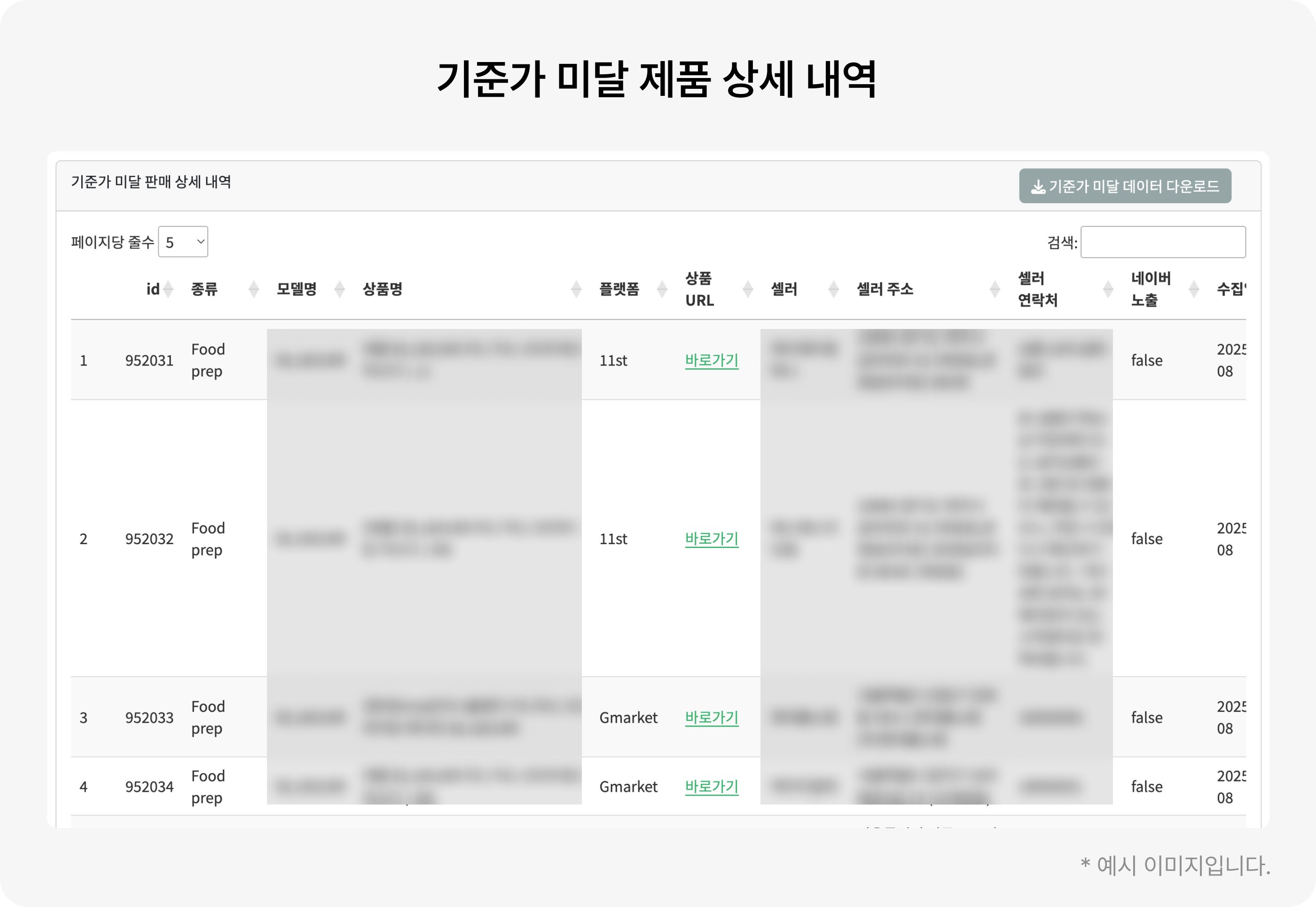
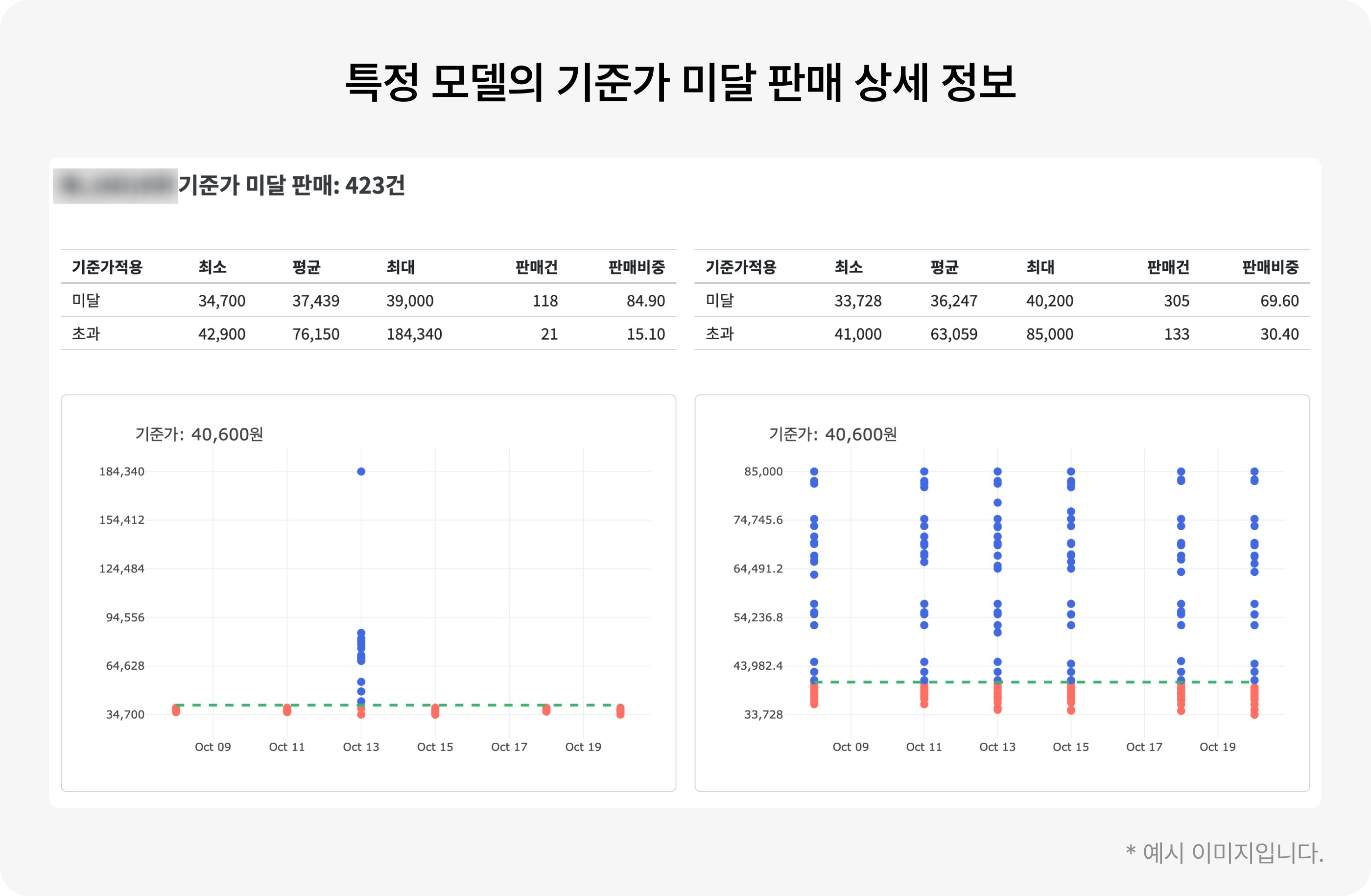
Here, Reatrics detects image and seller information together. Through image analysis algorithms, it identifies images with modified backgrounds or packaging even if it is the same product, and through seller tracking functions, it finds patterns of the same operator re-registering under different account names. When this data is combined, it can be interpreted not just as a simple price drop, but as an anomaly with a high probability of damaging brand value.
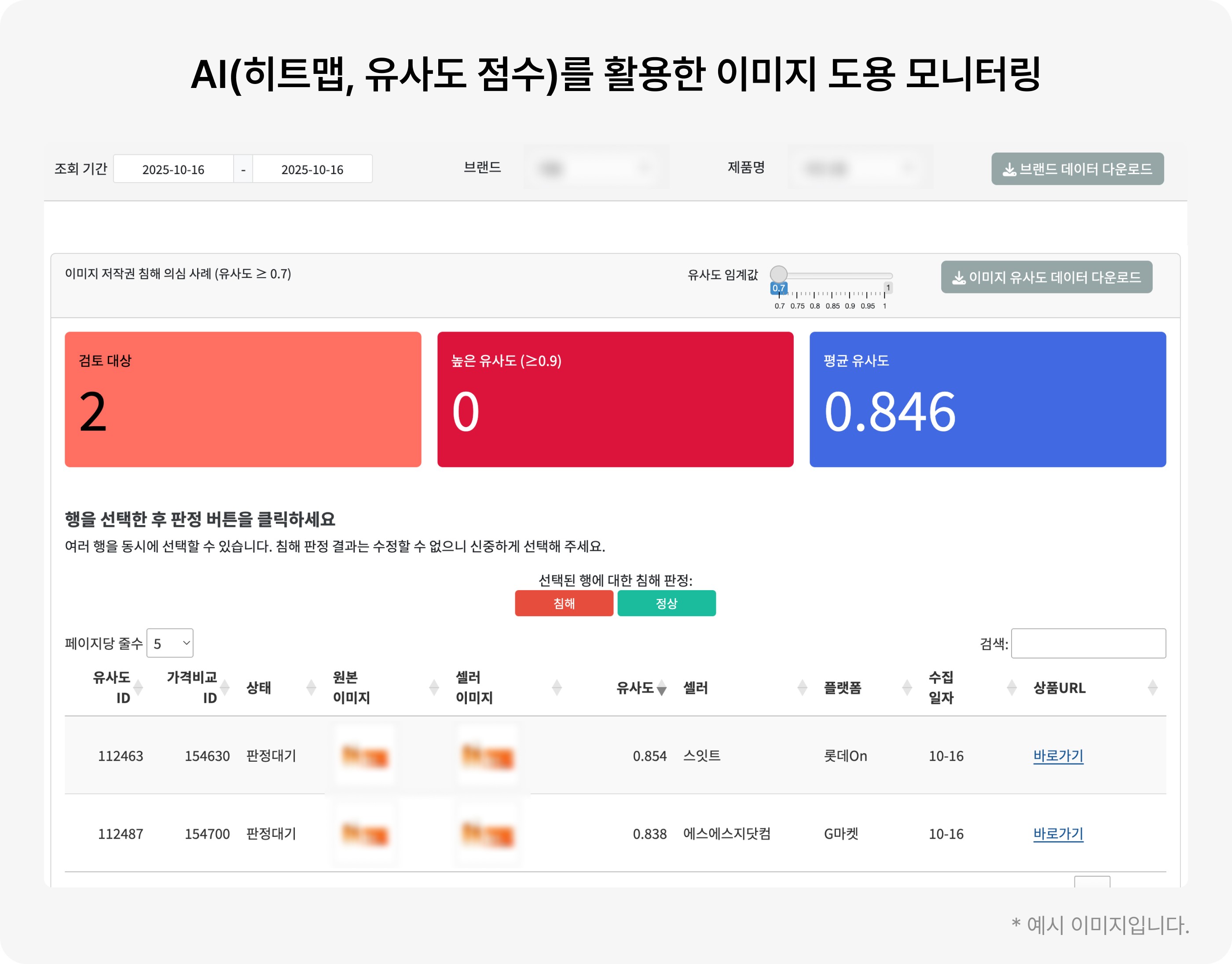
This structure also makes a clear difference in operational efficiency. Previously, when a report came in that 'prices are abnormally low,' the person in charge had to manually capture the product, organize links, report internally, and report to platforms one by one. However, Reatrics automates the flow of 'detecting abnormal storefronts → comparing images → identifying sellers → generating evidence reports.' Managers do not spend time organizing data and can focus on actual actions and communication.
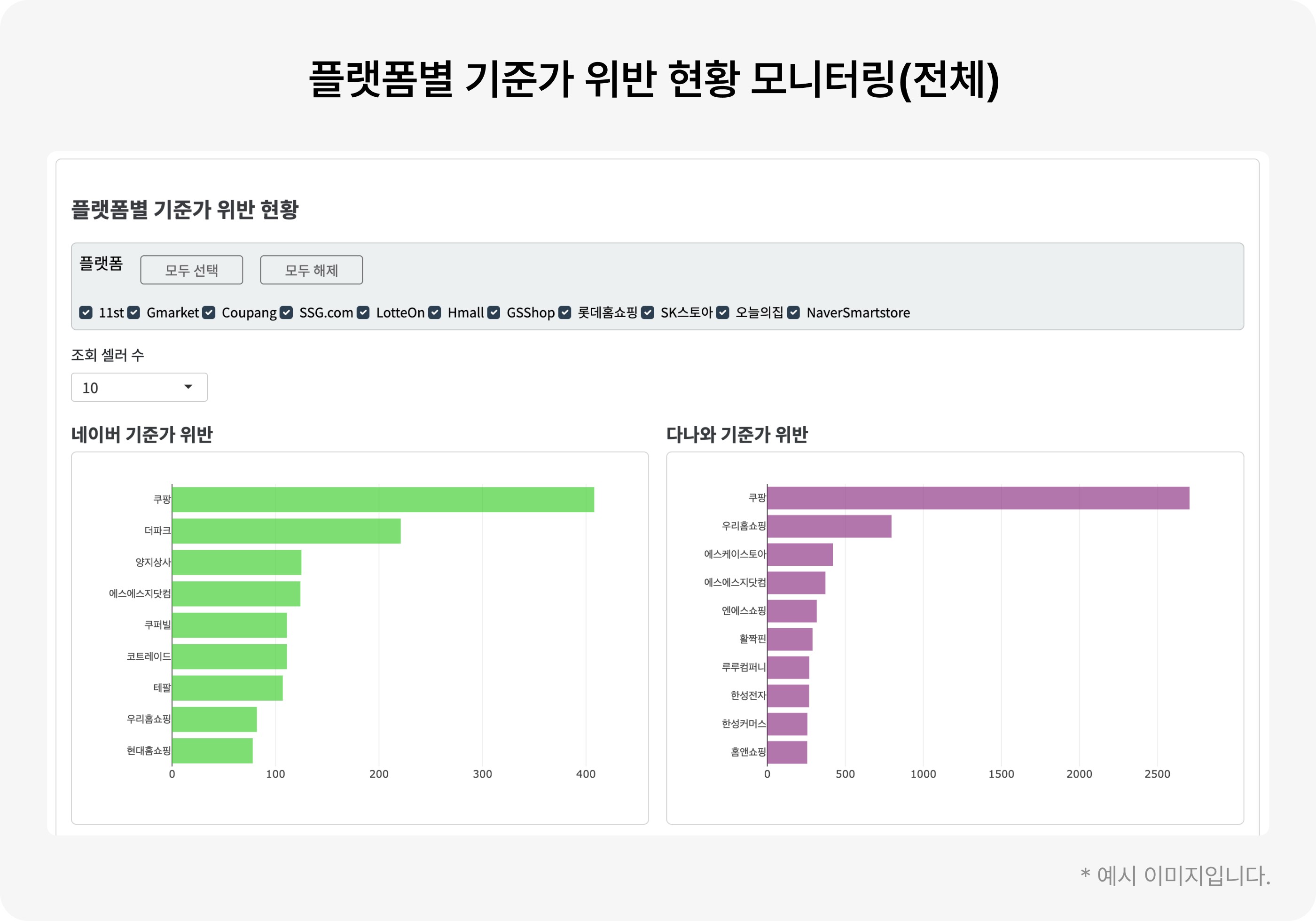
Ultimately, the value Reatrics provides is not 'simple collection' but 'providing explanation and evidence.' Looking at only one of price, image, or seller will not tell you the reason, but when these three elements are connected, you can clearly judge why a problem occurred and what action is required. This difference is the boundary line between general price monitoring tools and brand protection solutions capable of actual policy execution.
Selection Criteria for Professionals – Does It Enable 'Execution', Not Just 'Collection'?
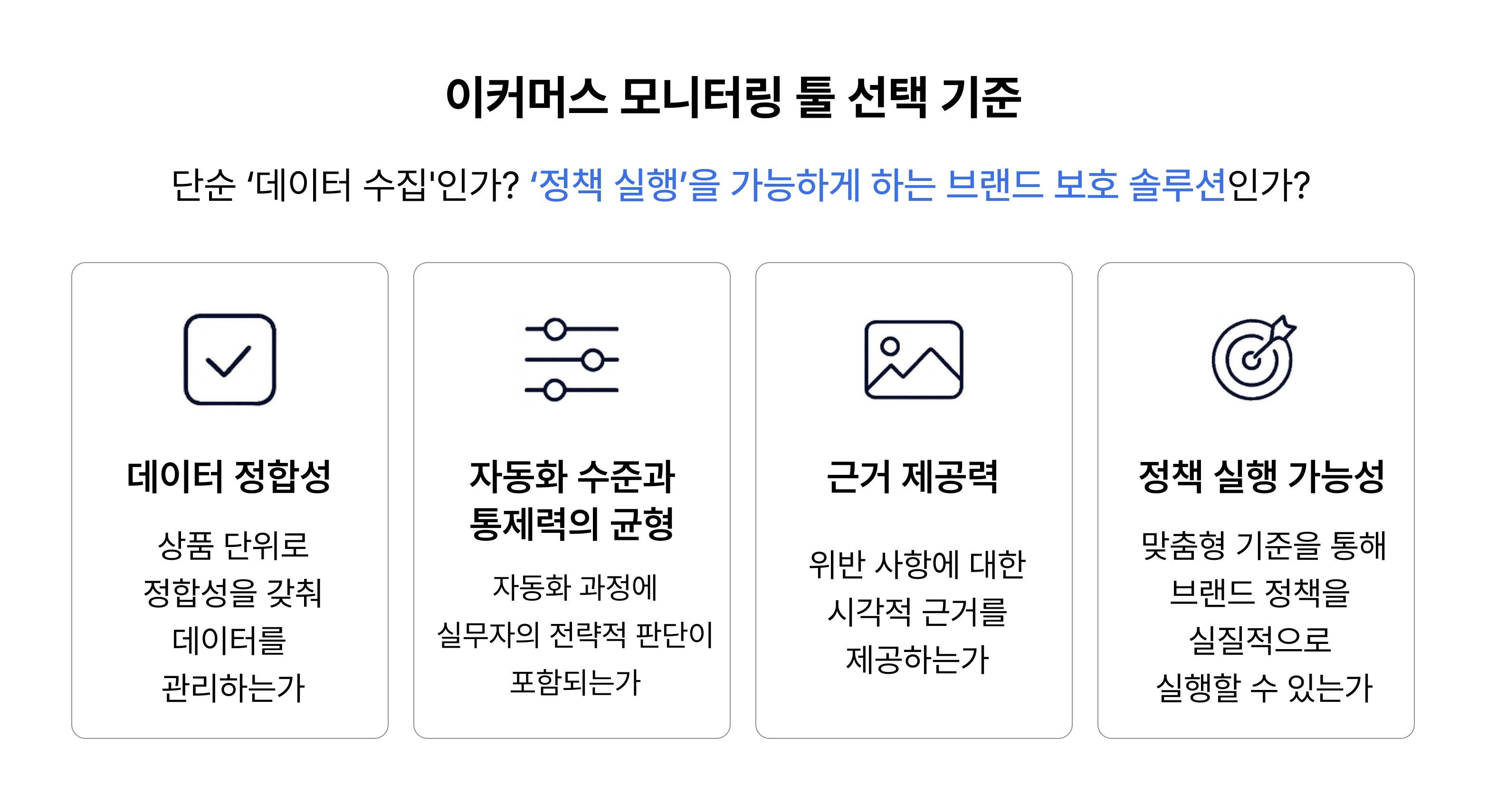
There is a common mistake e-commerce professionals make when comparing price monitoring tools: making a choice based solely on 'how much data is collected.' However, what matters is not how much is gathered, but 'what you can do' with that data. Indeed, several brand practitioners who have used standardized price monitoring tools say: "Reports arrive fine, but it still takes time to find the evidence of violations." In the end, it means they have the data, but it does not lead to execution.
The first criterion to look at when evaluating a price monitoring tool is 'data integrity'. Even for the same product, SKUs or option configurations may differ by storefront, and there are cases where the same product name is registered in different categories. Merely collecting this data makes it prone to errors. To solve this problem, Reatrics cross-validates whether they are the same product by combining price data with image and seller information. Thanks to this, highly accurate data is built at the product unit level that the actual brand needs to manage.
The second criterion is the 'balance between automation level and control'. Fully automated tools are convenient, but they do not suit brand policies with many exceptions. Conversely, manual tools are flexible but involve a lot of repetitive work. Reatrics combines automated data collection with a management system that the brand can directly adjust. In other words, automation is used to reduce repetitive tasks, while judgments and actions are made based on the professional's strategic criteria. As the professional's strategic judgment is included in the automation process, it becomes a structure where humans control the system, rather than the system leading.
The third criterion is 'evidence-providing capability'. Internal approvals or platform reports are difficult with a report that simply says "the price was low." The manager must clearly explain "why this unauthorized seller is a problem." Therefore, what matters is not 'numbers' but persuasive visual evidence.
Reatrics simplifies this process by combining price change data with 'AI image similarity diagnosis'. AI automatically identifies stolen images that look like the same product but have different background colors or label positions, and visualizes the differences in heatmaps. Managers can compare images at a glance, immediately verify violations, and use them as report materials without any separate editing or additional work.
The information collected in this way is provided in a single report format tying 'price capture–image comparison–seller history–link–timestamp' together. In other words, without the manager needing to recreate the evidence, it is organized in a form that can be immediately used for internal reporting or platform responses. Eliminating the gap between data and reporting is Reatrics' strength.
The last thing to look at is 'policy feasibility'. The purpose of price monitoring is not simple surveillance, but making sure brand policies are actually observed in the market. Finding violation circumstances through data, shortening response routines, and enabling brands to execute policies on their own—this is the real operational utility.
Ultimately, the true value of a tool lies not in "how much data it shows" but in "how quickly and accurately it enables action." Reatrics is a brand-centric solution designed around this point. It is not just a tool that shows data, but a system that helps policies work.
Conclusion: Guarding Price is Ultimately Guarding Brand Trust
Price monitoring is not simply about recording price changes in the market. It is about detecting market movements quickly, interpreting them through the brand's criteria, and creating a system to execute necessary actions. In an era where tools do the work instead, we are now transitioning into an era where brands proactively manage the market.
While it is certainly efficient that standardized automated tools reduce repetitive tasks, they are built on the assumption that 'all brands work in the same way.' However, actual practice is much more complex, and each brand's policy, channel, and partner structure are all different. This is precisely where Reatrics' customized approach becomes meaningful.
Reatrics is a customized monitoring infrastructure that allows managers to maximize efficiency while retaining control. Helping to redefine, in the brand's own language, what standardized automation misses is where Reatrics differentiates itself from other monitoring tools.
Ultimately, choosing an 'e-commerce price monitoring tool' is not a decision just to gather data. It is deciding by what criteria you view the market, at what speed you respond, and how proactively you will protect your brand's value. In that process, Reatrics is a brand protection value solution that helps practitioners go beyond simple monitoring to foster 'the power to read and respond to market changes hidden behind prices' and become 'people who execute policies'.