Counterfeit
210,000 Counterfeits Detected on Overseas Shopping Malls? How to Block Fakes Without Cost or Staffing Worries
💡 In this article, you can find the following information.
The crisis of increasingly sophisticated 'fake K-brands' alongside global market expansion
1.12 million suspected counterfeit products: severity of overseas distribution proven by statistics
A practical, 'one-stop counterfeit product reporting' guide by platform for practitioners
Zero worries about budget and manpower! 3 government-guaranteed 'K-Brand Protection Support Programs'
Sustainable growth of K-brands: the answer lies in the synergy of 'AI technology' and 'government support'
The Crisis of Sophisticated 'Fake K-Brands' Spreading in the Global Market
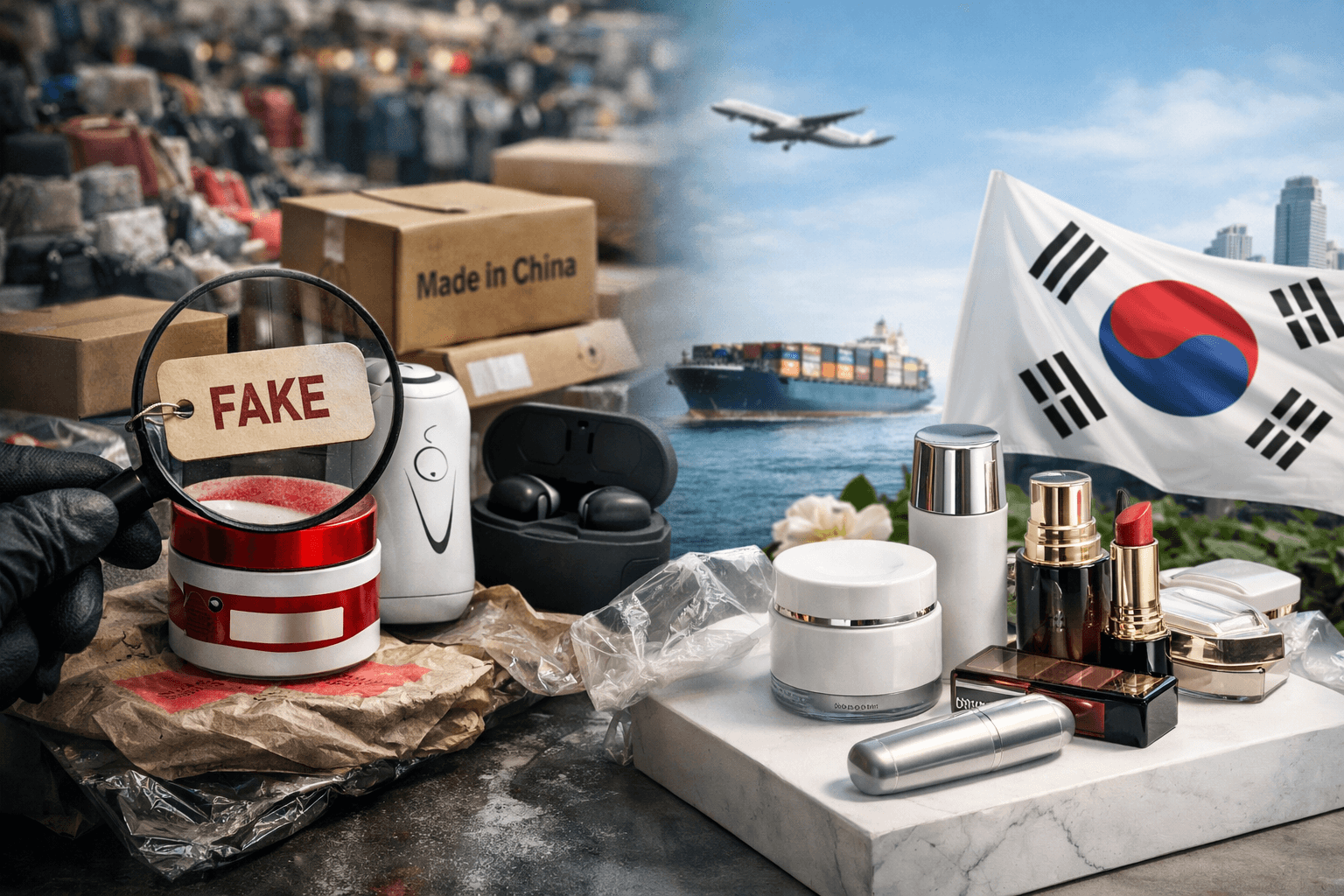
As global preference for K-brands increases, overseas expansion has become a necessity, not an option, for our companies. However, as the brand's reputation and influence grow, intelligent counterfeit distribution networks that exploit this are also spreading rapidly, centered on global platforms.
Recently, the distribution of counterfeit goods has become even more sophisticated, avoiding domestic crackdowns and moving its base to global e-commerce platforms such as Shopee in Southeast Asia and AliExpress in Greater China. This overseas distribution of counterfeits goes beyond simple revenue loss; it is a fatal threat that destroys the brand's pricing system, built with great effort, and ruins trust with local distribution partners.
In fact, counterfeit beauty products are repeatedly being detected in global online distribution networks. In March 2025, U.S. Customs and Border Protection (CBP) announced the seizure of counterfeit skin creams originating from Hong Kong and China. The seized items included a large number of products from famous beauty brands such as Estée Lauder, SkinCeuticals, and Clinique. This case shows that the counterfeit problem is no longer an exceptional event in some regions, but a structural problem repeated across the overall global e-commerce environment.
It is no longer possible to ignore the reality of infringement occurring across overseas platforms, which are blind spots for enforcement. Then, to what extent are the threats that domestic companies actually face on the global stage? Recently released statistical figures vividly show that the crisis we face is beyond imagination.
1.12 Million Suspected Counterfeit Products: Statistics Prove the Severity of Overseas Distribution
The first indicator to examine is the scale of damage in the global e-commerce market, where counterfeits of our brands are pouring out the most. According to 2025 data from the Korea Intellectual Property Protection Agency (KOIPA), the number of counterfeit products of domestic companies blocked through major global e-commerce platforms reached a staggering 210,034 cases. This is not just suspicion but the actual number of actions taken due to real infringement, showing clearly how seriously our brand identity is being compromised in overseas markets.
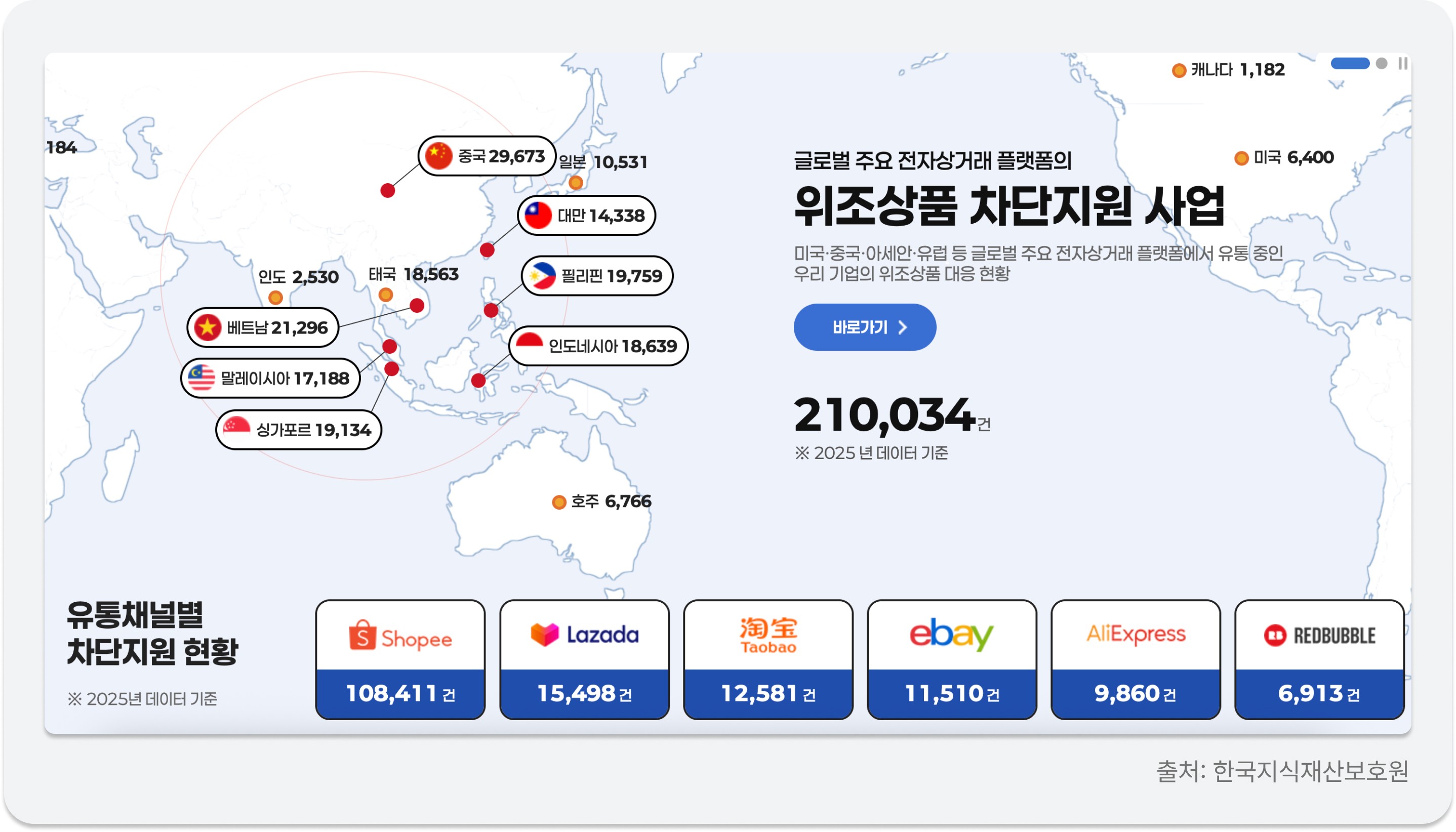
In regions where trademark protection is particularly weak, counterfeiters frequently register our names first. In fact, there are 2,062 suspected companies whose trademarks have been unauthorizedly preempted in China alone, with the number of trademarks reaching 3,112. The threats of 'name-stealing' and 'fake goods' are striking simultaneously.
Going Beyond Simple Imitation to Cosmetics and Small Appliances... Counterfeits Evolving into 'Enterprise-Level'
The real problem is that the types of counterfeits are completely different from before. In the past, they were mostly luxury bags or clothes, but recently, counterfeits are being manufactured on an enterprise scale across industries, including cosmetics, small appliances, and even sophisticated electronic parts. In fact, the problem of K-beauty counterfeits in the global market has already reached a serious level. It was surveyed that in 2024, approximately 1.12 million or more suspected K-beauty counterfeit products were found on over 1,500 online platforms in 80 countries worldwide. However, only about 80,000 posts were deleted through direct reporting by the actual companies. This means that a huge amount of undetected counterfeits are highly likely still being distributed somewhere in the online market.
A similar trend is confirmed in other statistics. According to data from the Korea Customs Service, during January to September 2025, the scale of intellectual property rights infringement damage caused by counterfeit cosmetics imitating domestic beauty brands reached approximately 22 billion KRW, a sharp increase of more than 24 times compared to the previous year. The reason the damage has grown out of control is that counterfeiters have moved their bases of activity in large numbers to overseas platforms such as Shopee, AliExpress, and Temu to avoid strict domestic crackdowns. Using the barriers of language and country as a shield, they copy the brand's genuine detail pages as they are to deceive consumers and make profits in the blind spots of law enforcement.
Warning from 100,000 Blocks on Shopee: Overseas Local Markets are the 'Strategic Escape Route' for Counterfeits
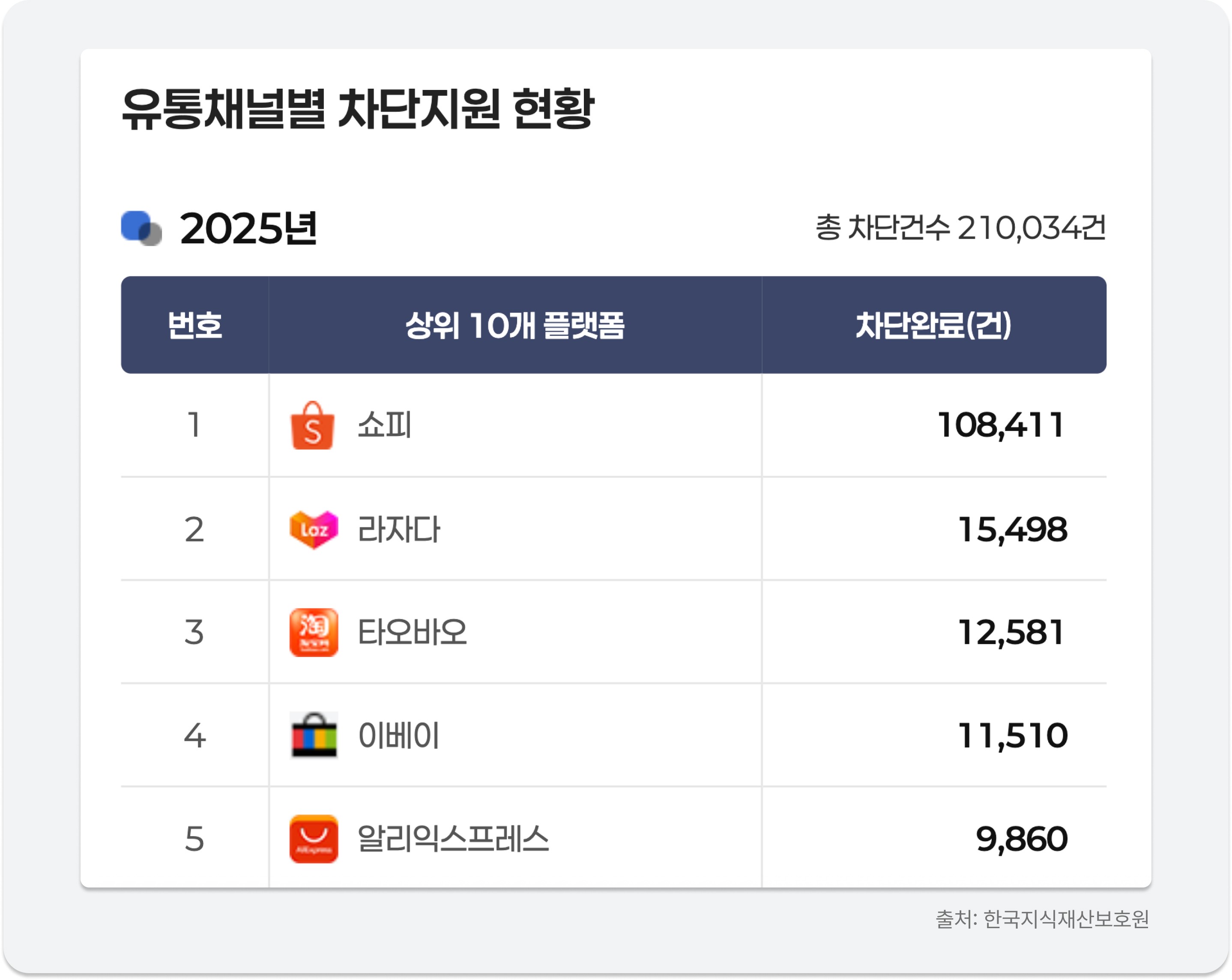
Additionally, the most noteworthy indicator is the blocking support status by platform. As of 2025, as many as 108,411 cases of counterfeit product blocking support were carried out on Shopee alone. The fact that the number identified on a single platform exceeds 100,000 shows that if a complete survey is conducted on other global platforms where monitoring systems are insufficient or located in blind spots, the actual scale of counterfeit distribution would be unimaginably huge. As such, counterfeiters are utilizing overseas reverse-border shopping channels and Southeast Asian local e-commerce as strategic choices to avoid domestic advanced AI monitoring systems.
This situation sends an important message to brand managers. Just because the number of counterfeit detections on domestic platforms has decreased is no reason to be relieved. This is because counterfeiters may have simply moved their bases from domestic areas, where crackdowns have intensified, to overseas regions where monitoring is relatively loose. In fact, when tracking counterfeits found overseas, they are very often closely connected to each other, having escaped domestic enforcement networks.
Ultimately, to prevent overseas platforms from becoming permanent havens for counterfeiters, domestic enforcement know-how and data must be organically connected with the entire overseas distribution network. For this organic response, we must first start by accurately understanding the reporting systems and guidelines, which differ by platform.
A Practical Guide to 'One-Stop Counterfeit Reporting' by Platform for Professionals
Since each overseas platform has different intellectual property rights protection policies and reporting systems, it is important to know the efficient response procedure that fits our brand's situation. Based on the guide provided by the Korea Intellectual Property Protection Agency (KOIPA), we detail the key processes of the main platforms that professionals encounter most frequently.
1) Taobao & Tmall (Alibaba Group, China)
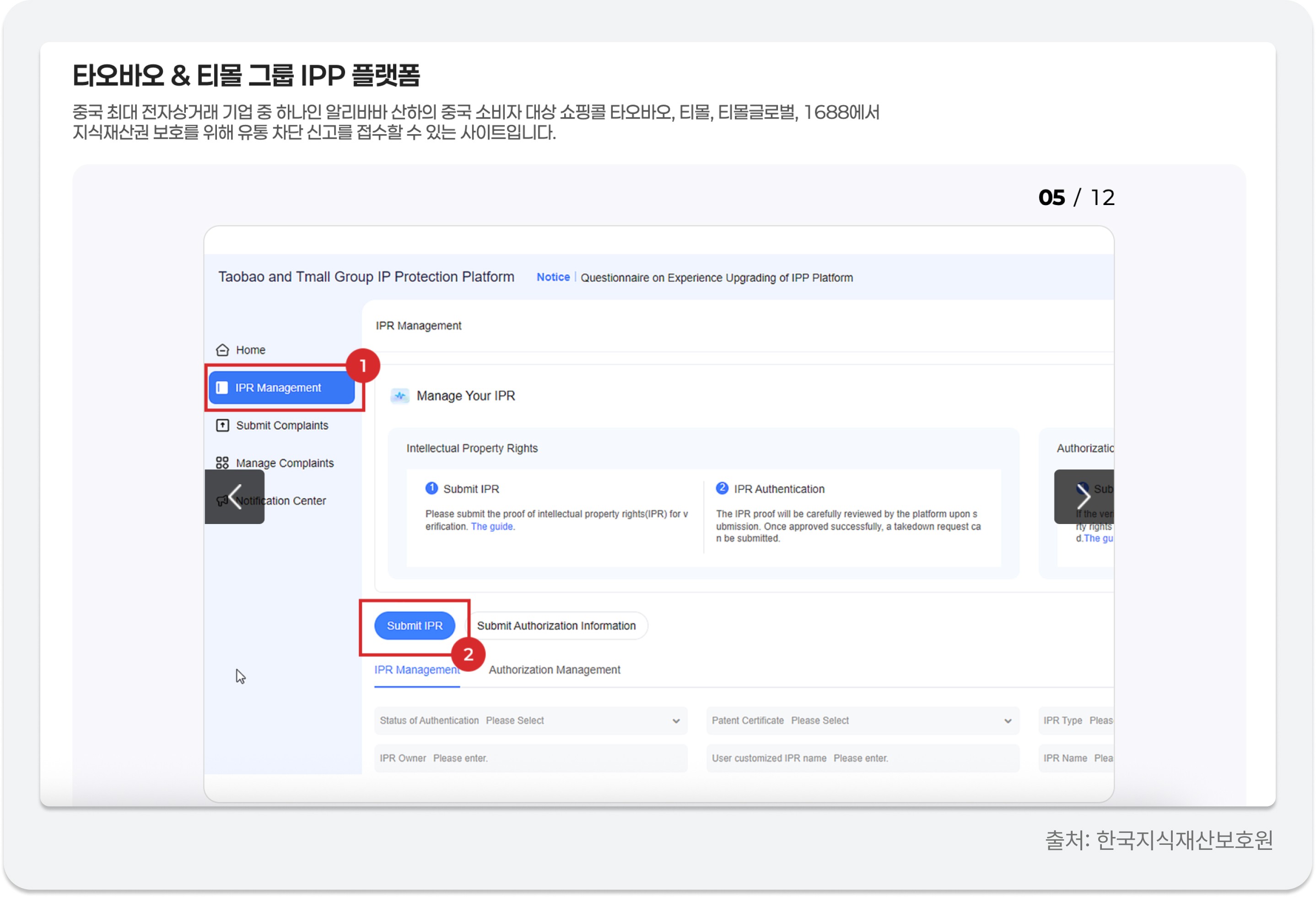
Alibaba Group, the core of the Chinese market, operates IPP (Intellectual Property Protection), an integrated IPR protection platform. Here, you can handle everything from account creation to rights registration and reporting in a one-stop process.
Key Procedures: Create a corporate rights holder account → Verification based on English business registration certificate → Pre-registration and approval of intellectual property rights (IPR) such as trademarks → Submit infringing URLs and report.
Precaution: Before reporting, your rights must be pre-approved within the platform for practical blocking measures to take place.
2) Alibaba International & Lazada
Alibaba International and Lazada, which target the global market and Southeast Asia as their main bases, also enable efficient responses through an integrated intellectual property rights protection platform.
Integrated Account Management: Alibaba Group's global platforms can be managed collectively with a single IPP account, and you register by selecting the 'Global' site during the initial signup.
Rights Holder Verification & Registration: After completing the rights holder verification by registering corporate information (business registration certificate), pre-register the intellectual property rights, such as trademarks, that will serve as the basis for the infringement report on the platform.
Platform Selection & Reporting: After the trademark is approved, select the platform where the infringement occurred, either Alibaba International or Lazada, from the report menu.
Specifying Infringement Type: Select the detailed reason, such as copyright infringement in addition to simple counterfeiting, and submit test purchase data or comparative photos proving it is counterfeit along with the relevant URL. You can check the processing results in real-time on the dashboard.
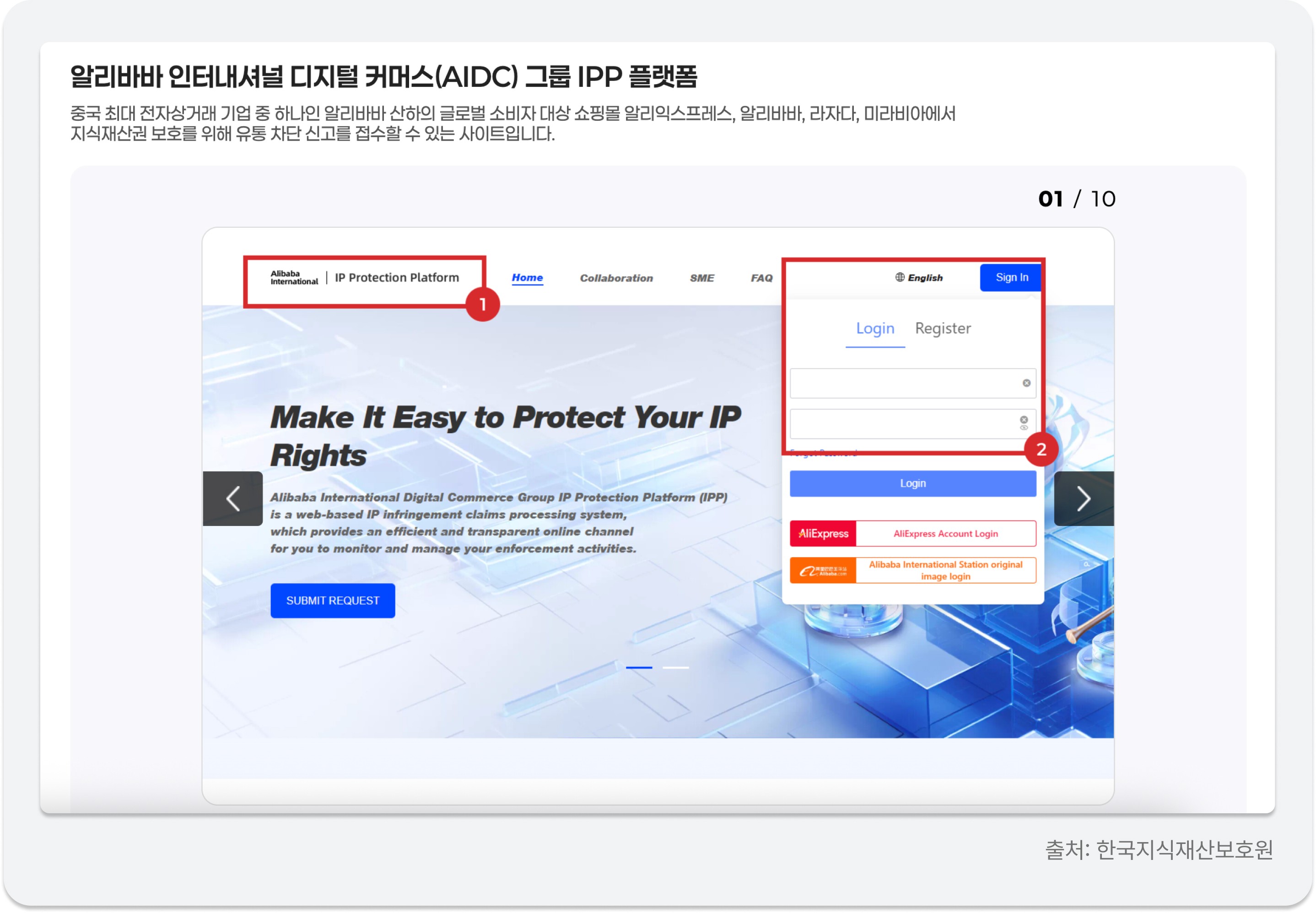
3) Shopee
Shopee, which covers Southeast Asia and the Taiwanese market, manages counterfeit product reporting by operating a dedicated reporting channel called the 'Brand IP Portal' separately. Due to the nature of the platform, it is optimized to control counterfeits listed across multiple countries simultaneously.
Brand IP Portal Registration: Access the dedicated portal, register rights holder information, and create an account.
Intellectual Property Rights (IPR) Application: Enter trademark information in the 'My IPR' menu. At this time, you must specify the country where the trademark is registered, the trademark number, and the expiration date.
Reporting Infringement Cases: Once the rights registration is complete, you can start reporting. Select the country where the counterfeit is being sold and the type of infringement (IPR Type).
Proof & Submission: Enter the Item ID or URL of the counterfeit product and upload supporting materials describing the characteristics of the counterfeit (different logo from the genuine product, poor finishing, etc.). Afterward, you can track the report results at any time within the portal.
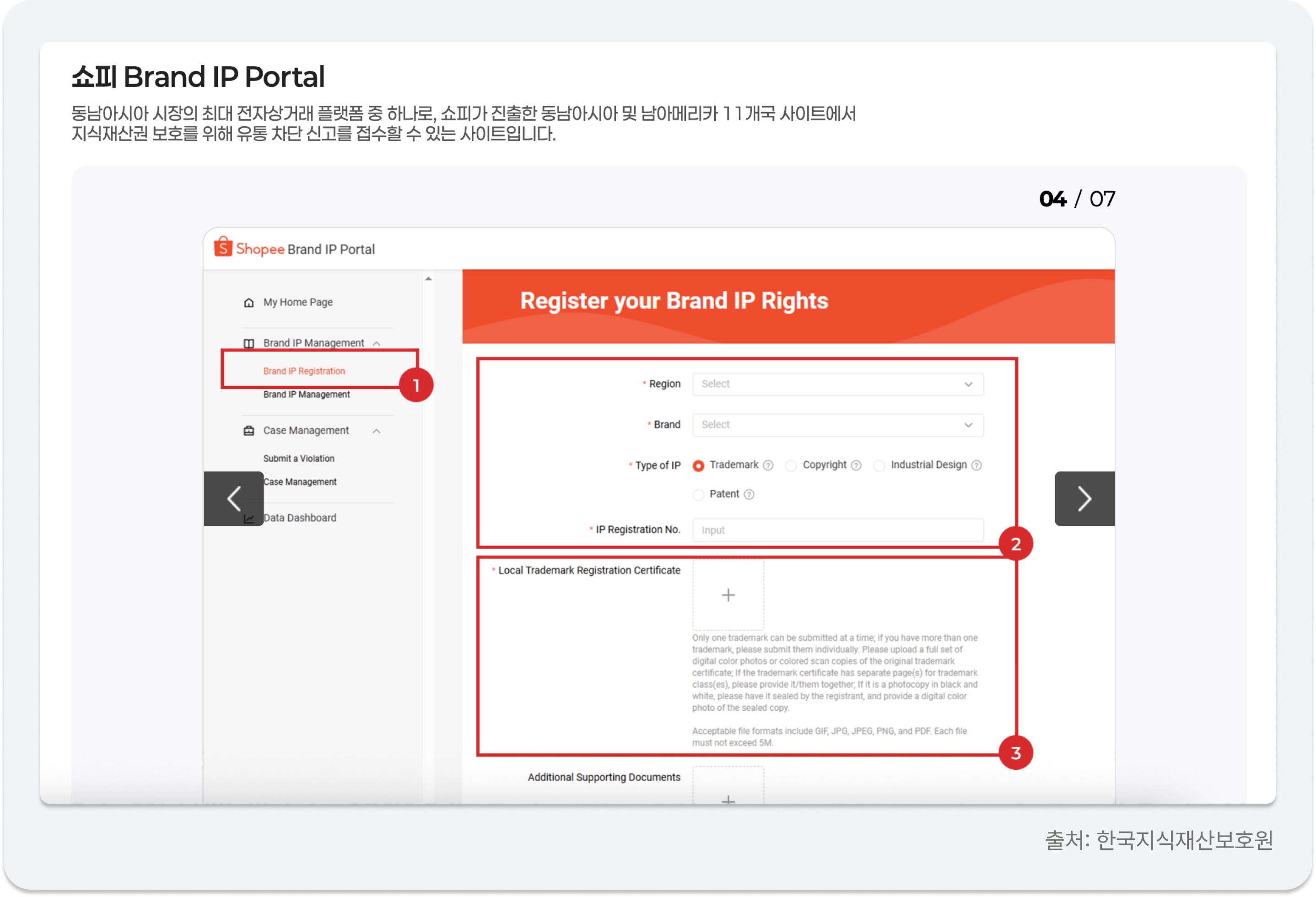
*Detailed guides for each platform can be found in the [Counterfeit Reporting Guide] menu within the K-Brand Protection Portal of the Korea Intellectual Property Protection Agency.
As we have examined so far, each platform has its own protection system. However, from a practical standpoint, fully understanding the constantly changing guidelines and cross-checking thousands of suspicious links pouring in every day requires significant resources.
To solve this frustration, a strong support infrastructure provided at the national level is in place. Now, let's look at the practical support projects that help domestic companies protect their brand value without worrying about cost and manpower.
Zero Worry About Budget and Manpower! 3 Selected 'K-Brand Protection Support Projects' Guaranteed by the State
When counterfeits break out overseas, the first thoughts that come to mind are, "When am I going to report all of this?" and "How much will it cost?" In fact, the distribution of counterfeit products on overseas platforms has clear limits with only individual corporate responses, and it causes huge legal costs and administrative risks, especially for small and medium-sized enterprises. Accordingly, the government has established a multi-faceted public support system through the Korea Intellectual Property Protection Agency (KOIPA) to protect the global intellectual property rights of Korean companies and is actively providing support. Here are the 3 key projects that professionals must check.
The first thing to check is the 'Overseas Online Counterfeit Product Distribution Blocking Support Project'.
This project helps to find and delete links selling counterfeits of our brands on Southeast Asian (Shopee, Lazada, etc.) or Chinese platforms on your behalf. Since experts directly handle the complex platform-specific reporting procedures we looked at earlier, such as investigating the infringement status through professional tracking agencies and requesting deletion from the platforms, the manager only needs to check the reports and review the results. Small businesses can receive government support for up to 80% of the total project cost, and medium-sized enterprises can receive up to 50%, making the financial burden very low. In particular, you can receive support up to 50 million KRW per year, which is essential for companies requiring large-scale distribution blocking. It is truly like rain during a drought for teams short on manpower.
The second is the 'Provision of Information on Suspected Unauthorized Trademark Preemption' service.
You can think of this as an alert service that notifies you in advance, saying, "Someone is trying to secretly register our trademark on an overseas platform." It is a service where the state monitors in advance to prevent counterfeiters in places like China or Vietnam from stealing our names first. If you lose your name first, a situation might arise later where you cannot sell genuine products even if you want to, so this must be checked. Since the distribution of counterfeit products often starts with the unauthorized preemption of trademarks, this service is a key preventive measure to block counterfeit distribution at its source and prevent large-scale trademark disputes in advance.
Lastly, there is the 'Intellectual Property Protection Diagnostic Service'.
This is consulting where experts diagnose in advance whether our brand is fully prepared to enter overseas platforms and whether there are any legal gaps. For companies considering or in the early stages of entering overseas markets, it examines the status of IP acquisition and the possibility of infringement in advance, and provides customized guides such as how to prepare evidence of rights by platform to build foundational strength in preparation for future disputes. Since these projects are recruited regularly from the 1st to the 20th of every month or announced on a large scale at the beginning of the year, it is strategically very important to bookmark the K-Brand Protection Portal and check the schedule.
Sustainable Growth of K-Brands: The Answer Lies in the Synergy of 'AI Technology' and 'Government Support'
The success of our companies in the global e-commerce market depends not only on increasing sales volume, but also on how intactly we preserve our brand value and establish a clean distribution ecosystem. The data and platform-specific reporting processes examined above show that responding to counterfeits in overseas markets should no longer remain a reactive measure.
To counter counterfeit organizations that are becoming smarter, a preemptive response system that links and examines global distribution data from Southeast Asia to the Greater China region and detects signs of infringement early is absolutely necessary. In step with this, Reatrics monitors global distribution networks 24 hours a day and detects subtle signs of infringement early, providing close support so that brands do not miss the golden time for enforcement and can respond immediately. Try combining Reatrics' sophisticated AI detection technology with the credible support infrastructure of KOIPA introduced today. If Reatrics' intelligent detection solution is added to the state's solid legal and administrative support, you can establish a seamless defense system that monitors global distribution networks in real-time without worrying about manpower shortages.
Only when supported by a clean distribution environment can the global growth of our brands continue without stopping. Why not establish the strongest and most efficient global shield for your brand right now through the 'K-Brand Protection Portal' and Reatrics' solutions?