Industry Cases
Counterfeit
Who knew electric toothbrushes could be this dangerous… The trap of counterfeit household appliances

💡 In this article, you can find the following information.
The 'unexpected danger' caused by electric toothbrushes
Online market distribution, lack of safety verification
Counterfeit small appliances leading to safety accidents
How to track unauthorized counterfeit sellers who 'reappear after deletion'
Conclusion: A dual monitoring system to protect safety and trust
The ‘Unexpected Danger’ Brought by Electric Toothbrushes
In the past, when the Customs and Border Protection (CBP) opened a cargo shipping box at Philadelphia International Airport, it was filled with what appeared to be well-packaged, famous brand products. Inside the box were thousands of replacement toothbrush heads bearing the 'Oral-B' logo. The problem was that these products were not genuine, but rather sophisticatedly counterfeited imitations.
As a result of expert inspection, it was confirmed that these counterfeit toothbrush heads did not undergo the hygiene and quality control procedures applied during the genuine manufacturing process. The materials used (bristle material) also had unverified origins and safety, raising the possibility of worsening oral health due to hygiene issues or quality degradation upon long-term use. In particular, because electric toothbrushes are a 'hygienic close-contact' product category that directly touches the inside of the oral cavity, using counterfeits of unclear quality can lead to direct health damage beyond simple inconvenience.
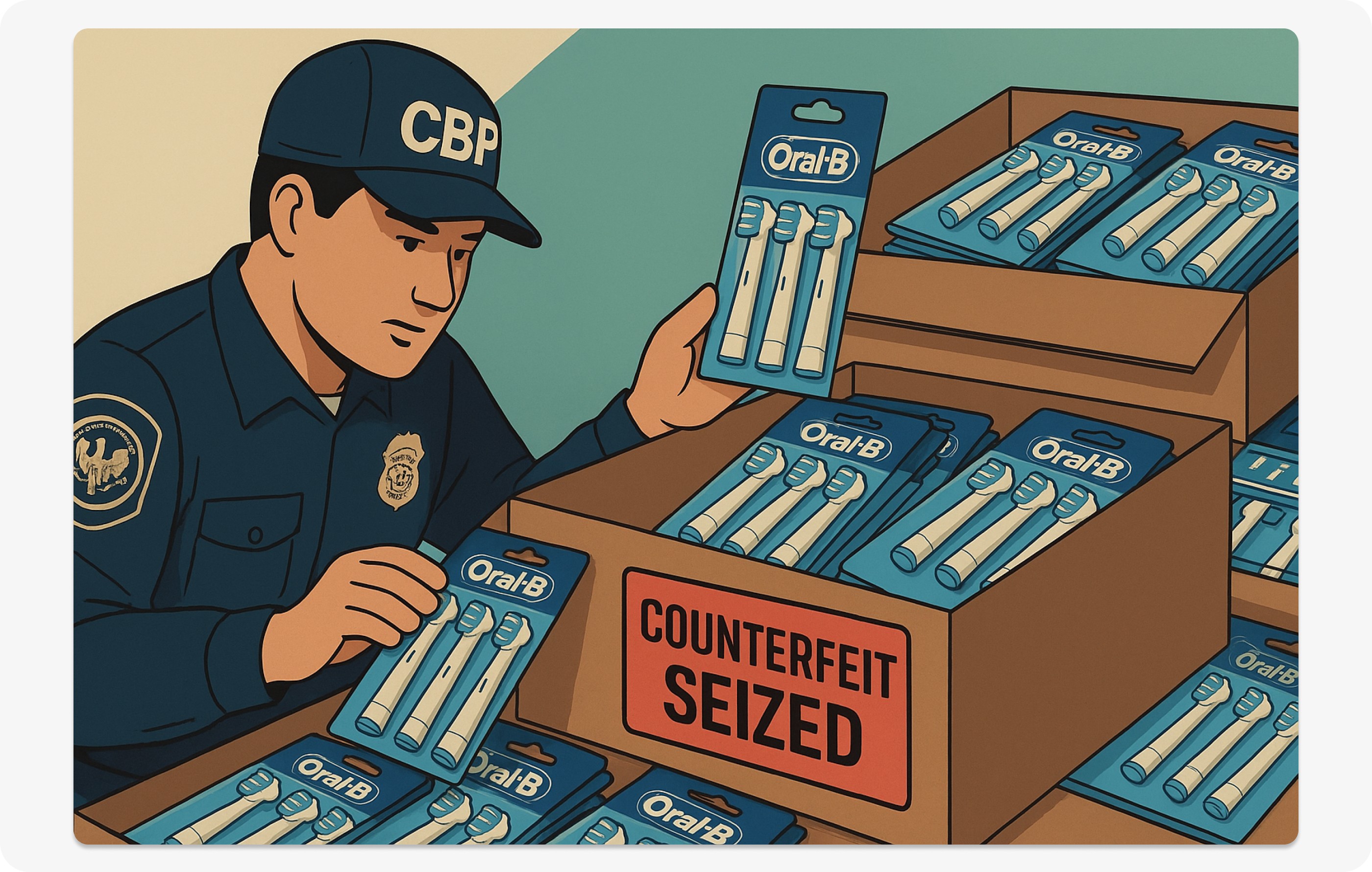
A bigger problem with these counterfeits is that it is difficult for consumers to distinguish them from genuine products. By replicating the logo, packaging, and even the manual, consumers easily believe the product is 'genuine' even when purchasing from channels other than the official distribution network. As a result, when a problem occurs, consumers think of the brand, not the seller, and contact customer service. From the brand's perspective, even though the damage is caused by a product they did not directly distribute, it is difficult to avoid the double blow of CS burden and declining trust.
This is not a story unique to electric toothbrushes. The distribution of counterfeit products is also rapidly spreading in the small household appliance market, which is directly related to personal hygiene and safety, such as hair dryers and electric shavers. This issue, which even carries risks of leading to safety accidents like overheating, electric shock, and skin damage, should be viewed not as a simple 'price deviation' but as a structural risk that threatens both consumer safety and brand trust at the same time.
Online Market Distribution, Absence of Safety Verification
As seen in the case of counterfeit electric toothbrush heads, small household appliances are directly related to hygiene and safety, but it is not easy to verify authenticity at the time of purchase. One of the reasons lies in the distribution structure of online markets. Major platforms have low barriers to seller registration, and products are exposed based solely on images and descriptions provided by the seller, making it difficult for consumers to verify authenticity on their own.
The investigation revealed serious safety defects in a wide range of product categories, including tumble dryers, kettles, travel adapters, hair straighteners, and Kodi boxes capable of media streaming. Some products continued to be sold even though they matched models already listed on the UK's national product recall list. ESF pointed out that these counterfeit and dangerous products use packaging and logos very similar to genuine products, easily confusing consumers.
In particular, the young generation in their 20s and 30s was found to be the most vulnerable age group to counterfeit scams. Approximately half of them had experience purchasing counterfeit electrical products online, whereas the rate was less than 10% for those aged 55 and older.
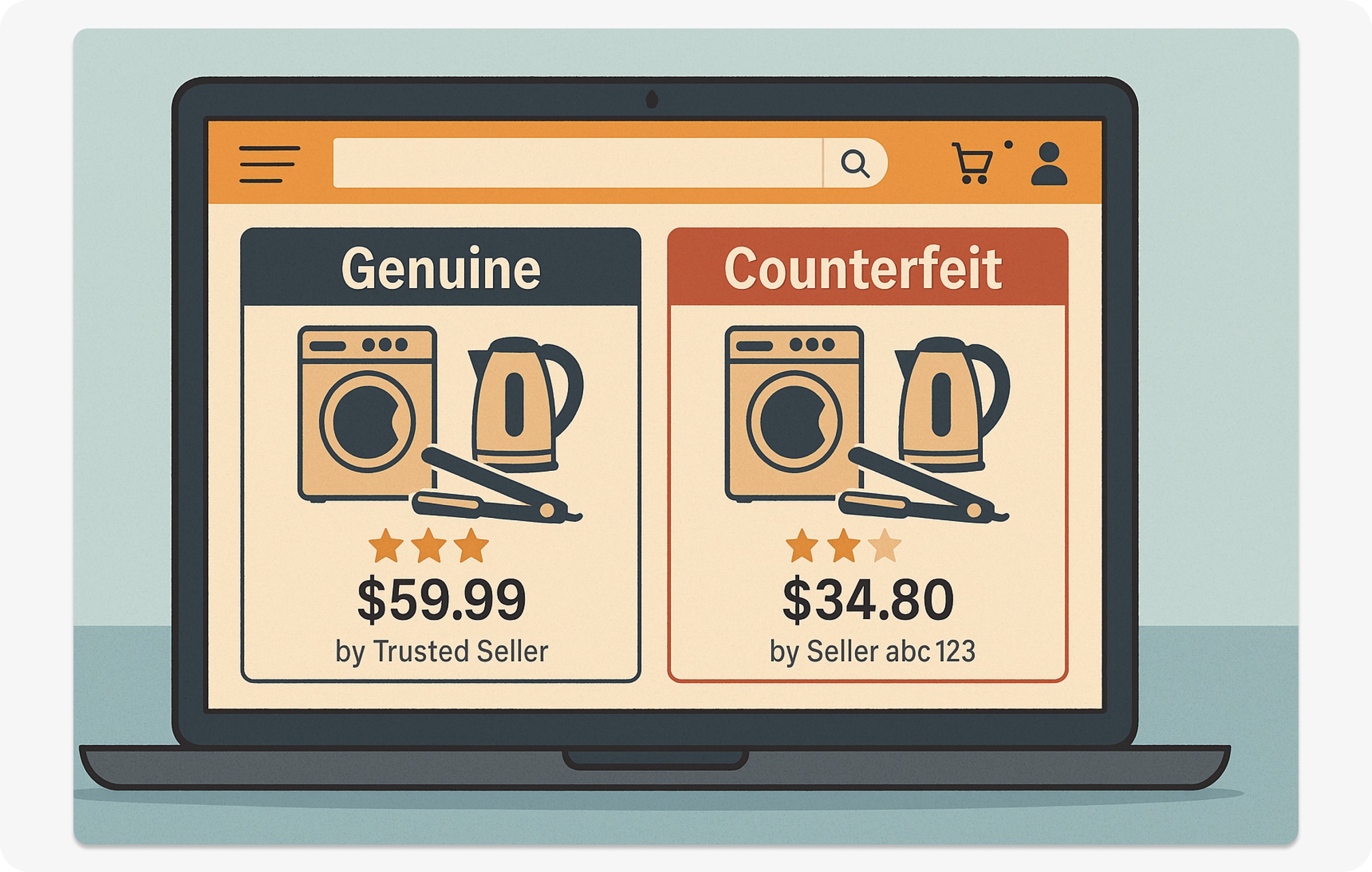
The survey results show how big a risk factor the absence of 'preliminary safety verification' on online platforms is. ESF sent official letters to Amazon UK, eBay UK, and Fruugo UK, urging them to strengthen regulations and seller verification to eradicate the advertising and sale of counterfeit and dangerous electrical products. In particular, it emphasized that immediate measures to stop sales must be taken if a product model number is on the recall target list.
Amazon, eBay, and Fruugo all stated their positions on the cases. Amazon stated that all marketplace sellers must comply with guidelines, and violations lead to actions including account deletion. eBay immediately removed the dangerous products pointed out in the investigation from its 'danger list', and Fruugo made it clear that it would expel sellers who consistently violate standards.
This case clearly demonstrates how easily counterfeit small electronic products that look genuine can be distributed on online marketplaces. Products that consumers trust and purchase may actually be unverified counterfeits, which can lead beyond simple complaints to brand image damage and threats to consumer safety.
Counterfeit Small Appliances Leading to Safety Accidents
Since small household appliances are used closely in consumers' daily lives, the damage caused by counterfeits is highly likely to lead directly to safety accidents. In particular, for product groups that use electricity, structural defects and faulty parts can directly lead to electric shocks and fires. Two recent cases detected in the US and UK clearly demonstrate these risks.
US CBP Seizes Counterfeit Hair Dryers Lacking Immersion Protection Devices
At ports in the Norfolk-Newport News area of Virginia, Customs and Border Protection (CBP) officers seized 60 handheld hair dryers originating from China. While the UL (Underwriters Laboratories) certification mark was clearly stamped on the exterior, investigation revealed that the mark was a counterfeit used without authorization. Analysis by CBP trade specialists showed that the product had no authority to receive UL certification and did not meet electrical safety standards.
A more serious issue was that the product did not contain an 'immersion protection circuit interrupter'—an essential safety device to prevent electric shock—inside at all. An immersion protection device is an essential component that immediately cuts off the current to prevent electric shock if a hair dryer comes into contact with water near a bathroom or sink. Without this device, if water splashes or the product is dropped and submerged, the current flows continuously, which can lead to a fatal electrical accident shocking the user.
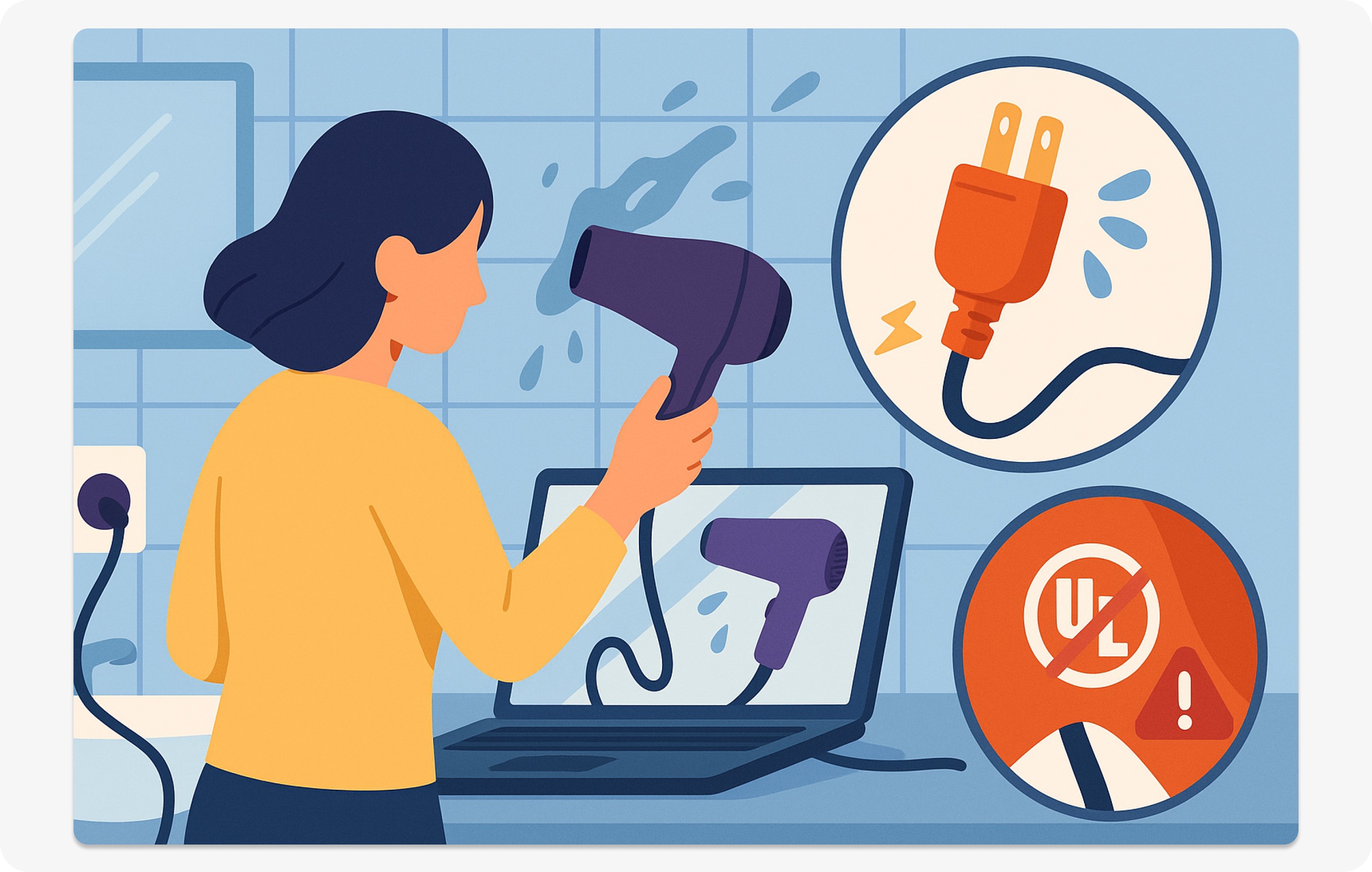
CBP pointed out that such products reassure consumers with counterfeit certification marks, making them mistakenly believe they are safe. Furthermore, it warned that counterfeit manufacturers tend to use defective parts or omit essential safety devices, posing constant risks of electric shock and fire.
UK Port of Felixstowe Seizes 500 High-Risk Counterfeit ‘Dyson’ Hair Dryers
Among these were 500 counterfeit 'Dyson' hair dryers, and during product testing, the following serious defects were identified:
Overheating and smoke generation during operation
Inability to cut off power
Melting of internal and external components (a phenomenon where the outer case and internal parts melt simultaneously during use)
Incorrect plug rating and use of fuses that do not meet BS 1362 standards
Very high risk of ignition due to failure to operate under overcurrent conditions
These defects are major safety violations that can cause both electric shock and fire hazards simultaneously. Trading Standards pointed out, "If distribution had been allowed, these products could have caused serious injury or property damage in actual homes," classifying the products as 'high-risk products' posing electric shock and fire hazards and immediately removing them from the market. Along with this, at the Port of Felixstowe, a large number of various electrical products, including air fryers, heating blankets for pets, fan heaters, and wall chargers, failed safety inspections and were blocked from entering.
This case warns that counterfeit small appliances go beyond simply damaging brand image, potentially flowing into the consumer market without meeting even basic electrical and fire safety standards. In particular, when distributed through third-party sellers on online marketplaces, it is virtually impossible for consumers to verify safety in advance.

In both cases, they are almost indistinguishable from genuine products based on appearance alone, but the internal structures and components did not meet safety standards at all. In particular, the absence of essential safety devices, substandard components, and the use of incorrect certification marks send a false signal of 'safety' to consumers, which can lead to serious accidents like electric shock or fire during actual use.
The problem is that once damage occurs, consumers think of the brand, not the seller, creating a structure where the brand must bear the double damage of CS burden and image degradation, despite the product not being directly distributed by them.
Ultimately, to minimize these risks, a comprehensive monitoring system that includes image analysis and seller history tracking is needed, going beyond simple price monitoring. Being able to track 'where, who, what product, and at what price' it is being sold all at once makes it possible to block counterfeits before they spread in the market.
How to Track Unauthorized Sellers of Counterfeits Who ‘Reappear After Removal’
The common thread among the counterfeit household appliance cases examined earlier is that they are difficult to distinguish from genuine products by appearance alone. They replicate genuine images exactly—including UL marks, brand logos, packaging designs, and color combinations—or modify detailed elements so subtly that consumers cannot notice the difference.
The issue is that these products do not just disappear once caught. Even if a seller's account is closed or the seller name is changed, they frequently reappear using the exact same product images and description text. In fact, in some counterfeit sales patterns monitored by Reatrics, sales posts based on the same image were re-registered at 3-to-4-month intervals, and even when the seller changed, cases were confirmed where the shipping origin and product codes matched.
Image theft goes beyond simple copyright infringement and becomes a core tool to make consumers believe a product is 'genuine.' Since images themselves—such as product usage scenes, component close-ups, and certification marks—are important factors in building trust for small household appliances, images often become the starting point for counterfeit distribution.
To block this, AI-based image similarity analysis is required, rather than simple keyword searches or manual inspections. Reatrics' image diagnostic function analyzes similarity at the pixel level to find associations with the original image even when the background color is changed or some angles are adjusted. Combining this with seller history tracking makes it possible to check the history of sellers and products that have used the same image in the past, allowing proactive identification of recurring counterfeit distribution networks.
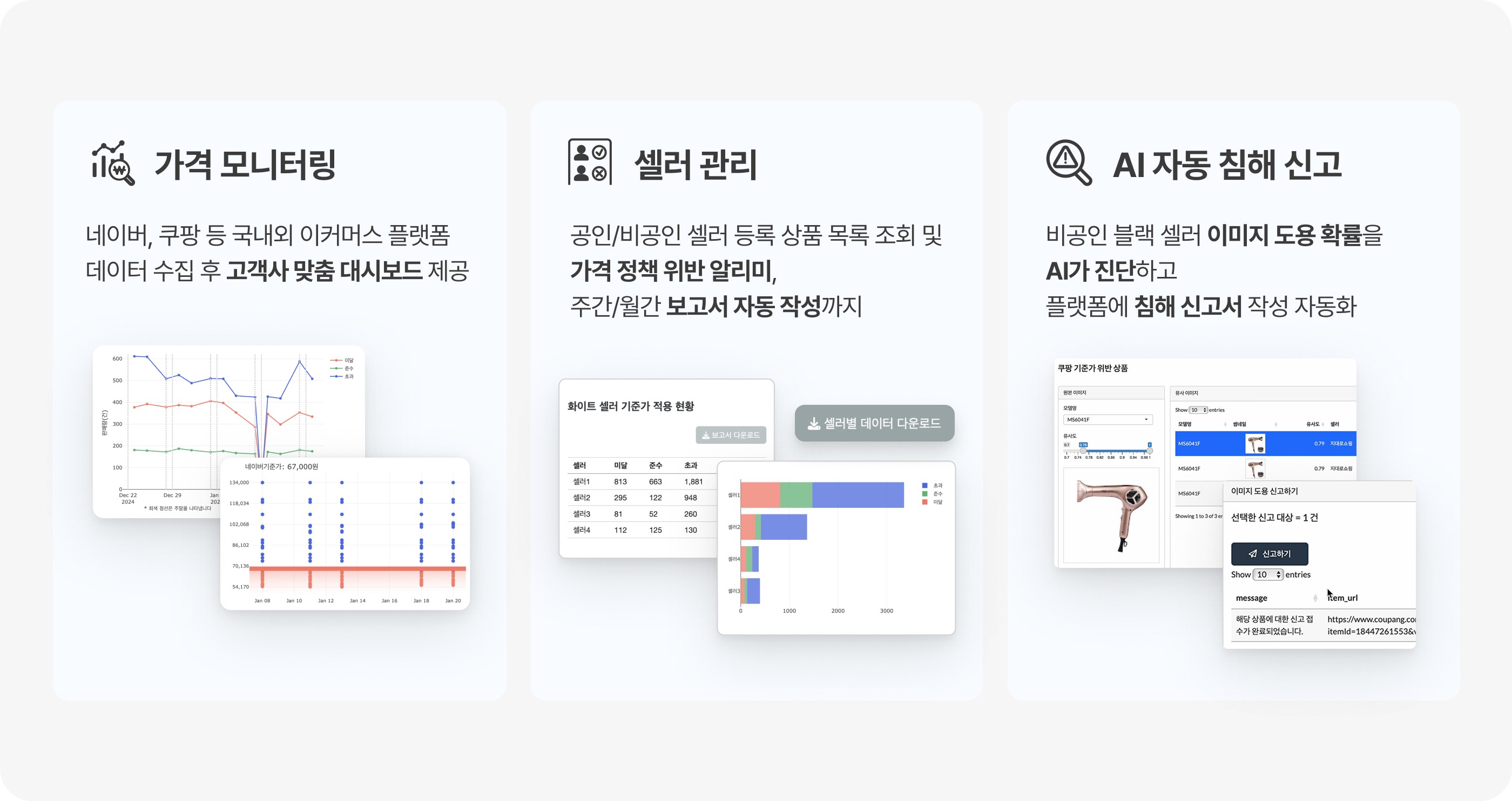
To effectively stop counterfeits, it is recommended to establish an integrated surveillance system that includes seller history tracking, rather than viewing 'price monitoring' and 'image analysis' separately. This enables continuous blocking rather than one-off crackdowns, breaking the vicious cycle of counterfeit distribution that threatens both brands and consumers.
Conclusion: A Double Surveillance System Protecting Safety and Trust
Counterfeit small household appliances, such as electric toothbrushes and hair dryers, are not just a problem of simple imitations; they are products that directly threaten the health and safety of consumers. As seen in the previous cases, products lacking essential safety devices or using certification marks without authorization can lead to serious accidents such as electric shock, fire, and oral damage. Furthermore, these products reappear on online marketplaces with appearances that are almost indistinguishable from genuine ones, dragging down brand trust when damage occurs.
Ultimately, the key to a solution lies in 'discovery' and 'blocking.' Through price monitoring, products with abnormally low prices must be captured early, and sellers utilizing stolen images must be tracked through image similarity analysis. When combined with seller history management that monitors repeated re-registration, the entry of counterfeit small appliances into the market can be substantially reduced. Safety begins with prevention, which is also the first step in protecting brand trust.