Industry Cases
Counterfeit
Similar designs, different ingredients... counterfeit cosmetics damage brand trust
💡 In this article, you can check the following contents.
How far can counterfeits imitate genuine products?
Prices more than 30% lower: is it a simple discount or a counterfeit?
The label looks genuine, but the content is harmful: cases of counterfeit cosmetics detection
Counterfeits are not just a problem for high-end brands
Subtle traces of counterfeit: how can we find them?
Conclusion: A double-monitoring system of price and image to protect genuine products
How Far Can Counterfeit Products Go in Copying the Genuine Ones?
These products were generally distributed at prices more than 60–70% cheaper than the retail price, and some even had different scents or cloudy formulations. Differences in the quality of the ingredients—such as essence smelling like shampoo or serum with altered viscosity—were confirmed compared to genuine products, but they were nearly impossible to distinguish with the naked eye.
In particular, unless directly compared to the genuine product, differences in packaging box fonts, label printing positions, and container materials made it difficult even for consumers who had experienced the genuine product to notice the counterfeit status. Ultimately, consumers who purchase these products end up complaining to the brand when problems arise, which adversely affects both brand trust and customer safety. Since it is difficult for consumers to know whether a product is counterfeit, the responsibility ultimately shifts back to the brand when issues occur.
In fact, according to a report by the UK Intellectual Property Office (IPO), 17% of British women have 'intentionally' purchased counterfeit products online. While demand for luxury beauty products remains strong, many budget-conscious consumers since the pandemic-induced economic downturn are choosing cheaper alternatives. Consequently, the market where counterfeit cosmetics are distributed is expanding, posing a more structural threat to brands. For product categories directly linked to skin health like cosmetics, this is not just a simple pricing issue, but can lead to counterfeit risks that threaten both brand trust and customer safety simultaneously.
A Price More Than 30% Lower: A Simple Discount or a Counterfeit?
"I just bought it because it was selling cheaper than usual, but the smell was so strange."
One consumer, who purchased a famous brand skincare essence with a retail price of £40 for only £12 online, left a review suspecting it was a counterfeit, saying the 'smell was so strange.' The product in question had an appearance similar to the genuine one, but showed clear differences in scent, formulation, and label finish. According to research, these low-cost counterfeit cosmetics mimic genuine products, but their production and storage environments are highly unhygienic, and the ingredients may not be safe.

Phil Lewis, Director General of the Anti-Counterfeiting Group (ACG), warns about counterfeit cosmetics as follows: "There are cases where these counterfeit cosmetics contain rat droppings, urine, and even lead, mercury, and arsenic, which are known carcinogens. The manufacturing environments are also often unhygienic places, such as unlicensed warehouses and waste piles, posing a serious threat to consumer health."
In fact, in 2021, UK police and border forces raided a warehouse complex in Manchester, uncovering a fake product manufacturing facility containing counterfeit cosmetics, perfumes, manufacturing equipment, and toxic chemicals worth approximately £500 million.
These counterfeits are not simply cheap substitutes, but can be serious hazardous substances that can cause risks such as skin irritation, infection, and chemical burns to users. Dermatologist Dr. Amna Adel points out, "The absolute best-case scenario with a counterfeit product is that it just doesn't work," adding, "At worst, it can lead to risks like chemical burns, infections, and dermatitis." She also emphasizes that "untested products, like counterfeit sunscreens, can even increase the risk of skin cancer," highlighting the difficulty for consumers to verify authenticity themselves.
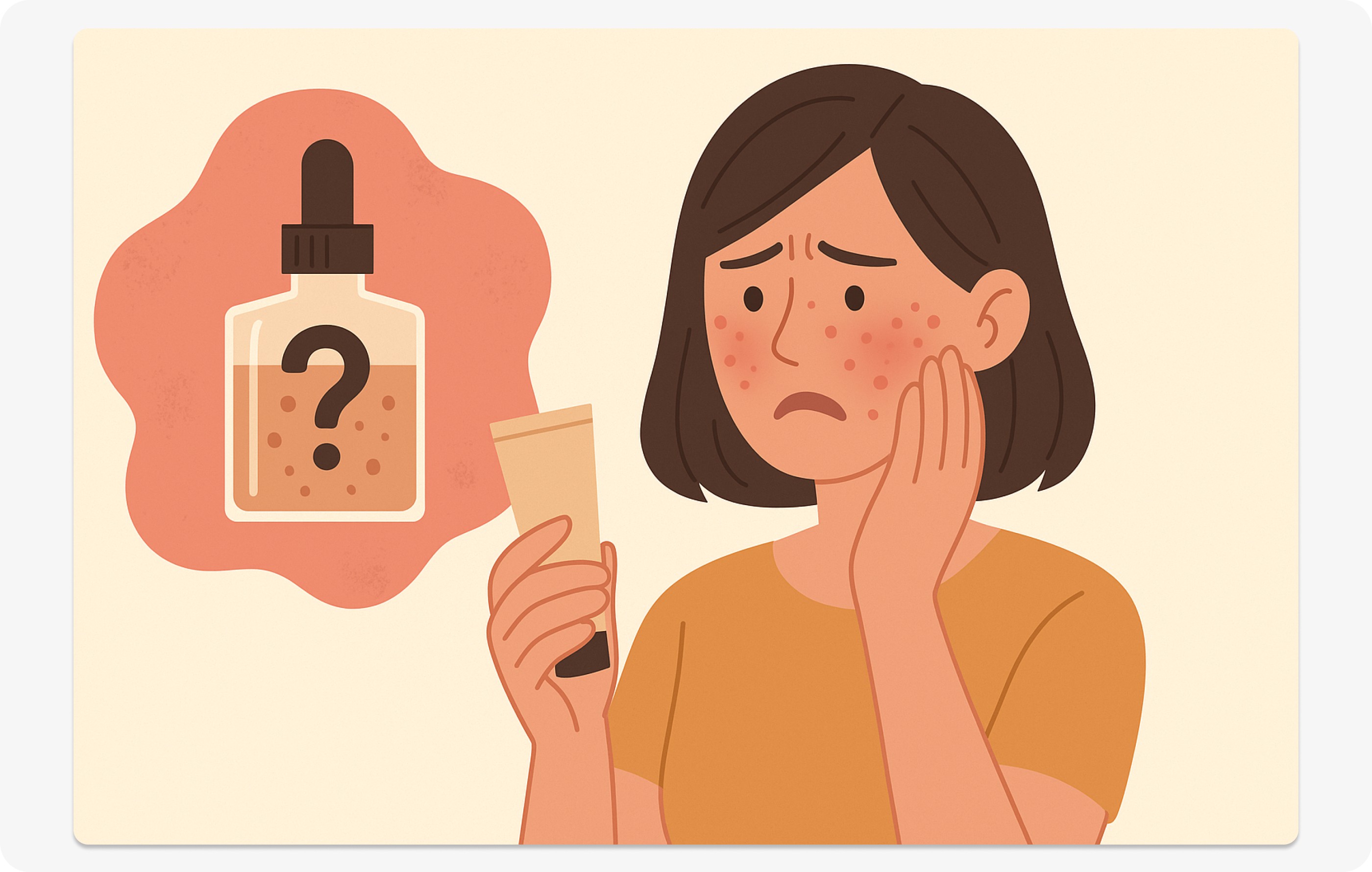
The more popular a low-priced product is on social media, the greater the likelihood of counterfeiting. The fact that products buyers purchase thinking they are at a "reasonable price" may actually be counterfeits that can cause several times more health damage than genuine products raises alarm among industry professionals.
Labels Look Genuine, but the Inside is Harmful: Cases of Counterfeit Cosmetics Detection
“How would you feel if the cosmetics you bought, deceived by an appearance similar to genuine packaging, turned out to be counterfeit products in which bacteria and human feces were detected?”
As we examined earlier, counterfeit cosmetics do not stop at simple similar packaging, but are often accompanied by toxic substances and hygiene issues. This time, we will look more closely at how these hazardous elements were actually detected through on-site crackdown cases.
The Los Angeles Police Department (LAPD) raided a total of 21 stores in the 'Santee Alley' area of the Downtown Fashion District, seizing approximately $700,000 (about 900 million KRW) worth of counterfeit cosmetics. Products mimicking famous brands like Kylie Cosmetics and Urban Decay were being sold in this area, and in some of these products, bacteria and human feces that can cause skin diseases were detected.
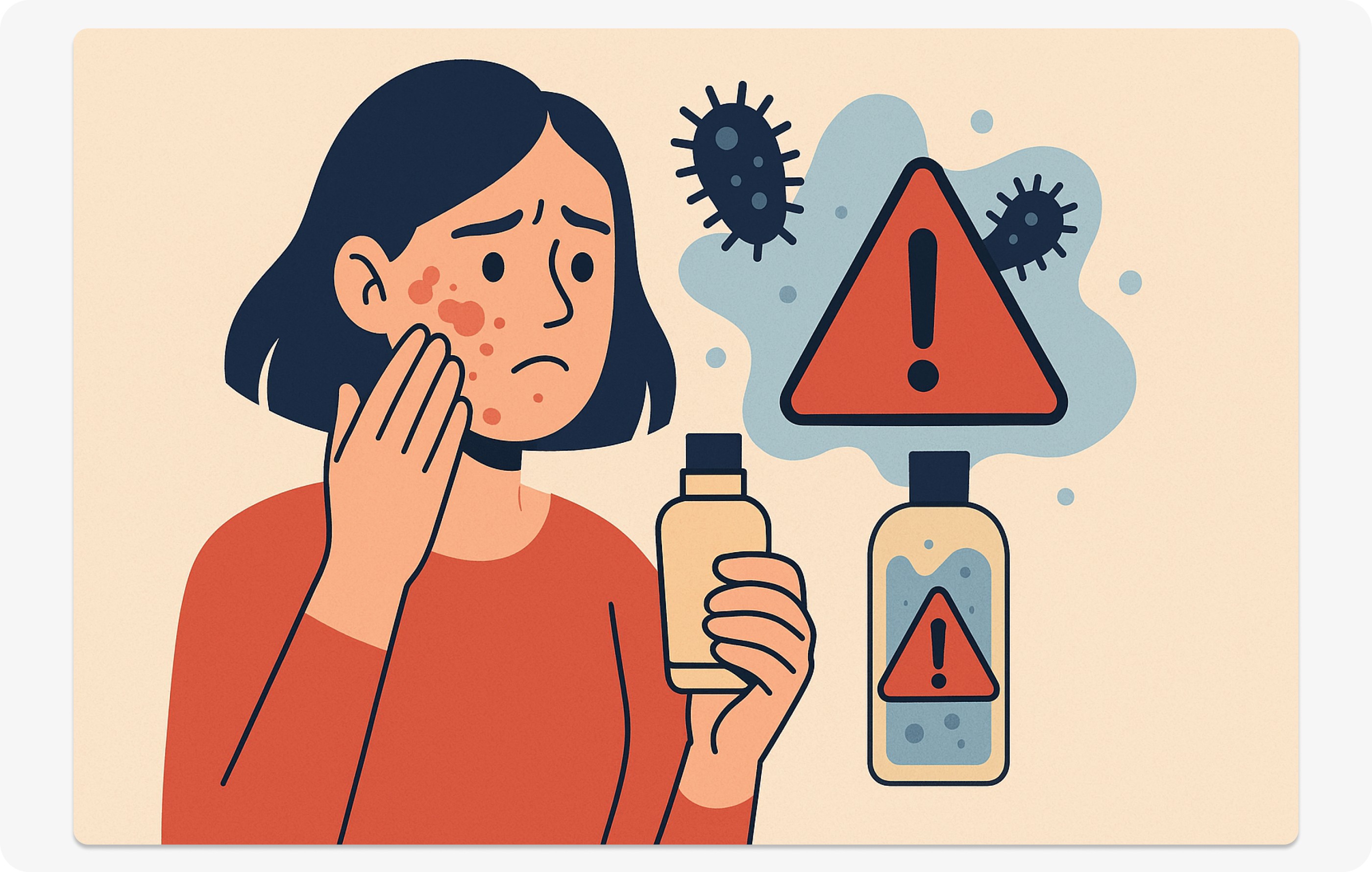
At the time, LAPD's Marc Reina warned that “the best price is not always the best deal,” and Kim Kardashian, a famous TV personality and the older sister of the founder of Kylie Cosmetics, who came across this incident, created a social sensation by leaving a message on SNS saying, “This is so gross. Never buy fake products.”
Counterfeit cosmetics are not just 'cheap and ineffective fakes.' They are accompanied by hygiene issues that cannot be verified by packaging alone, and can lead to serious health risks that can cause skin troubles, infections, and in severe cases, chemical burns to users. As such, relying solely on visual similarity to genuine products for judgment can lead to devastating consequences for consumers, and the need for a thorough monitoring system is growing, especially given that cases where the contents are filled with completely different ingredients are actually being detected.
Counterfeits are Not Just a Problem for Luxury Brands
When thinking of counterfeits, it is easy to only think of luxury premium brands like Chanel and Dior, but recently, low-to-mid-priced brands are also becoming targets of counterfeiting. Phil Lewis, Director General of the Anti-Counterfeiting Group, says, “If there is an item that consumers want, counterfeit manufacturers are never far behind.”
In actual investigations, many counterfeits of popular brands like La Roche-Posay and Maybelline were also discovered. One product sold on eBay was offered at £5.98 when the regular price was £8.80, and was traded over 1,900 times. Thanks to a price that was not significantly different from the genuine product, it is easy for consumers to believe "the genuine product must be on sale."
Then why do unofficial sellers bother to counterfeit low-to-mid-priced brands? Phil Lewis explains the reason as "profit margin." Since manufacturing costs are low, they can actually make more profit.
As a result, it is becoming a global distribution threat that is relevant not only to Europe and the US but also to Korean brands. Phil Lewis states, “As of 2024, more than 1.5 million counterfeit cosmetics, perfumes, and body products were seized in the UK alone, which is a significant increase compared to the previous year.” The primary origins of these products are China, Hong Kong, India, and Turkey, which according to the OECD, account for 78% of global seizures. In particular, goods repeatedly exposed at low prices on online marketplaces are often counterfeited and distributed through these countries.
This suggests to Korean cosmetics brands that there is a possibility of counterfeit influx through overseas sellers or domestic parallel distribution. In fact, some sellers purchased in this investigation showed a cumulative sales history of over 270,000 cases, of which more than 5,000 cases were cosmetics items.
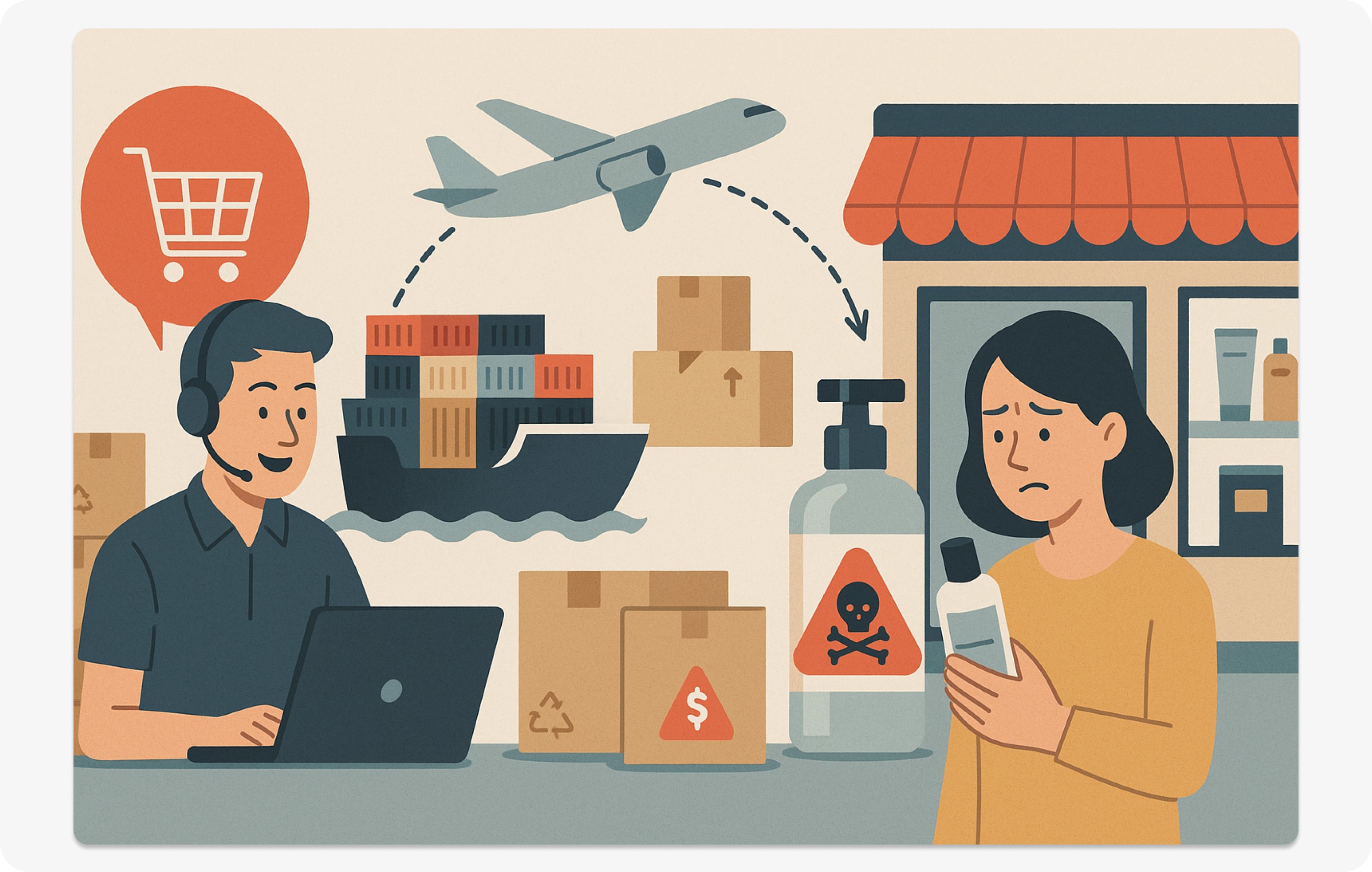
According to the UK Border Force, the number of counterfeit cosmetics seizures confirmed from February to November 2024 reached 1,654, which is likely just the tip of the iceberg.
From the perspective of Korean companies, the key point is that 'Korean brand products' listed on global distribution platforms can also be targeted for counterfeiting. Even if there are no issues domestically, if overseas consumers experience fakes, that distrust can lead to the brand as a whole. In particular, unless the brand directly monitors products sold at the lowest prices online, the structure where the brand ends up bearing the responsibility for counterfeits purchased by customers "thinking they were official sellers" cannot be ignored.
Subtle Signs of Counterfeiting: How Can We Detect Them?
As mentioned earlier, the distribution of counterfeit cosmetics is not just a matter of 'cheap prices.' Because they have an appearance almost identical to the genuine product on the outside, not only consumers tempted by the price but also existing customers who trusted the brand are often deceived. In fact, in early 2025, the US Customs and Border Protection (CBP) seized about $30,000 worth of counterfeit anti-aging creams in the Pennsylvania area in just 5 days. Although the appearance was almost indistinguishable from the genuine product, harmful chemicals that can cause cancer, acne, and eczema, as well as urine and other impurities, were detected in the contents.
CBP warns consumers:
“Consumers may save money today by purchasing fake products, but they could end up spending thousands of dollars more on unexpected medical bills tomorrow.”
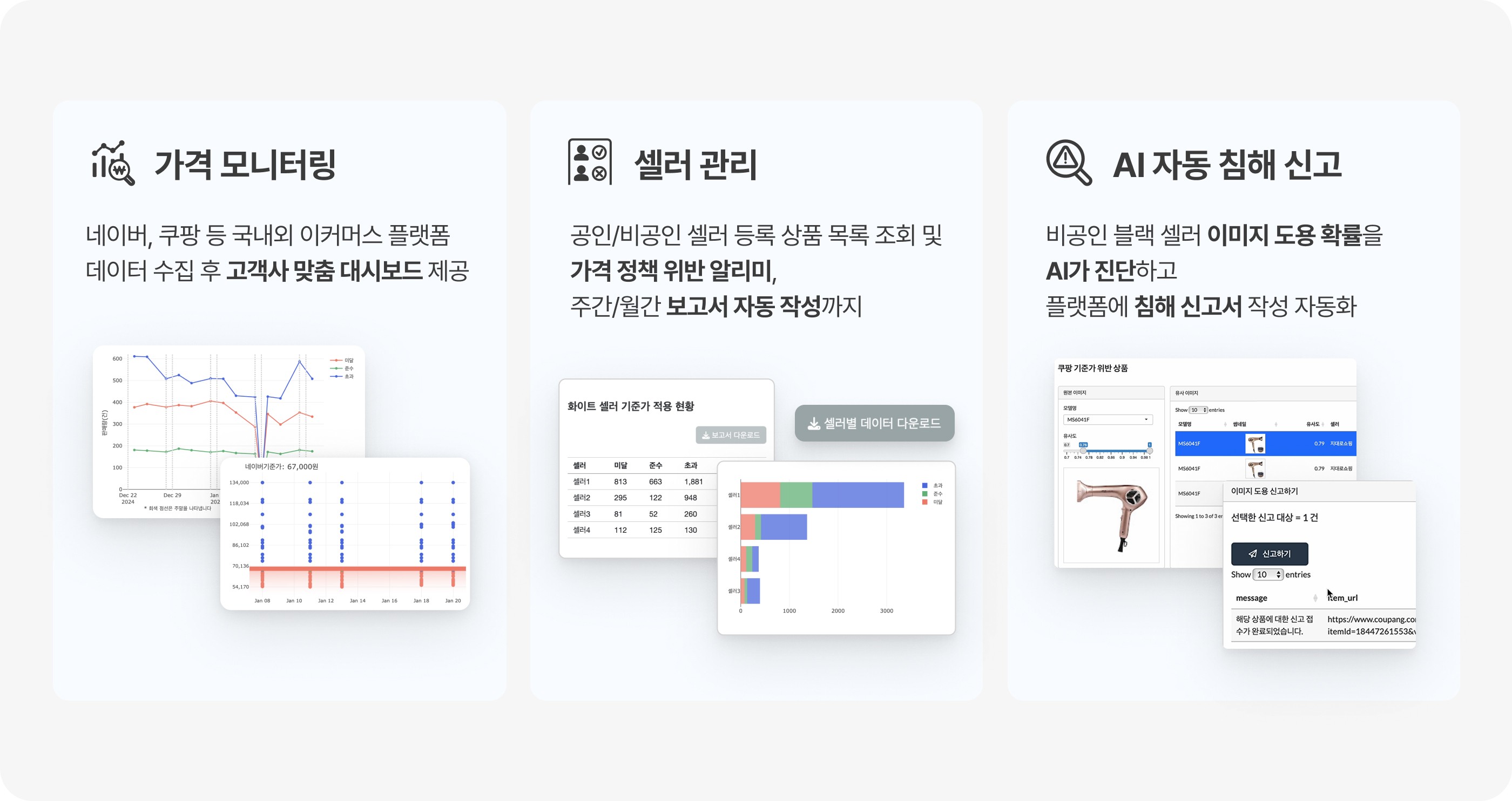
To respond to the spread of counterfeits that are difficult to detect by appearance alone like the case above, simple price monitoring has its limits. What is needed at this time is AI-based image similarity diagnosis technology. By comparing and analyzing even pixel-level differences between genuine and distributed images, it catches signs of counterfeiting that humans might miss, such as subtle label smudges, logo positions, and differences in packaging texture.
In particular, since counterfeit sellers often reuse the same image repeatedly across multiple sellers, AI diagnosis has the advantage of being able to track the spread path of similar images, allowing response to the entire distribution network beyond single product enforcement.
Ultimately, the influx and spread of counterfeits can be preemptively blocked through a dual monitoring system of lowest price monitoring and image similarity diagnosis.
Even in the actual market, the necessity of such a monitoring system is reflected in numbers. In the first half of 2024, Corsearch detected counterfeit inventory totaling $276,000 (USD) across 14 cosmetics, beauty, and skincare brands, which is a 53% increase compared to the same period of the previous year.
This is not just a matter of distribution volume. Since a structure exists where if consumers unknowingly use counterfeit products and suffer health damage, brand trust and public image are damaged together, brands need to respond more actively.
A Dual Price and Image Monitoring System to Protect Authenticity
As seen in the various counterfeiting cases discussed in the main text, counterfeit cosmetics have an appearance almost identical to genuine products, making them difficult to distinguish not only for general consumers but even for brands. In online marketplaces, in particular, there are clear limits to judging by price alone.
So, what should brands protect?
Ultimately, the answer lies in 'two indicators.' One is abnormally low prices, and the other is clever plagiarism of genuine images. To detect these two signals simultaneously, a single monitoring system is not enough. A lowest price monitoring system monitors prices across distribution channels in real-time to capture sharp deviations in market prices early. Adding AI image similarity diagnosis technology to this allows for precise identification of fake images that look genuine. Through this, even counterfeits that are 'indistinguishable at a glance' can be caught.
The damage from counterfeit cosmetics goes beyond simple inventory loss or sales decline, leading to consequences that destroy consumer trust in the entire brand. Therefore, what is needed now is not 'post-sale response' but 'pre-sale blocking.' The dual monitoring system is the most realistic line of defense protecting brands from counterfeits.