Industry Cases
Counterfeit
Home Appliances: No Matter Who Sold It, Is the Brand Ultimately Responsible?

💡 In this article, you can check the following content.
Home appliances are not products that are done once they are sold
The GE Appliances Case: CS confusion caused by counterfeit water filters
The real issue behind the customer saying, "I thought it was genuine"
When distribution collapses, the cost structure also shakes
How can we proactively identify signs of distribution anomalies?
Conclusion: Preventing customer confusion from becoming a brand risk
👩🏻💼 “I heard that the water purifier I bought on the internet was installed incorrectly, but is it actually our brand’s product?”
🤷🏻 “They said water is leaking after just replacing the filter. They want us to verify if it's a genuine product.”
These types of inquiries often come into brand customer centers. The problem is, in many cases, this product has never been directly distributed or installed by the brand.
However, consumers do not know this fact. When a problem occurs with a product, in most cases, they think of the brand before the retailer. Especially for home appliances that require installation, the user experience after purchase, rather than the product itself, often leads to the impression of the brand.
When conspicuous problems such as installation errors, leaks, or defective parts occur, regardless of where they originated, eventually overall brand trust begins to shake.
Home Appliances Are Not Products That End with a Sale
For home appliances, the post-sale experience has a decisive impact on the perception of the brand. Especially for refrigerators, water purifiers, washing machines, and dishwashers that require installation, they must operate closely in the customer's daily life. Therefore, the brand's role continues through coordinating installation schedules, checking exact components, responding to initial installation errors, and managing subsequent maintenance and after-sales service. In this way, home appliances are not simply 'sell and forget' goods, but a product category where the entire service experience after purchase leads to brand evaluation.
The problem is that despite these characteristics, as distribution structures become more complex, the number of distribution channels that brands cannot control is increasing. In particular, in the home appliances market, 'unofficial sellers' or 'unauthorized sellers' who are not certified by the brand often intervene in the distribution process, and some even sell 'counterfeits' that imitate the brand. Most of them operate on online platforms and attract consumers by artificially lowering prices.
The issue is not simply that the product in question is not covered by the brand's official warranty. Consumers, unaware of this, will contact the brand's customer center believing the product is genuine when a defect occurs. The problem is that from the customer's perspective, 'which brand it is' is more important than 'who sold it', so the responsibility is naturally transferred to the brand, eventually leading to a situation that requires a brand-level response.
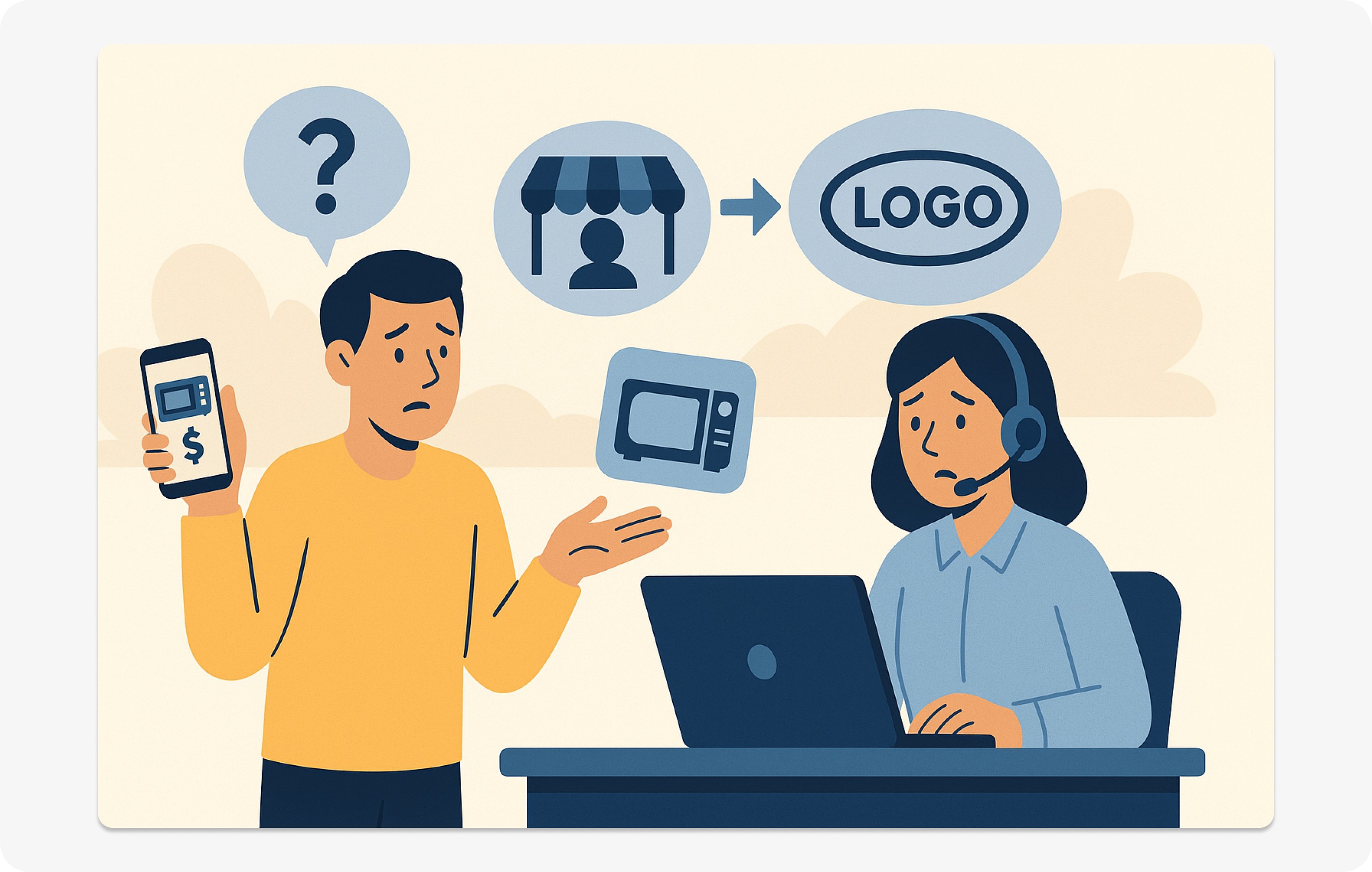
This soon means that the customer's experience spreads as distrust toward the brand as a whole. From the perspective of consumers who purchased after seeing images, specifications, and price descriptions that look identical to the actual genuine product, if they experience problems during use, the perception that 'this brand is of poor quality' remains stronger than the thought that 'I bought a fake'.
Ultimately, a brand cannot be free from problems with products it did not even sell, which stems from the structural characteristic where consumers rely on the brand without being aware of the distribution channel. If left unchecked, this can lead to a decline in trust for the brand as a whole.
As the distribution path becomes more complex, the need for a proactive detection system to reduce confusion caused by unauthorized sellers is also being raised.
The Case of GE Appliances: CS Confusion Caused by Counterfeit Water Filters
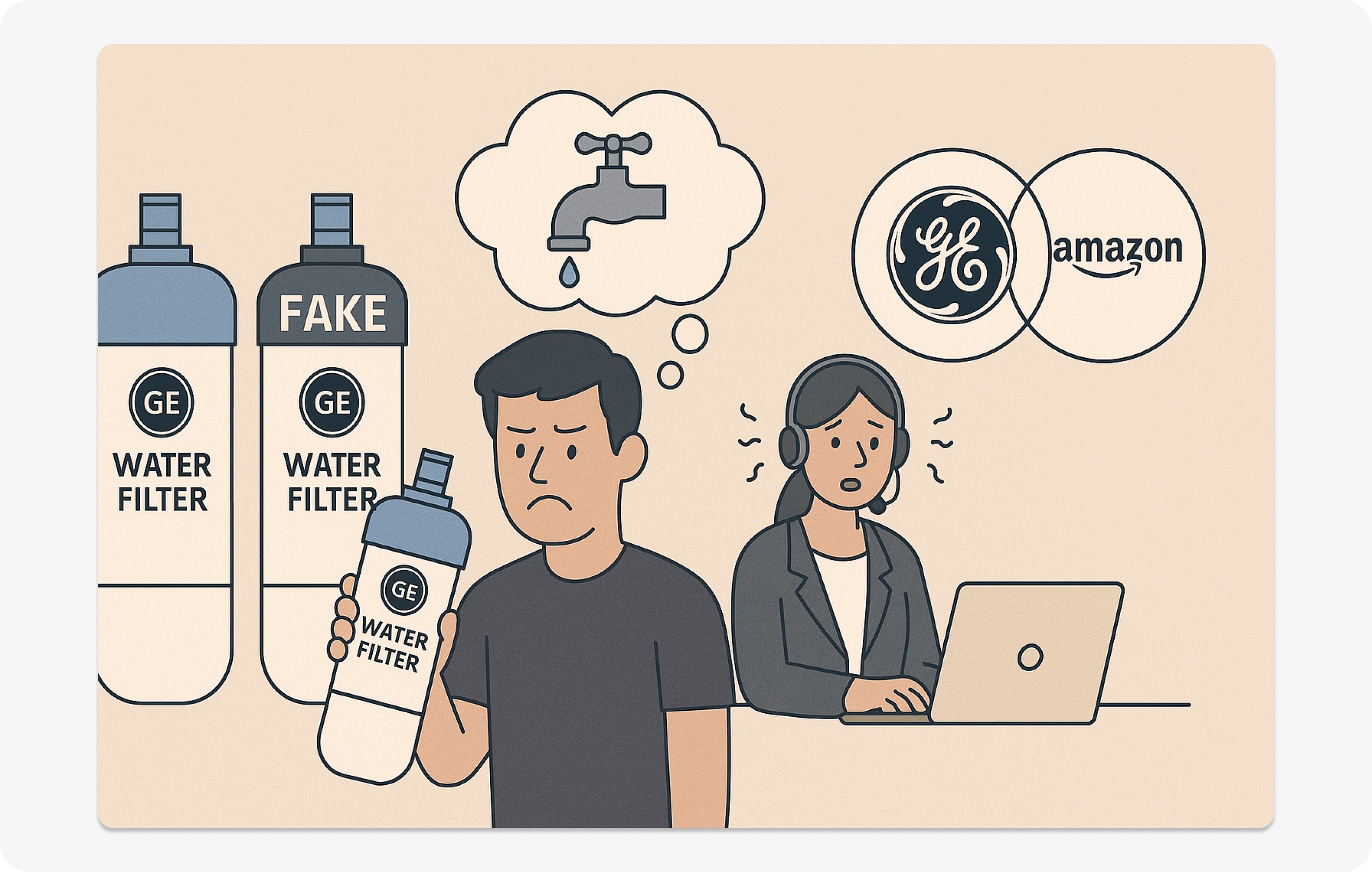
In 2022, GE Appliances took legal action against 16 unauthorized sellers who sold counterfeit water filters disguised as genuine GE products on Amazon. These unauthorized sellers sophisticatedly imitated the GE brand logo, packaging design, and product descriptions, making it easy for consumers to mistake them for genuine products. As a result, consumers who purchased these counterfeit products experienced serious quality problems during actual use. The most frequently reported problems were leaks due to poor internal filter components, degraded filter performance, and shortened lifespan.
An even bigger problem was that consumers were completely unaware that the filters were counterfeit. Consumers naturally perceived this quality problem as a failure of the GE brand itself, and concentrated their complaints and protests on the official GE customer center, not the unauthorized sellers. As inquiries to the customer center surged, GE had to invest additional manpower and cost to respond, and in the process, its brand image and credibility suffered a major blow.
This case illustrates how severely counterfeit products not directly distributed by a brand can damage consumer trust in that brand. Consequently, to prevent such counterfeit issues, GE Appliances worked with Amazon to block counterfeit sales and facilitate refunds, taking active measures to protect consumers and restore brand trust.
The Real Problem Hidden Behind the Customer's Words: "I thought it was genuine"
As such, home appliances sold at much lower prices than the regular price are commonly found online. However, consumers often do not know the exact reason why the product price is low. From the consumer's perspective, they believe it is genuine for the following reasons:
They use packaging and designs very similar to genuine products to make people believe they are genuine.
The description and images on the product sales page are almost identical to the genuine product, causing consumers to mistake it for the real product.
The differences in the components are so subtle that it is difficult for general consumers to easily distinguish them.
The biggest problem consumers face is that they do not even know if the product they bought is counterfeit. When a problem occurs with a product, consumers naturally contact the brand's customer center. At this time, if the brand explains that the product in question was not sold through an authorized seller and that warranty service is difficult, consumers may misunderstand that the brand is failing to manage properly or is disregarding customers.
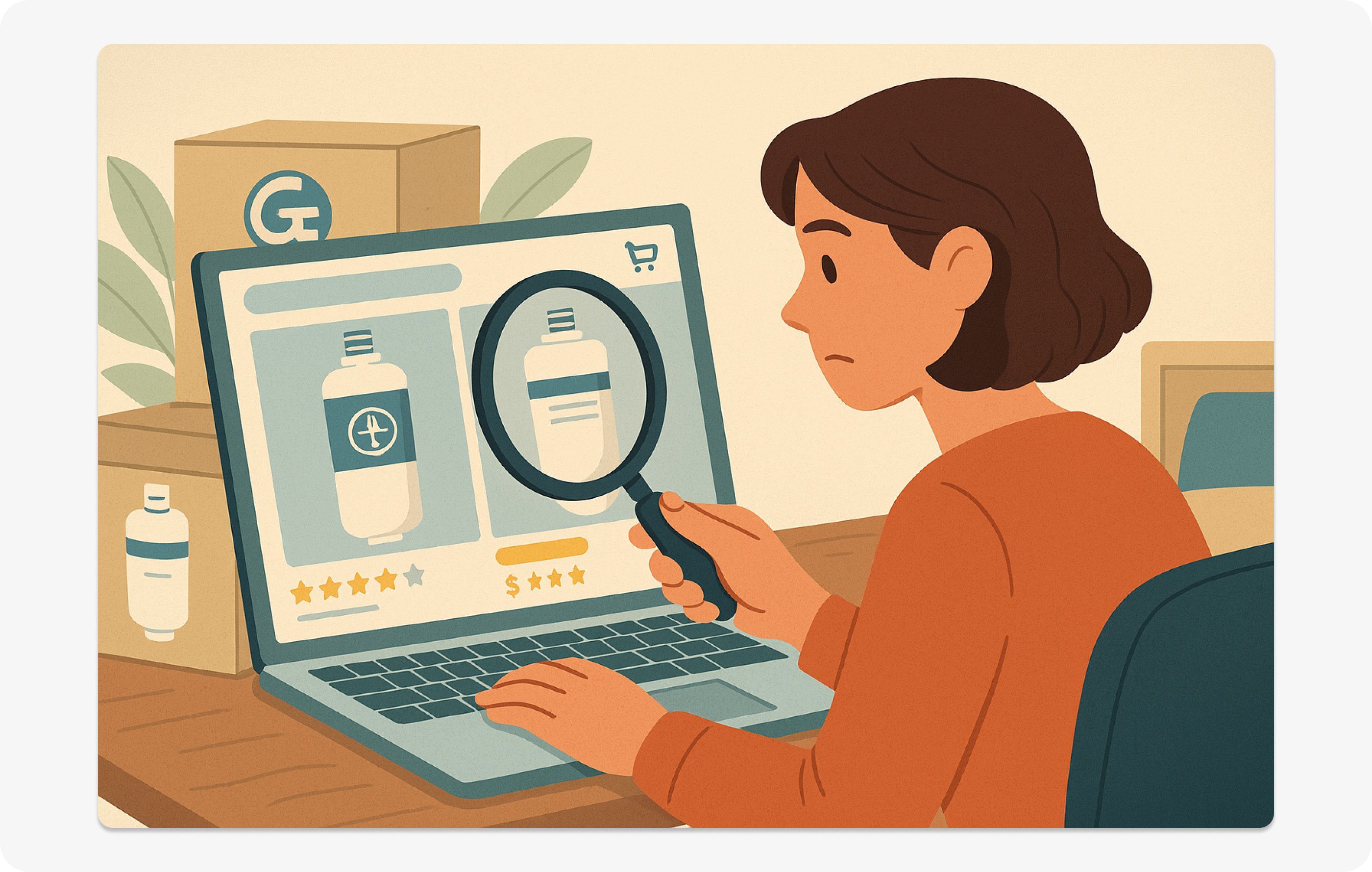
Furthermore, consumers share these experiences with those around them or online, which adversely affects brand credibility. When customers express dissatisfaction, they feel that "there is a problem with the brand's product itself," which can cause serious damage to the brand's reputation in the long run. Therefore, if the unofficial distribution structure is left unattended, there will be more cases where the brand ends up handling customer service even for product issues in which they did not directly intervene.
Ultimately, a systematic distribution management and consumer protection system at the brand level becomes necessary to prevent problems arising in the distribution process beforehand and to reduce consumer confusion.
Unofficial Parts and Unauthorized Installation, the Real Risks the Brand Ends Up Bearing
As confirmed in the GE case, recently, beyond simply lowering prices, cases where unauthorized installation services are provided, unofficial parts are replaced, and fake accessories disguised as genuine are used are increasingly leading to customer damage.
The common denominator of these problems is that it is difficult for customers to distinguish whether they are genuine or not, and when actual damage occurs, inquiries are concentrated at the brand's customer center. Although they look like identical parts on the outside, filters, power cables, or installation kits that have not received official certification cause problems, and the responsibility ultimately falls back on the brand image and CS resources.
In this way, the beginning of the problem lies in unofficial distribution or the sale of similar products, but because customers only remember "which brand's product it was," it creates a structure where the brand name remains longer than the seller's history or installation path.
Therefore, brands need a perspective to check not just 'how much our product is selling for,' but also 'which seller, where, with what components, and in what manner is installing it.'
If Distribution Collapses, the Cost Structure Also Shakes
As mentioned earlier, even for problems occurring with products not directly distributed by the brand, customers contact the brand. At this point, beyond simple response, resources from various departments are invested, such as adding CS personnel, refining response manuals, conducting legal reviews, and communicating with official sellers. If resources are repeatedly invested in these unexpected problems, the brand faces a substantial increase in operating costs.
For example, as in the case of GE Appliances, if inquiries flood the customer center due to the distribution of fake parts, it can lead to a decrease in the CS response rate for that product category, a decrease in response quality, and an increase in churning customers. Indeed, GE had to collaborate with Amazon to sue counterfeit filter sellers and even take refund measures, which expanded beyond a simple legal response to marketing and customer trust recovery costs.
Of course, not all brands take legal action like GE, but at least in the process of reorganizing the distribution network and supplementing the CS infrastructure after a problem occurs, the fact that additional costs are incurred is a reality that most brand practitioners empathize with. Therefore, controlling the distribution structure in advance and establishing a system to detect anomalies early is not just about protecting customer trust, but becomes a practical response strategy to reduce unexpected operating expense losses.
How Can We Proactively Identify Distribution Anomalies?
As in the GE case, situations where customer CS surges and trust is hit due to products not directly sold by the brand are no longer exceptional events. To prevent this, rather than reacting after a problem blows up, there is an increasing movement recently to detect and respond in advance to anomalies that may occur during the distribution process.
ReTrix is a price monitoring solution designed to manage a brand's price order and distribution stability in real time.
It detects the moment when the price of a specific product suddenly drops,
identifies sellers who repeatedly deviate from policy, and
provides reports on which product lines experience frequent issues.
Through this, brands gain a foundation to take preventive action first before consumer complaints come in, that is, before trust collapses. In addition, it is of practical help in reducing work burdens and CS costs in that it more clearly defines the boundaries between the official seller system and unofficial distribution, and eliminates risk points in advance.
Conclusion: Preventing Customer Confusion from Becoming a Brand Risk
Taking responsibility even for problems arising from products not directly sold by the brand is no longer an exceptional occurrence. As distribution becomes more complex, consumers seek out the brand before the place of purchase, and brands face customer dissatisfaction due to distribution issues in which they did not intervene. Especially in situations where consumers experience confusion due to unofficial sellers, black sellers, or counterfeit distribution, both the consumer and the brand become victims.
The risk generated in this process is not simple. It leads to a triple burden: customer complaints increase, resources invested in CS response rise, and ultimately, trust in the brand as a whole declines. Particularly in product categories where the post-purchase experience is important, such as home appliances, these risks can translate into long-term image damage.
Now, brands must move beyond the era of simply managing prices and equip themselves with a system that can detect and control seller credibility, distribution timing, and price changes by platform in real time. The necessity of a system to detect anomalies in the distribution structure in advance and block damage caused by unofficial sellers early is also growing steadily.
Sustainable brand trust is not decided by simple sales management, but across the entire experience after purchase where consumers feel "this brand is trustworthy." The starting point is establishing distribution order and price trust.