Counterfeit
Counterfeit damage on Naver Shopping: Why do brands need to take the lead in monitoring?
💡 In this article, you can find the following information.
“I received a counterfeit product, but a refund is not possible?”
Recurring damage from counterfeits on platforms: the structural reasons
Why brands must monitor outside of platforms
The later you find out, the bigger the damage; the problem lies in ‘speed’
Conclusion: Trust is protected when brands move first
“I received a counterfeit product, but they say a refund is impossible?”
🤔 ‘It should be fine since it's a major platform shopping mall, meaning all sellers must have been verified.’
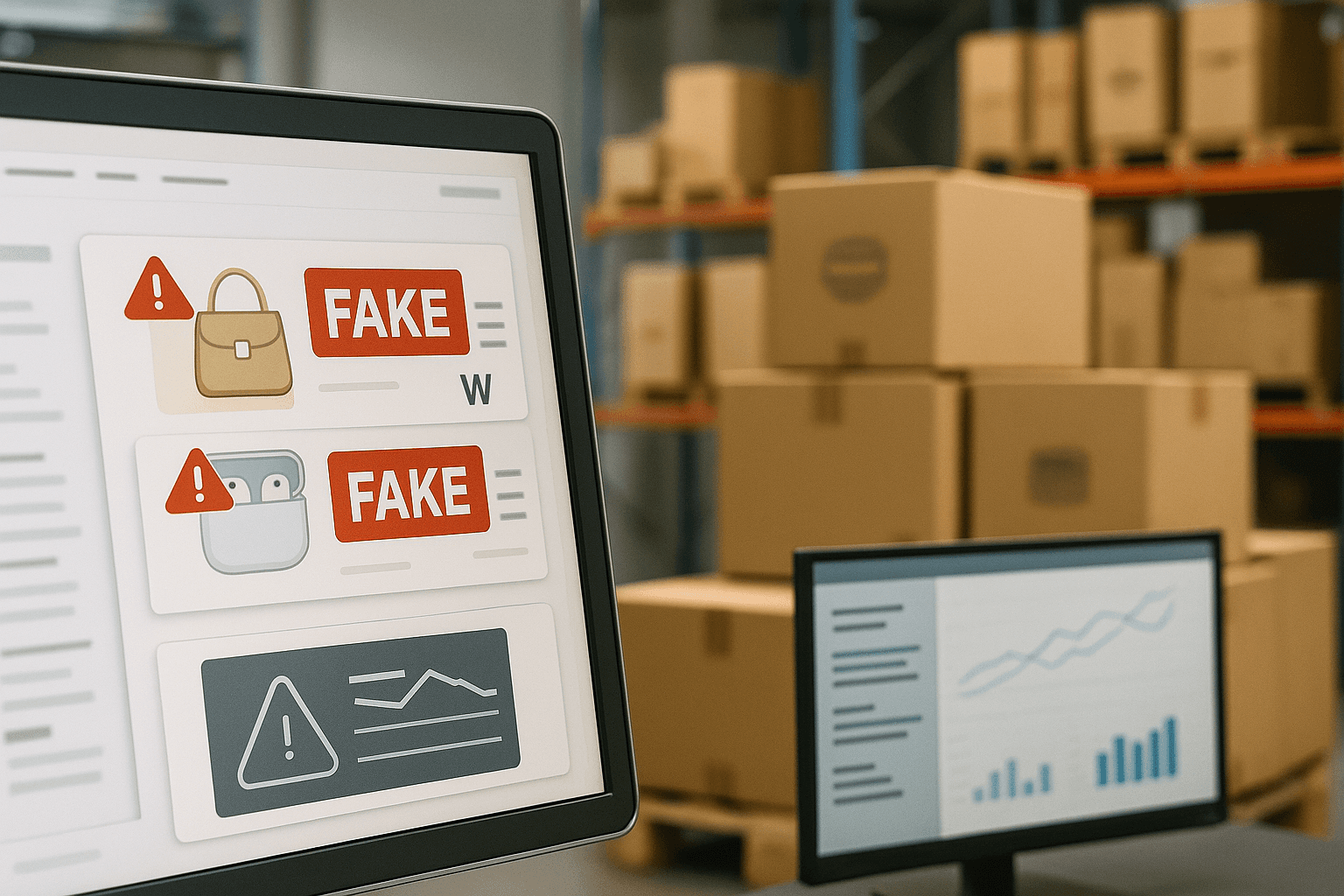
Many consumers purchase products on Naver Shopping with this trust. However, recently, reviews saying "I bought a counterfeit product but couldn't get a refund" have been pouring in one after another.
According to a report by the Consumer Economy News, among the counterfeit damage reports received this year, the largest portion was related to Naver Shopping. Of course, Naver Shopping is also strengthening its response system by operating various systems to prevent the distribution of counterfeit goods. Nevertheless, damage from counterfeit goods is not decreasing. The reason is simple. The moment a counterfeit product starts selling, it already spreads through multiple sellers. It is difficult to stop the spread with a reaction that is one step too late.
This article starts from that point. "Why does damage keep repeating even though platforms are operating monitoring systems?"
And we would like to explore the answer together from the brand's perspective.
Repeated Counterfeit Damage on Platforms: The Structural Reason
The counterfeit damage cases surrounding Naver Shopping are not a one-time issue. According to a report by the Consumer Economy News, out of 49 counterfeit damage reports received by the Consumer Complaint Center this year, about 20% were related to Naver Shopping (as of February 2025). Compared to the 1 to 5 cases reported during the same period on competing open markets such as Coupang, Gmarket, 11st, and Musinsa, this is not a small percentage.
The details of the damage were surprisingly similar. The seller could not be reached, or had already disappeared in a suspended state. The platform's customer center did not proceed with a refund under the pretext that 'we cannot connect with the seller'. Ultimately, consumers bought trusting a major platform like Naver, but when a problem arose, they were placed in a structure where it was difficult to hold anyone accountable.
“The authentic product I bought in good faith turned out to be counterfeit” – Repeated consumer damage cases
Counterfeit damage is not limited to specific product categories. From cosmetics and electronic devices to luxury accessories, consumer damage is repeated regardless of brand, price range, or sales channel.
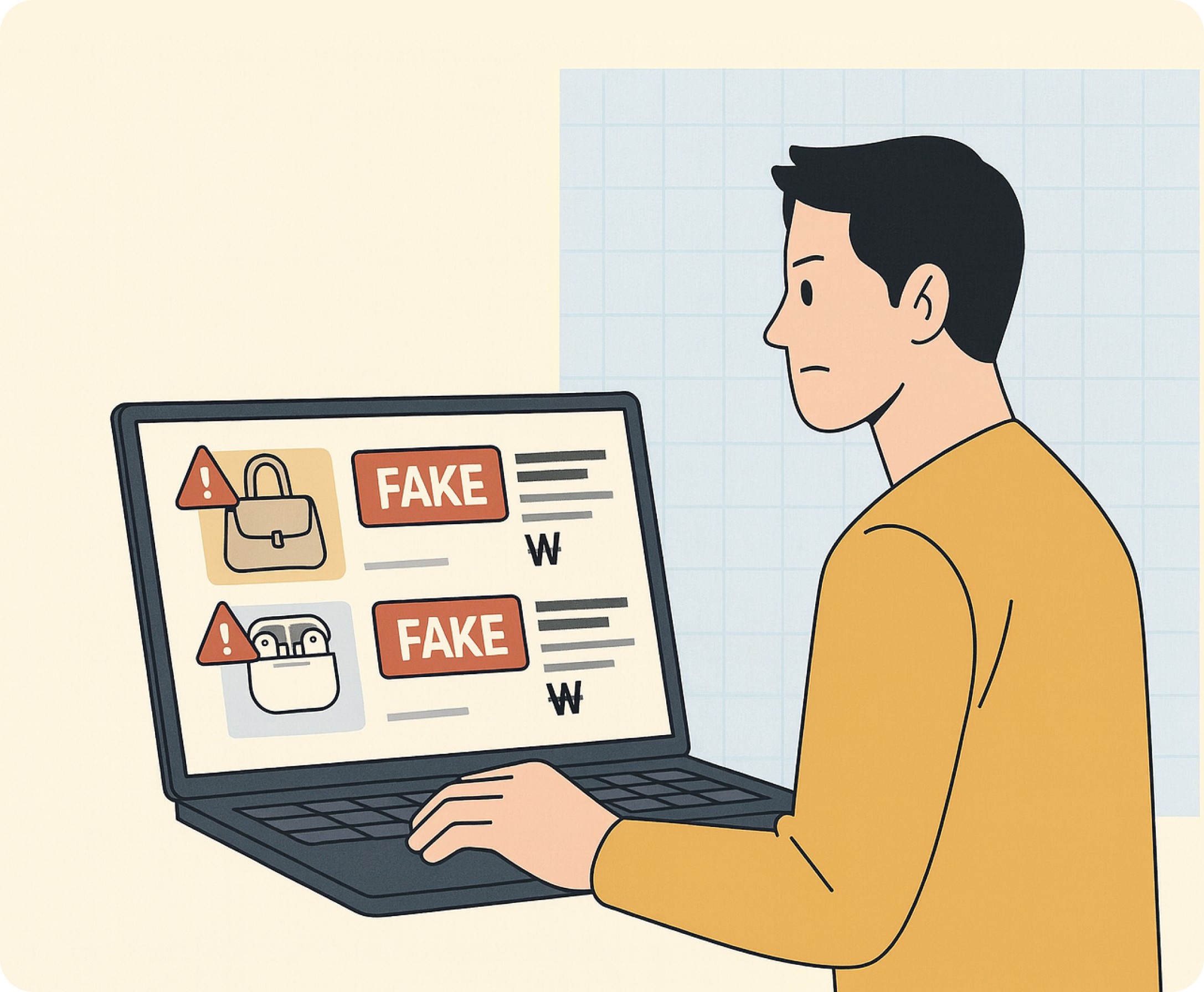
One consumer purchased 'Aestura Atobarrier 365 Cream' through Naver Shopping. However, the appearance of the product that arrived was different from the authentic one they had used previously. When they left an inquiry with the Naver customer center regarding this, the customer center searched a completely different order history ('McDonald's Pochacco Bag') and only replied that it was "under normal delivery." The counterfeit seller had already stopped selling.
A similar thing happened in the electronic device sector. A consumer who purchased 'AirPods Pro 2nd Generation' after seeing the phrase 'Guaranteed Authentic' was informed at an Apple Store four months later that it was "a counterfeit product that already had five repair records." They contacted the Naver Shopping customer center, but only received a response that a refund was difficult because they could not reach the seller. They expressed strong dissatisfaction with the platform neglecting counterfeit sales and not taking clear follow-up measures.
The luxury category is no exception. Another consumer purchased a 'Bottega Veneta Wallet' through Naver Shopping, but the product they actually received was a Chinese imitation with misaligned stitching and a rough finish. They tried to contact the seller, but they had already vanished.
In this way, counterfeit damage does not discriminate by product category, leading to a structural problem that directly shakes the trust between consumers and brands.
“There is response, but no prevention of spread” – The limitation of platforms remaining post-action-centric
Of course, Naver Shopping is also strengthening its counterfeit response system. They operate the 'Counterfeit Goods Clean Program' to immediately sanction sellers if counterfeit sales are detected, and have introduced a procedure to purchase and verify actual products through a 'Mystery Shopper System'. Starting in 2025, they also attempted to prevent recurrence by extending the settlement payment suspension period from the previous 4 months to 12 months for stores where counterfeit sales were confirmed or failed to sufficiently prove authenticity.
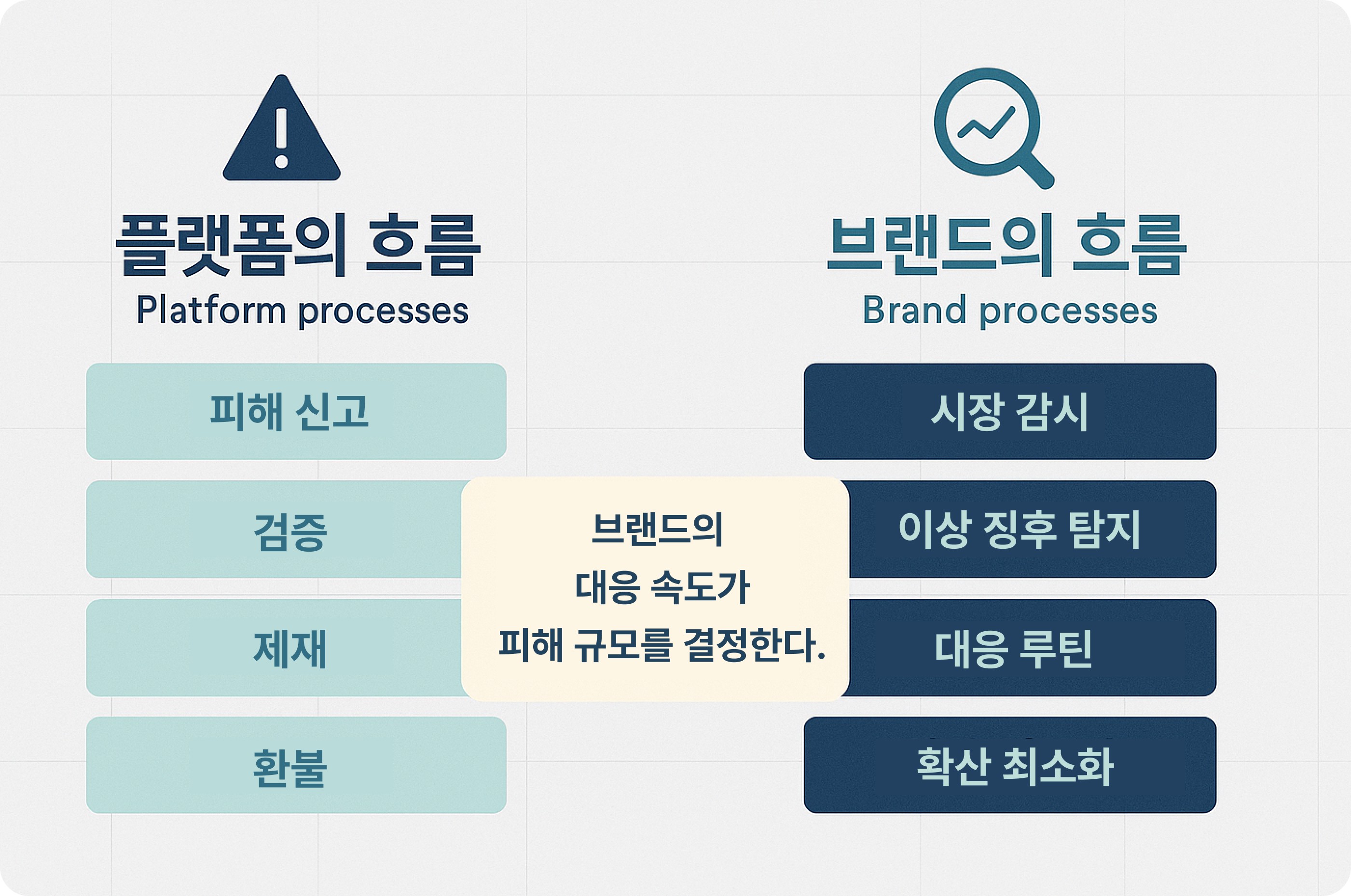
However, these systems are ultimately structures that operate after a consumer report or damage claim is received. In other words, the process starts only after a problem has occurred. While the process of receiving damage reports → verification → sanctions is underway, the exact same product is already re-registered under another seller's account and spreads to other platforms. This is because the counterfeit distribution structure is faster at 'cloning' than 'deleting' once it begins. In other words, counterfeits that enter the distribution network once will continue to spread throughout the market until they catch someone's eye.
A bigger problem is that the final authority to determine authenticity lies with the brand headquarters, not the platform. Since platforms act as 'sales intermediaries', they do not have the authority to make final judgments on counterfeits due to legal and policy constraints. This means they cannot conclude anything beyond 'suspected products'. Ultimately, the final decision on suspension of sales, deletion, or refund is made only after confirmation from the brand. During this process, more time passes and damage accumulates. As a result, consumers feel that "both the platform and the brand are doing nothing," and brand trust is damaged alongside it.
The role of preventing counterfeit spread, now up to the brand?
Now, it is difficult to stop the spread of counterfeits with the platform alone. While the platform is structured to take sanctions after a report, brands can monitor the market themselves at an earlier stage and spot suspicious circumstances early. In other words, we have entered an era where the platform handles 'management' and the brand must handle 'detection'.
In counterfeit prevention, the timing of awareness is more important than the speed of response. The earlier a brand captures signs and takes action, the more the spread of damage decreases. Conversely, the later they respond, the more products with the same images, similar packaging, and abnormal prices flood the market. The important thing is not "whether we can stop counterfeits," but "how quickly we can identify and respond to them."
A monitoring system with separated roles has structural limitations. Only when brands monitor the market themselves and establish a response routine based on data can they minimize the damage that occurs after the platform stage. This is the practical reason why brands must build a monitoring system outside the platforms now.
Why Brands Must Monitor Outside of Platforms
The essence of the counterfeit issue is not simply that 'fake goods were sold'. When and through what path the brand realizes this fact determines the size of the damage. By the time consumer reports or platform sanctions take place, sales are already underway, and reviews, images, and price information have already spread to external channels. In other words, the 'speed of spread' is more of a problem than the sale itself. At this time, the brand's role is not simply to wait for the platform's results, but to monitor market changes and read the signals themselves.
Recently, there have been many cases where a single product is exposed across multiple seller accounts simultaneously, or re-registered with only a slight change in the product name. These patterns are difficult to identify quickly using only the platform's internal data. However, through its own monitoring, a brand can periodically check how its products are being exposed, with what images, and at what prices. Through this process, problems can be discovered through 'internal detection' rather than 'initial reports'.
The biggest advantage of a brand taking direct action is control over speed. The spread of counterfeits is a battle against time. Even if you are just one day late, other sales sites using the same image will appear, and products with abnormally low prices will occupy the top of search results. Consumers make purchase decisions based only on prices lower than genuine products, and eventually, the brand loses both price trust and quality trust simultaneously. The only way to break this vicious cycle is 'independent monitoring without waiting for platform results'.
In addition, proactive monitoring by brands strengthens the basis for internal judgment. When a suspected counterfeit case is discovered, there is a basis of "our system detected it first" rather than simply "someone reported it." This data can be used not only for platform reports but also for internal reporting and legal action. It transitions from emotion or speculation to a evidence-based judgment system.
Ultimately, building a brand's own monitoring system is not simply about supplementing platform monitoring. It is a process of controlling how one's own brand is perceived across the market. Counterfeits start not just from a single sale issue, but at the point where the relationship of trust established between the brand and consumers is shaken. Therefore, looking after the market first is not an option for brands, but a must.
The later you find out, the greater the damage; the problem lies in 'speed'
As mentioned earlier, once a counterfeit product is sold, its flow spreads quickly. Products using the same image or phrases are cloned across multiple stores in an instant, and some of them even migrate to other platforms. Ultimately, how quickly a brand recognizes the problem determines the scope of the damage. Therefore, what is needed now is a monitoring system that prevents the spread of counterfeits.
Brands must monitor market changes in real time and be able to identify early signs of their products being exposed at abnormal prices or with inappropriate images. What is important at this time is "evidence, not intuition." Only when data such as price fluctuations, image similarity, and seller movement are accumulated as evidence can the cause and path of the problem be clearly traced. However, managing this manually across all channels is realistically difficult.
To compensate for these limitations, Reatrics automatically collects data from various marketplaces and provides an environment where brands can filter out anomalies based on criteria they set. It plays a role in helping brands quickly recognize market changes on their own without waiting for consumer reports or platform sanctions. Through this, instead of manually searching for suspicious cases, brands can quickly identify which sellers are suspicious and on which channels the same product is being resold. Brand managers do not need to manually search platforms one by one or monitor price fluctuations themselves. Since the system automatically collects data and classifies abnormal patterns, practitioners can focus on filtering suspicious cases and establishing response strategies.
In other words, Reatrics is a solution that provides the response capability and evidence for brands to capture market changes on their own, rather than a post-sanction response by the platform. The key to countering counterfeits is 'early awareness', not 'after-the-fact treatment'. Only brands that can discover market changes first and accumulate evidence can minimize damage. In this process, Reatrics acts as a structured monitoring network so that brands can move faster than platforms.
Conclusion: When the brand moves first, trust is protected
The reason brands must move first is not just to catch counterfeits quickly. Brand monitoring goes beyond short-term damage recovery; it is part of a long-term strategy to restore and maintain consumer trust.
The essence of the counterfeit problem is not 'forged products', but how transparently a brand manages its own name in the market. Tracking after sales and reconnecting trust with consumers—the initiative now lies with the brand, not the platform.
What is important now is not a simple response, but the ability to interpret signals of market change. Brands must be the first to read meaning among various indicators such as price fluctuations, image reuse, and abnormal sales patterns. Ultimately, the power to protect a brand comes from the 'speed of identifying before anyone else' and the 'eyes that watch the longest.' Only brands that respond quickly and observe consistently can restore market trust on their own.