Unofficial Seller Management
Price Management
The Threat of Black Sellers Seen Through the Coupang-Home Shopping Conflict: Is Your Brand Safe?

💡 In this article, you can check the following content.
The conflict between Coupang and home shopping channels, and the 'black seller' issue hidden behind it
Similar cases repeating overseas... Why you need to start responding to black sellers right now
The solution proposed by Retrix: Black seller monitoring that led to actual revenue recovery
The most basic condition for protecting a brand, “Black Seller Monitoring”
The conflict between Coupang and home shopping companies, and the 'Black Seller' issue hidden behind it
Recently, there was a notable issue in the retail industry. It was the incident where Coupang suspended the open market accounts of major TV home shopping companies such as Hyundai Home Shopping, Lotte Home Shopping, and GS Shop. The reason was that they violated product information registration standards. Coupang determined that some products registered on home shopping channels did not comply with its standards and that there were also concerns about intellectual property rights infringement.
Coupang has been continuously guiding sellers on policy violation cases and strengthening monitoring since last year. It has also repeatedly notified and demanded compliance with intellectual property-related policies for several years. Despite this, some sellers and store partners failed to implement this, leading to a situation where the reliability and stability of the entire platform were threatened. In fact, Coupang has received reports of unauthorized image theft from domestic and foreign home appliance manufacturers, and circumstances of selling counterfeit goods using popular brand images have also been confirmed. As a result, many products have been excluded from search exposure, raising concerns about revenue loss and potential damage to brand image.
Coupang has taken strong measures to protect its platform, but home shopping companies are protesting that suspending accounts without prior notice is excessive. This case shows that beyond a simple conflict between distribution channels, various issues such as price order, content reliability, and image copyright occurring in the overall online retail environment are complexly intertwined. And through this case, we once again think about why 'black seller monitoring' is necessary.
Similar cases repeated abroad… Why you should start responding to black sellers now
This problem is not limited to Korea. In the United States, brand image theft and price order disruption issues occur frequently. In particular, in the case of global electronic brands, legal action is often taken because sellers who are not official resellers sell products at excessively low prices or repeatedly distribute counterfeit goods using unauthorized images.
Particularly on large platforms such as Amazon, competition to occupy the 'Buy Box' is fierce. In this process, there are many cases where unofficial sellers unreasonably set the lowest price, causing damage to normal distribution networks. According to a report by Jungle Scout, low-price sales by unofficial sellers on Amazon are causing actual revenue losses to official brand sellers.
When the MAP (Minimum Advertised Price) breaks down, trust in the brand falls, and it becomes difficult to recover a reasonable price. In fact, looking at overseas cases and customers who have used the Retrix service for more than a year, when MAP breaks down, the brand's annual revenue decreases by an average of 3 to 5%. The bigger problem is that brand value, once perceived as low by consumers, is difficult to recover, and ultimately faces a vicious cycle where other products also have to lower their prices.
If this situation is left unchecked, an abnormal phenomenon can occur where uncontrollable sellers, rather than the brand headquarters, dominate the brand image. Consumers will perceive the brand based on the lowest price, which can ruin the brand value and trust built up over time. Consequently, relationships with official distribution partners deteriorate, and the brand's profitability and sustainability are also hit.
In today's online distribution environment where anyone can become a seller, a structure is formed where a single black seller can negatively affect the entire brand. In fact, many companies are investing a lot of cost and time to operate legal teams or reorganize distribution channels to respond to this problem. However, there is a clear time limit to manually check and respond to hundreds or thousands of product listings one by one. Brands need a system that can detect and quickly respond to sellers threatening MAP as soon as they appear.
Complacent expectations that "our company will be fine" can lead to even greater risks. This is because as distribution channels diversify, blind spots that brands have not yet recognized also increase. From now on, brands need to make efforts to secure leadership over pricing policies and distribution structures.
The solution proposed by Retrix: Black seller monitoring that led to actual revenue recovery
Retrix is a brand-exclusive MAP management platform developed to solve these problems. Rather than simply collecting prices online, it automates most of the tasks that protect the brand's pricing policy and distribution order from various angles. In addition, if you choose the image theft detection function using AI technology, copyright infringement reporting is fully automated, allowing you to protect brand value faster and more effectively.
JMW, a brand famous for lightweight and powerful hair dryers, was able to precisely collect and monitor online sales data for its entire range of about 70 products after introducing Retrix. Before introduction, only about 10% of all products were sampled and investigated, but as a result of closely checking data for more than a year, it was confirmed that about 20% of all products were violating the MAP (minimum price policy) during that time. The estimated revenue loss from this reached as much as 1.95 billion won.
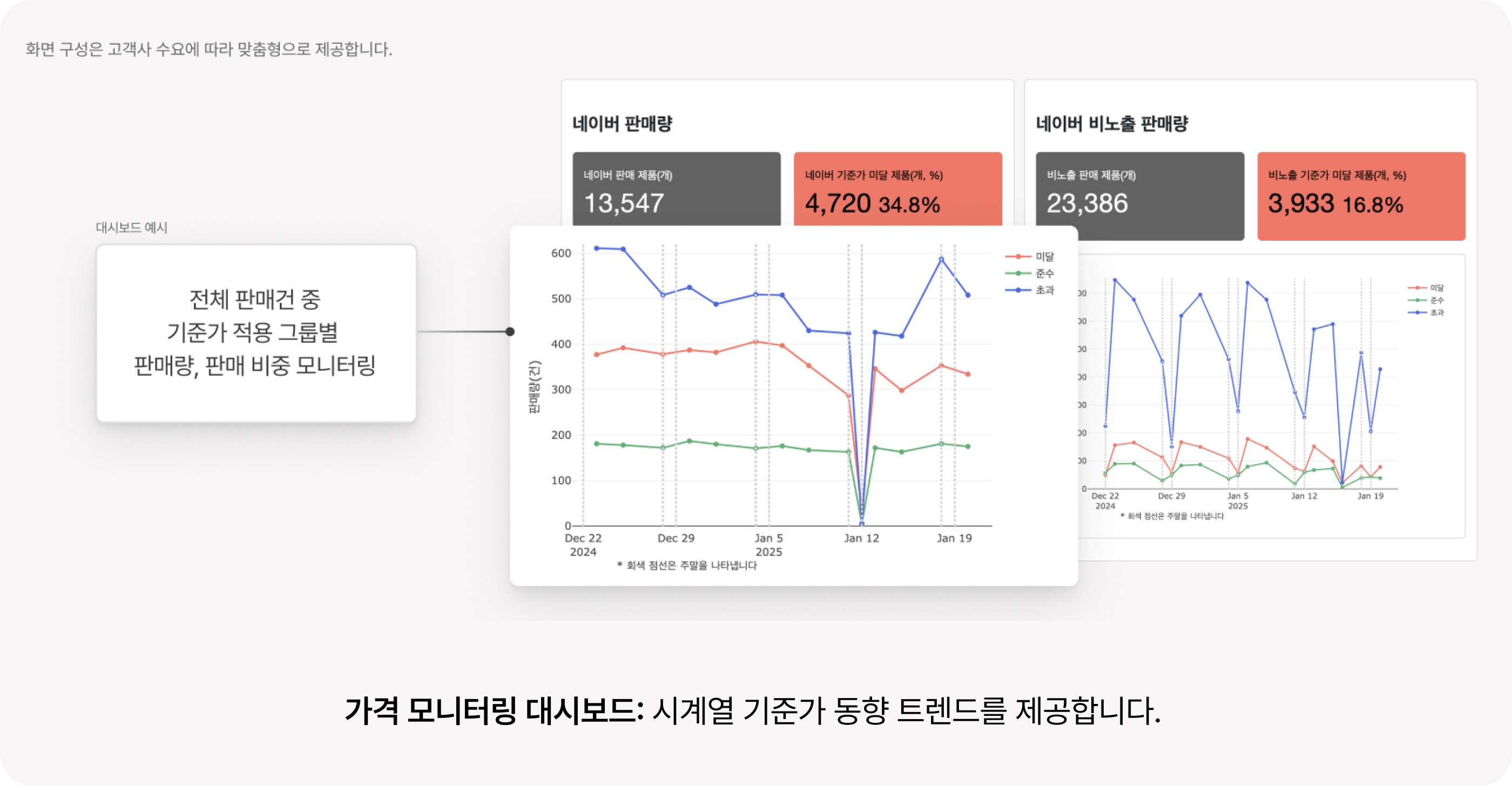
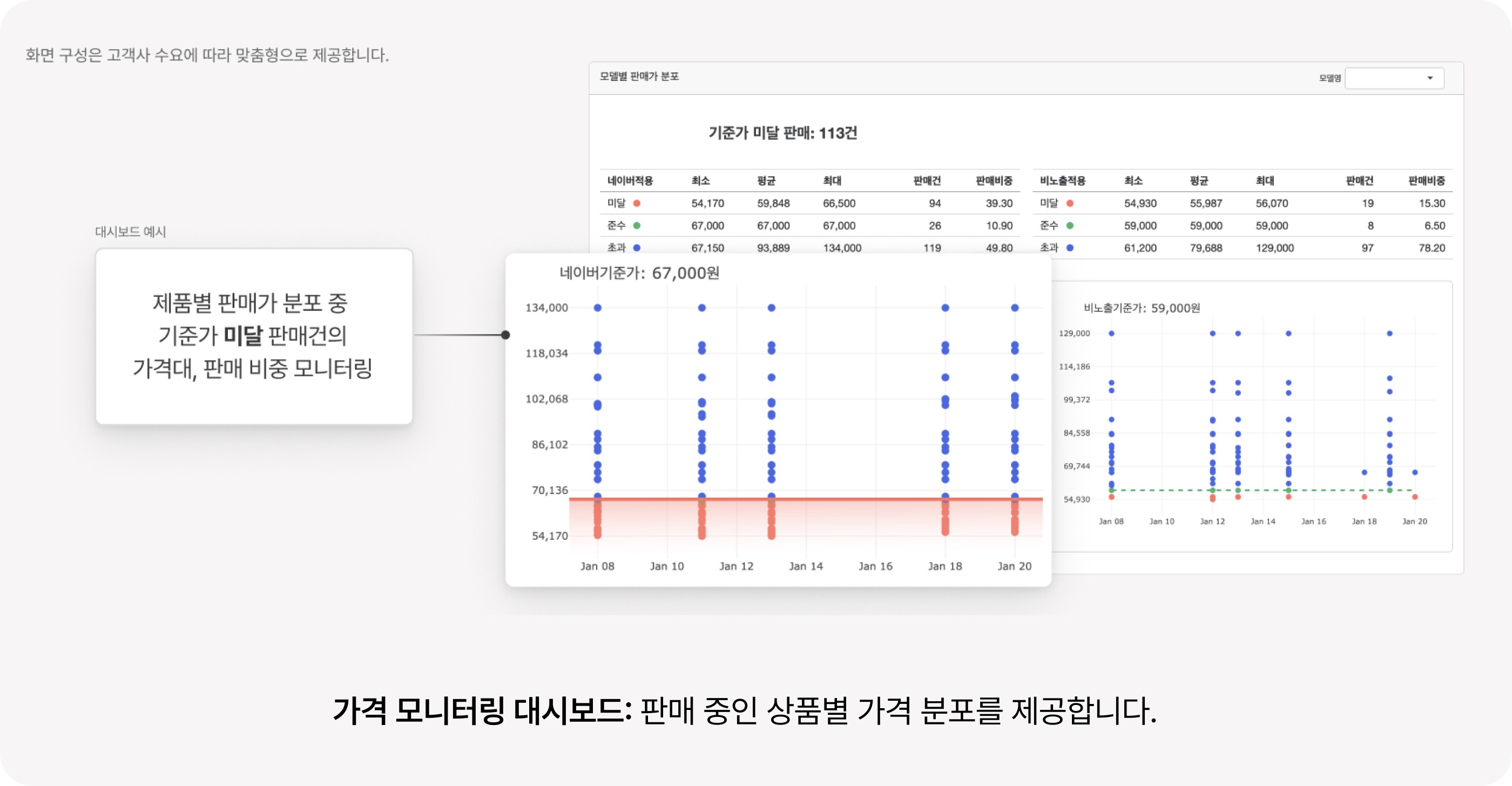
To resolve this situation, Retrix collected product information of unauthorized sellers in real time from major platforms such as Coupang, Gmarket, and Smart Store. Beyond simple collection, it automatically generates weekly reports that can analyze price violation patterns, manage recurring seller histories, and recently, even check whether the product price of MAP-violating sellers has returned to its original state.
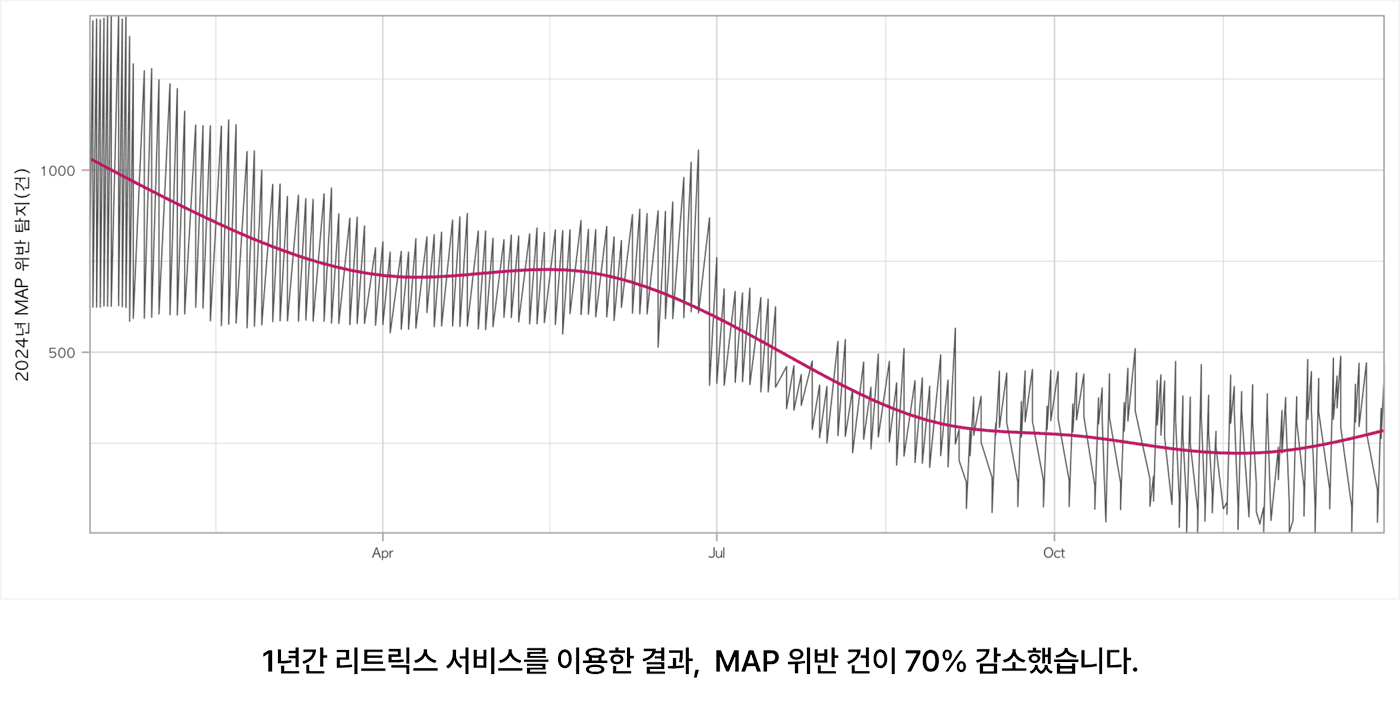
It was revealed through Retrix reports that some of the official distribution partners were also violating MAP agreements, and based on this data, the brand succeeded in reorganizing the pricing policy of official distribution channels. Since then, the number of unauthorized sellers with price violation cases decreased by 70%, confirming that the price order of the entire brand was restored.
By checking the Retrix dashboard, terminating contracts with existing sellers who lost trust, and increasing sales channels directly managed by JMW, operating profit is also said to have improved. By establishing and actively executing MAP policies, a distribution environment where they can focus on the competitiveness of the product itself, instead of reckless price competition, was created.
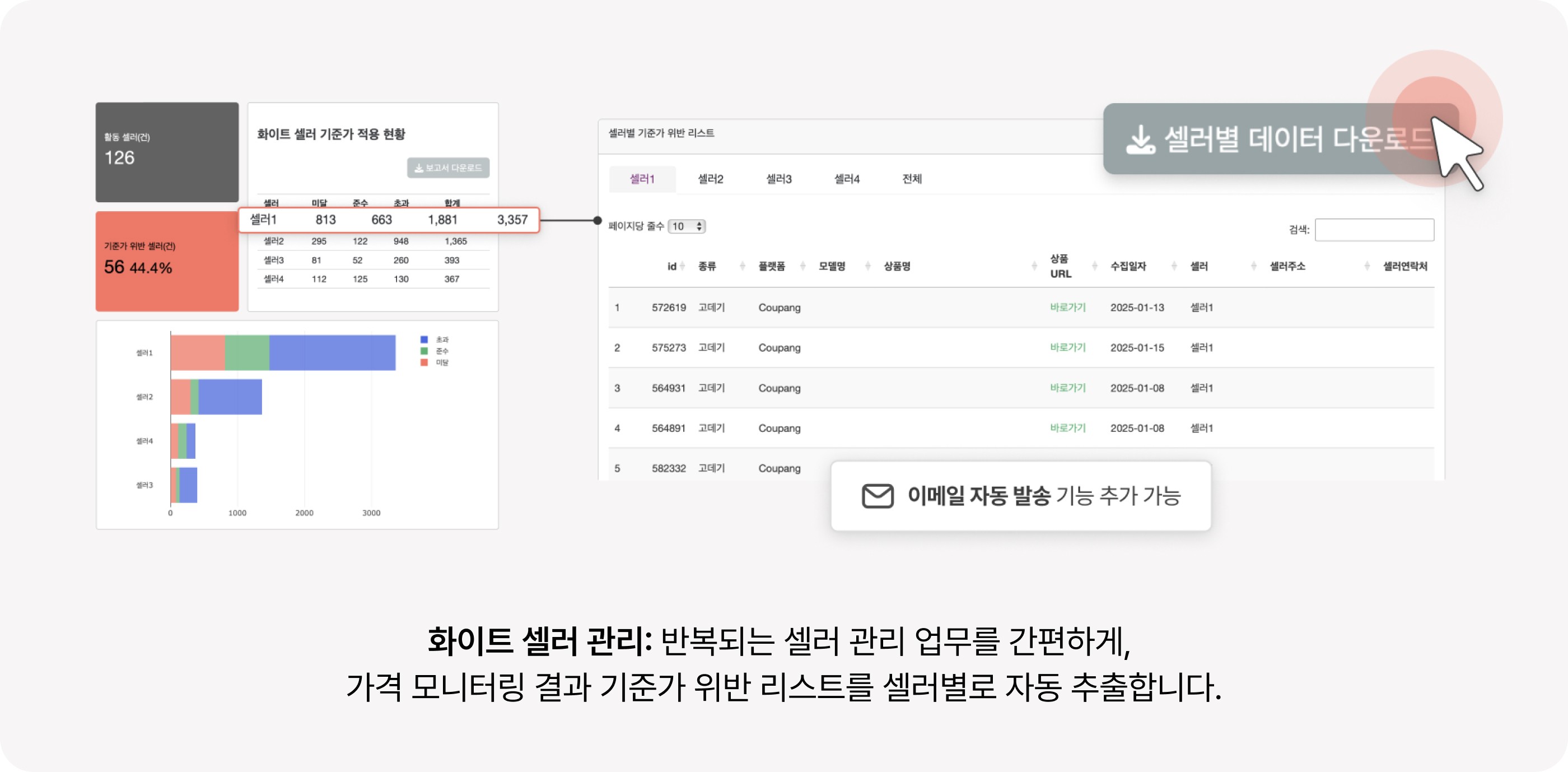
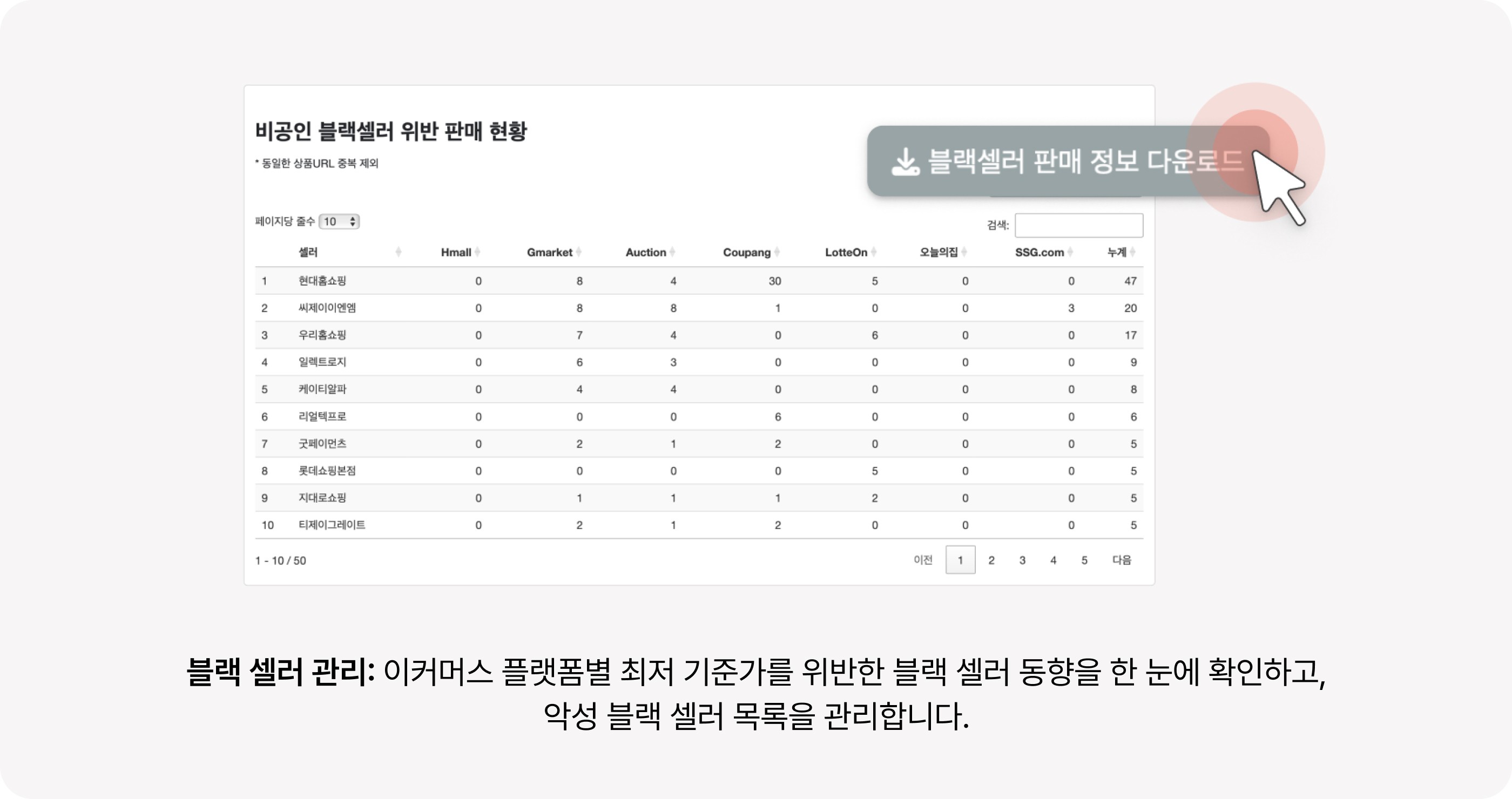
Of course, Retrix made it easy to check MAP violation information, but in the end, stopping black seller activities remains the brand's responsibility. Retrix is working hard on technology development to fully automate even this final rights infringement reporting.
Retrix is not just a tool that finds 'who is breaking our price.' It is a 'strategic partner' that creates a structure where brands can control prices and distribution on their own.
The most basic condition to protect a brand, "Black Seller Monitoring"
Just as the saying goes, 'It is a small crack that breaks a dam,' in an era like today where information surrounding brands spreads in real time, a single price or a single image can affect the entire brand.
Now, it is difficult to grow a brand through marketing or sales alone. Systematic management that can protect 'trust' in overall brand operation is required. To maintain trust with consumers, relationships with partners, and a stable revenue structure, black seller monitoring is no longer an option but an essential strategy.
As distribution channels expand, the scope that brands must control widens, and the risks that can occur accordingly also increase. What we must protect now is not just revenue, but the 'trust' of the brand itself.
Retrix is taking the lead in protecting brand value. If you are curious about how the solution that protects MAP pricing policy and image copyright together works, apply for a free demo.