Counterfeit
Coupang and Naver Smart Store counterfeit reporting: Practical strategies to increase your success rate
💡 In this article, you can check the following content.
🤔 “Can this be reported?”
Why are reporting standards so vague?
Key elements that define the boundaries
So what is the best approach? – Combined strategy of image similarity and price monitoring
Conclusion: Practical guidelines to increase the reporting success rate
🤔 “Will this report be accepted?”
One of the most frequent questions from the online retail frontline is, “Will this report be accepted?” When unauthorized sellers or counterfeit products are discovered on platforms like Coupang or Naver Smart Store, practitioners immediately attempt to report them, but the results are not always the same. Some are removed quickly, while others are rejected due to 'insufficient evidence.' Especially in the case of Coupang, reports are not accepted simply because the thumbnail is identical to the genuine product. The standard required by the platform is a clearer basis, such as whether it constitutes a violation of laws or theft of brand assets.
For example, in the cosmetics industry, cases such as non-disclosure of all ingredients have a relatively high reporting success rate. This is because it is a clear violation of regulations under the Cosmetics Act, which mandates disclosure. On the other hand, cases of packaging with similar appearance or simple price cuts are often repeatedly rejected. The reason why some reports are accepted while others are ultimately rejected depends on the criteria that define the boundary.
The problem is that these criteria are not clearly disclosed at the platform level. From a practitioner's perspective, there is no choice but to learn empirically through trial and error, during which dozens of rejection experiences accumulate. Ultimately, what is important is understanding the boundary of “how far is possible, and from where does it become ambiguous.” In this article, we will point out that very point, organize practical criteria that can reduce unnecessary reporting, and allow you to focus on cases with a high probability of success.
Why are the reporting criteria so ambiguous?
The moment practitioners feel the most frustrated is when they have reported multiple times, but the results are different each time. The experience of “Some are taken down, while others are rejected. But no one tells us the criteria,” is commonly heard in the retail field. This is a structural limitation that occurs because platforms do not disclose their report review criteria in detail.
First of all, pointing out the officially verifiable facts,
Coupang's operating policy explicitly states that 'the sale of counterfeit products such as illegal copies, imitation products, and counterfeit goods is strictly prohibited,' and guides that sanctions such as suspension of sales or account suspension can be taken if intellectual property rights infringement is confirmed. However, from the practitioner's perspective, the detailed review criteria of 'what evidence must be submitted for the report to be accepted,' which is the core, is difficult to confirm specifically in policy documents.
Naver Smart Store's operating policy explicitly states that 'registration and sales of goods that infringe intellectual property rights, such as counterfeit goods, are strictly prohibited,' and guides that sanctions such as sales prohibition, transaction cancellation, and member qualification suspension can be taken in case of violation. However, Naver also makes it difficult to confirm the specific criteria for 'what level of evidence must be submitted for actual action to be taken,' which practitioners are most curious about when preparing a report, in its policy documents.
On top of this, the laws applied to each product group are different, making it difficult for reporting results to be consistent. Cosmetics must display all ingredients in accordance with the 「Cosmetics Act」, and omitting this is considered a clear violation of the law. On the other hand, electrical and electronic products are judged based on KC certification in accordance with the 「Electrical Appliances and Consumer Products Safety Control Act」.
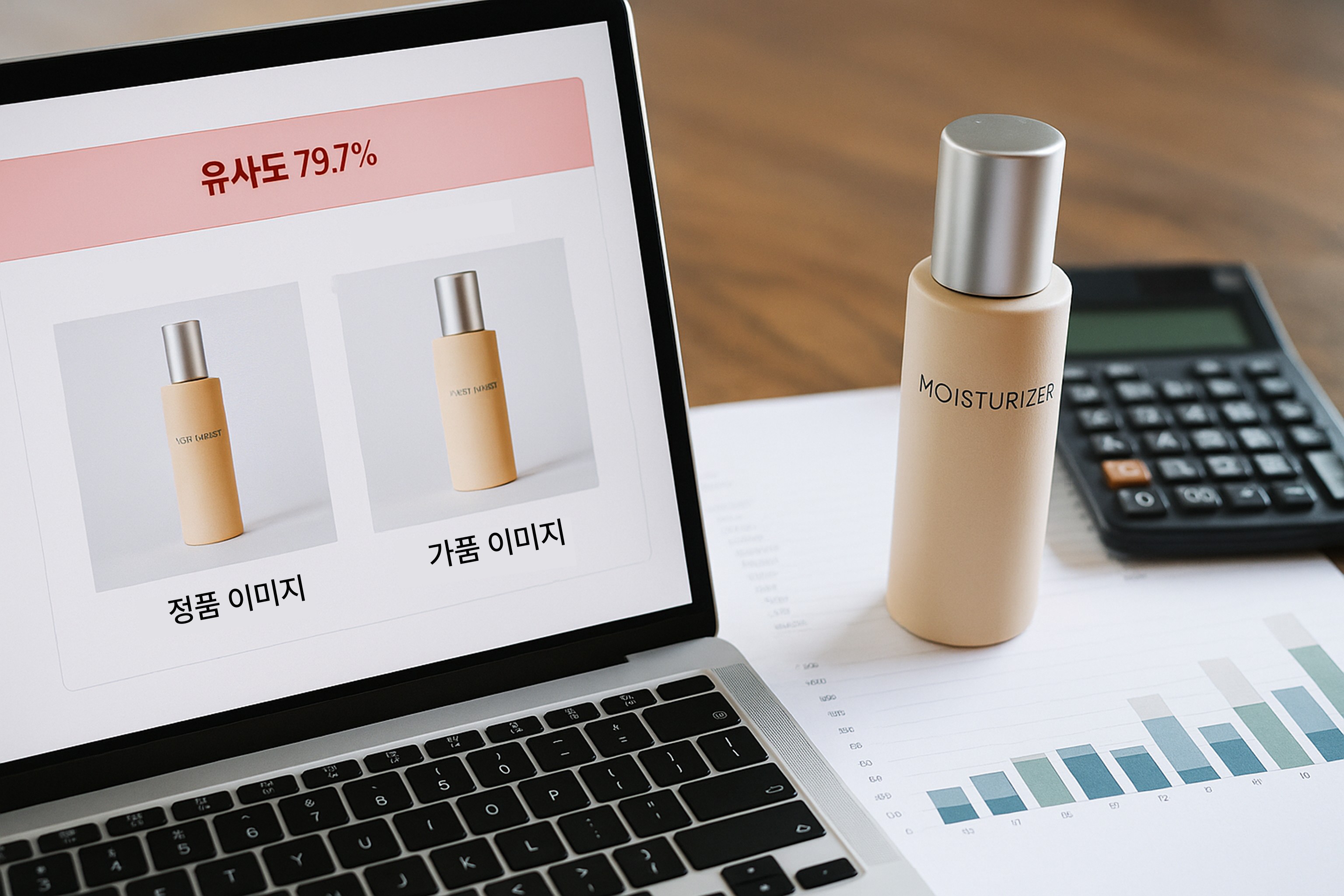
Particularly on Coupang, reports are not accepted simply because the thumbnail is identical to the genuine product. Simple image similarity can result in an 'insufficient proof' decision, and clear evidence such as violation of laws or infringement of intellectual property rights is required.
🔎 Accepted vs. Ambiguous – Understanding Ambiguous Reporting Criteria
Looking concretely through cases, the difference between accepted cases and ambiguous cases becomes clear.
The most representative 'accepted' case is when a violation of law is clear. Among them, the non-disclosure of all ingredients in cosmetics is the case that practitioners encounter most frequently. As mentioned earlier, Article 10, Paragraph 1 of the 「Cosmetics Act」 stipulates that all ingredients used in the manufacture of cosmetics must be displayed on containers or packaging, which is a mechanism to ensure that consumers can fully check safety and ingredient information when choosing a product. In addition, the enforcement rules of the same Act clearly require the display of all ingredients as one of the items that must be written on cosmetics packaging . Therefore, a detail page omitting all ingredients can be considered a violation of laws rather than a simple editing mistake, which is why cases of non-disclosure of all ingredients show a high success rate in platform reporting.
However, until now, practitioners had to open each detail page one by one to check whether all ingredients were displayed, which consumed significant resources. Recently, to reduce this inefficiency, a method of automatically detecting non-disclosure of all ingredients using AI text recognition technology has also been introduced. This technology quickly screens for potential legal violations and significantly shortens the process of securing evidence for practitioners.Another representative case is when official brand images are used without authorization. Acts of taking and using